

Report
Mr. Husain Haqqani, Ashley J. Tellis
{
  "authors": [
    "Husain Haqqani"
  ],
  "type": "legacyinthemedia",
  "centerAffiliationAll": "dc",
  "centers": [
    "Carnegie Endowment for International Peace"
  ],
  "collections": [],
  "englishNewsletterAll": "ctw",
  "nonEnglishNewsletterAll": "",
  "primaryCenter": "Carnegie Endowment for International Peace",
  "programAffiliation": "russia",
  "programs": [
    "Russia and Eurasia"
  ],
  "projects": [],
  "regions": [
    "India",
    "Pakistan"
  ],
  "topics": []
}
REQUIRED IMAGE
Source: Carnegie
Originally published in the Asian Wall Street Journal, May 23, 2002
Last week's terrorist attack on an Indian military camp in the disputed territory of Kashmir has led to India expelling the Pakistani high commissioner to New Delhi. Members of India's parliament have called for appropriate retaliation, some demanding war. Ironically, each side is looking toward the United States to bring pressure on the other to resolve the current crisis.
Pakistan, a Cold War ally and the current staging ground for attacks against al Qaeda in Afghanistan, expects U.S. diplomatic efforts to prevent Indian military retaliation. India has expressed disappointment that the U.S. cannot force Islamabad to clamp down on militant Islamists operating from Pakistan territory. But Washington may be unable to fulfill either side's desire for action. At best it can act as an honest broker and help them end the current military standoff. In the end, the two neighbors must overcome their own history of mutual mistrust and the legacy of three wars in 54 years.
This is not the first time that the U.S. has been torn between Pakistan and India, and failed to satisfy either. In return for offering military bases and intelligence cooperation during the Cold War, Pakistan expected Washington's support for its position in the dispute over the Himalayan territory of Kashmir. The U.S. initially backed Pakistan in the United Nations but did not support its ally's failed military effort against India in 1965. In 1971, Washington was unable to save Pakistan from dismemberment during the Bangladesh war.
It is unrealistic for Pakistan's military ruler, Gen. Pervez Musharraf, to now expect U.S. support for the militant insurgency in Kashmir as repayment for military and intelligence cooperation in the Afghan war. Pakistan may be an American ally, but India pulls more weight in Washington. With the end of the Cold War, American suspicions of a non-aligned India with close ties to the Soviet Union have dissipated. India's economic reforms have moved the country away from its quasi-socialist practices, opening a huge market to U.S. businesses. From the American point of view, Pakistan may be America's wartime ally, but it is India that offers the prospect of long-term friendship.
In a showdown involving conventional warfare, Pakistan would be at a disadvantage. Its military has received no new weapons from America in a decade. Indigenously manufactured weapons and arms supplied by China might not be sufficient to effectively ward off an attack by India, which has been buying modern weapons from a variety of sources in the international market. This military imbalance means that the possibility of Pakistan resorting to nuclear weapons in the event of war cannot be completely excluded.
Islamabad cannot afford to depend exclusively on the U.S. to defuse tensions between India and Pakistan. It will have to act decisively against Islamic militants allegedly involved in attacks in India and Kashmir. Proposals for joint India-Pakistan monitoring of the Line of Control in Kashmir, to stop infiltration of militants ostensibly acting on their own, must also be seriously considered. Pakistan's most significant diplomatic successes in its dispute with India, including U.N. resolutions calling for a plebiscite in Kashmir, were attained during times of peace. Contrary to the conventional wisdom in Pakistan, militancy and militarist solutions have not helped in mobilizing international support for Kashmiri self-determination.
India's response to the current situation also should be rational, not emotional. It is simply not possible to "eliminate" or "liquidate" a neighbor with nuclear weapons, as some extremists in Mr. Vajpayee's ruling coalition have demanded. At a time when extremists are under pressure globally, India's insistence on rubbing Pakistan's nose in the ground would be counter-productive. Not only would it impair Pakistan's ability to cooperate in the war against terrorism, it could even give a boost to Pakistani militants. Conflicts with India tend to unite Pakistanis. If Gen. Musharraf's regime is seen as acting under Indian duress, support for the militants opposing him could increase.
Gen. Musharraf's refusal to expand his support base beyond the military makes his domestic position precarious. While supporting Gen. Musharraf in his efforts against Islamic extremists, the U.S. also needs to ensure that it would still be able to count on Pakistani help in the anti-terror effort even if there is a change of regime in Pakistan. In the past, India and Pakistan have managed to avoid military confrontation whenever civilians were in power in Islamabad, and a civilian, democratic government in Pakistan would be less dependent on the military and the Islamic militants for support.
The current crisis provides an occasion to address the root causes of violence between India and Pakistan. America is already using its influence with Pakistan to force action against Islamic extremists. It should also persuade India to get serious about resolving the dispute over Kashmir. Pakistan needs to root out Islamic extremism for its own sake, not just to fulfil Indian and U.S. demands. But India also must wake up to the fact that it will continue to have a Kashmir problem even after the current militancy there is brought under control. Sooner or later India will have to discuss the future of Kashmir, both with the people of living there and with Pakistan. So why not do it now, so that a comprehensive solution to South Asia's security problems can be implemented?
Instead of rattling sabers or hoping for U.S. intervention, the leaders of India and Pakistan should consider renewing their dialogue directly. India's lack of enthusiasm for diplomacy is attributed to Pakistan's failure to live up to its commitments in the past. New Delhi appears to have calculated that brinkmanship and the threat of war will yield better results for India by forever diminishing Pakistan's military might. Gen. Musharraf's government would almost certainly fall if Pakistan loses a limited war. On the other hand, if the military build-up forces Gen. Musharraf to back down, his position as Pakistan's strongman will be seriously compromised.
For peace to prevail in South Asia, India and Pakistan must draw back from the brink. The U.S. seems to have less leverage with India than it does with Pakistan. In the past, New Delhi has rejected the notion of third-country mediation in its relations with Islamabad. When U.S. Deputy Secretary of State Richard Armitage goes to the region in early June, he should seek a reduction in the current Indian military build-up while insisting on verifiable Pakistani steps against Islamic militancy. Above all, he should ensure that the U.S. alliance with Pakistan and friendship with India are not misinterpreted by either side as an excuse to do as it pleases. These neighbors need to be prevented from going to war again. They also need to be encouraged to engage in self-sustaining dialogue.
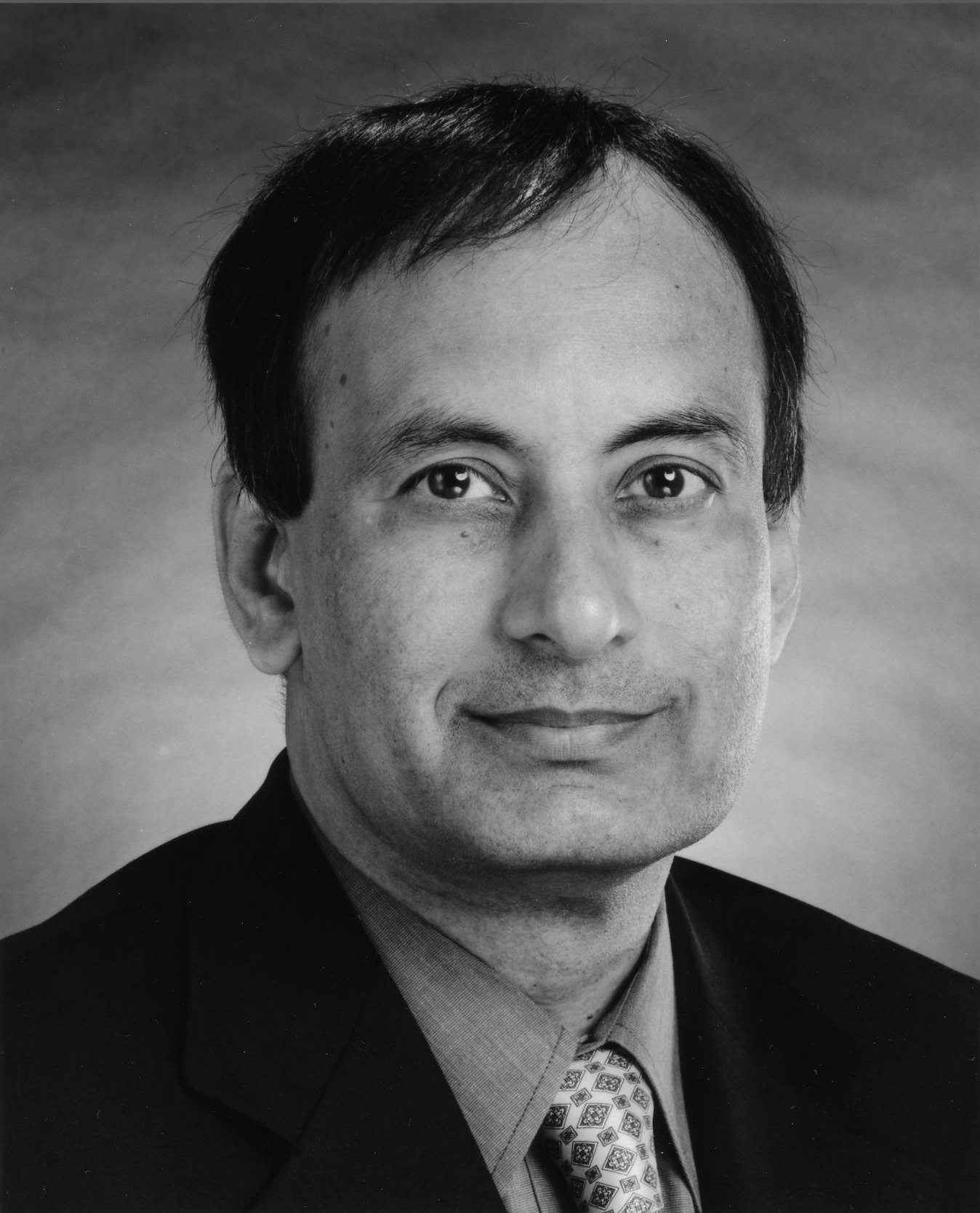
Mr. Haqqani is a visiting scholar at the Carnegie Endowment for International Peace in Washington D.C. He has served as adviser to Pakistan's Prime Ministers Nawaz Sharif and Benazir Bhutto and as Pakistan's ambassador to Sri Lanka.
Former Visiting Scholar
Recent Work
Mr. Husain Haqqani, Ashley J. Tellis
Mr. Husain Haqqani

With the growth in points of friction between the great powers, organizations like the SCO will continue to play a role in the strategic adaptation of the smaller powers caught between them.

Temur Umarov
Xi, Putin, and other regional leaders are back-slapping in Bishkek, but the SCO has yet to answer the most serious questions about continental Asia's economic future.

Evan A. Feigenbaum

In any defense establishment, change is an ongoing process. However, despite the best of intentions, existing bureaucracies, bound by habit and years of socialization, have their limits in implementing transformative change.

Anit Mukherjee
As AI grows more sophisticated, as the supply chains that power it become more contested, and as access to frontier models becomes geopolitically charged, India must begin to ask a different set of questions. Not what applications it can build on someone else’s infrastructure but what the world needs.

Konark Bhandari
As India undergoes a demographic transition, its cities will be its economic powerhouse—but only if it accurately captures city growth and empowers cities to support their citizens.

Apoorva Jadhav