Article
Marina Ottaway, Omar Hossino
{
  "authors": [
    "Marina Ottaway"
  ],
  "type": "legacyinthemedia",
  "centerAffiliationAll": "dc",
  "centers": [
    "Carnegie Endowment for International Peace"
  ],
  "collections": [],
  "englishNewsletterAll": "democracy",
  "nonEnglishNewsletterAll": "",
  "primaryCenter": "Carnegie Endowment for International Peace",
  "programAffiliation": "DCG",
  "programs": [
    "Democracy, Conflict, and Governance"
  ],
  "projects": [],
  "regions": [
    "Southern, Eastern, and Western Africa"
  ],
  "topics": [
    "Political Reform",
    "Democracy",
    "Economy"
  ]
}
REQUIRED IMAGE
43 of 48 sub-Saharan African countries have held multiparty elections, but this superficially rosy picture hides a much starker reality. In most of these countries democracy is a sham. In Africa today, stemming state decay is a more urgent task than building democracy.
Source: International Herald Tribune
Originally published May 23, 2003 in the International Herald Tribune.
In 1990, only three African countries had formally democratic systems. Now 43 of 48 sub-Saharan African countries have held multiparty elections. But this superficially rosy picture hides a much starker reality. In most of these countries democracy is a sham. Much of the continent's population lives in deeply troubled, even disintegrating states. In Africa today, stemming state decay is a more urgent task than building democracy.
In 2001-2002, the Freedom House Index rated only nine countries in sub-Saharan Africa as free, 24 partially free and 15 not free. Only 13 percent of the African population lives in countries rated free.
Five of the most populous countries, accounting for more than 40 percent of the continent's population, are shaken by internal conflicts, or teetering on the verge of disintegration. Nigeria, the Democratic Republic of the Congo, Ethiopia, Angola and the Sudan are unstable and divided countries, whose problems could affect entire regions.
Many explanations have been provided for these unhappy political conditions, including the colonial legacy, the arbitrary nature of African boundaries, poor leadership or the rise of "neopatrimonialism" - an ill-defined code word for the political ills that afflict the continent. Less discussed is the fundamental fact that without a functioning government capable of making major decisions, democracy does not have much meaning.
Granted independence by a fiat of international decision-making, rather than because they developed the administrative, financial and military capacity to govern and defend themselves, African states from the beginning had trouble either commanding the loyalty of their citizens or forcing them to submit to their power. From the outset, the state was less important for many Africans than immediate patrons, religious leaders or ethnic leaders. Today, the state is also less important than the international institutions and bilateral donors that impose policies and pay the bills.
When a country's macroeconomic policy is prescribed by the International Monetary Fund, its education and health policies are negotiated with the World Bank in the preparation of a Poverty Reduction Strategy Paper, and domestic and foreign nongovernment organizations have more influence on revenue spending than the government - as is the case for oil revenue in Chad - the election of a president and a Parliament have little impact on policies.
Three sets of problems contribute to the present African predicament: the weakness of states, their lack of integration in the new international economy and their lack of democracy. Ideally, donors seeking to help African countries should address all three sets of problems at the same time. In reality, this is not possible because of funding and human resource constraints. So donors are forced to establish priorities.
Democracy should be the ultimate goal for African countries but it is not a good starting point. Rebuilding the state must come first, and the changes that would bolster the state are not those that would deepen democracy. Democracy requires the strengthening of parliaments and judiciaries and the curbing of the power of the executive. Strengthening the state requires building up executive agencies and the administrative apparatus. Indeed, without an increase in their capacity to control and administer the country, states will continue to disintegrate whether or not the government is elected or the judiciary is independent.
Without a clear improvement in their administrative and, in extreme cases, even military and police capacities, even democratic governments would not be able to promote their countries' integration in the global economy. The major beneficiaries of preferential trade measures, such as the U.S. African Growth and Opportunity Act, are those countries whose governments are able to guide entrepreneurs through the maze of implementation rules. Strong states like South Africa and Mauritius are already benefiting, while the changes make no difference to the Democratic Republic of the Congo or to Burundi.
Addressing the governance deficit by building up the capacity of administrative agencies is the most promising focus for helping African countries move forward. Africa needs stable states in order to become democratic. It also needs strong states in order to become better integrated in the global economy.
The reason is simple: Africa needs to become part of the global economy, but the global economy hardly needs Africa, except for raw materials it can already obtain. There is no "scramble for Africa" today. Rather, it is African countries that must scramble to integrate economically and politically, and that requires stable states and capable governments.
A longer version of this article appeared in the Foreign Policy Centre publication "Unbinding Africa: Making Globalisation Work for Good Governance.” Click here to view the introduction to the publication.
Former Senior Associate, Middle East Program
Before joining the Endowment, Ottaway carried out research in Africa and in the Middle East for many years and taught at the University of Addis Ababa, the University of Zambia, the American University in Cairo, and the University of the Witwatersrand in South Africa.
Recent Work
Marina Ottaway, Omar Hossino
Marina Ottaway
Carnegie does not take institutional positions on public policy issues; the views represented herein are those of the author(s) and do not necessarily reflect the views of Carnegie, its staff, or its trustees.
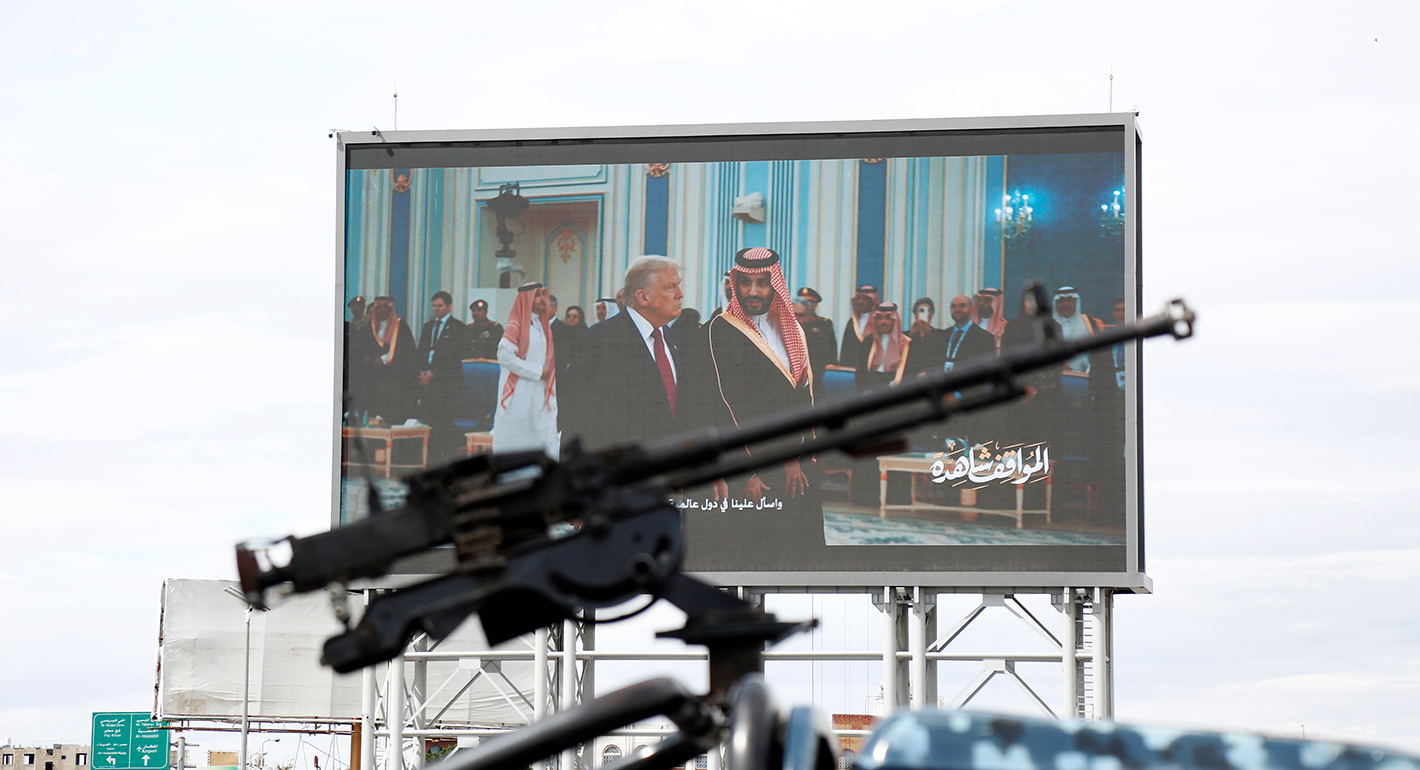
As the war between the United States, Israel, and Iran continues, Carnegie scholars contribute cutting-edge analysis on the events of the war and their wide-reaching implications. From the impact on Iran and its immediate neighbors to the responses from Gulf states to fuel and fertilizer shortages caused by the effective shutdown of the Strait of Hormuz, the war is reshaping Middle East alliances and creating shockwaves around the world. Carnegie experts analyze it all.
The return of war as the organizing factor in Middle Eastern politics has predictable consequences: governments are prioritizing regime stability and becoming averse to political and social reform.

Sarah Yerkes, Amr Hamzawy
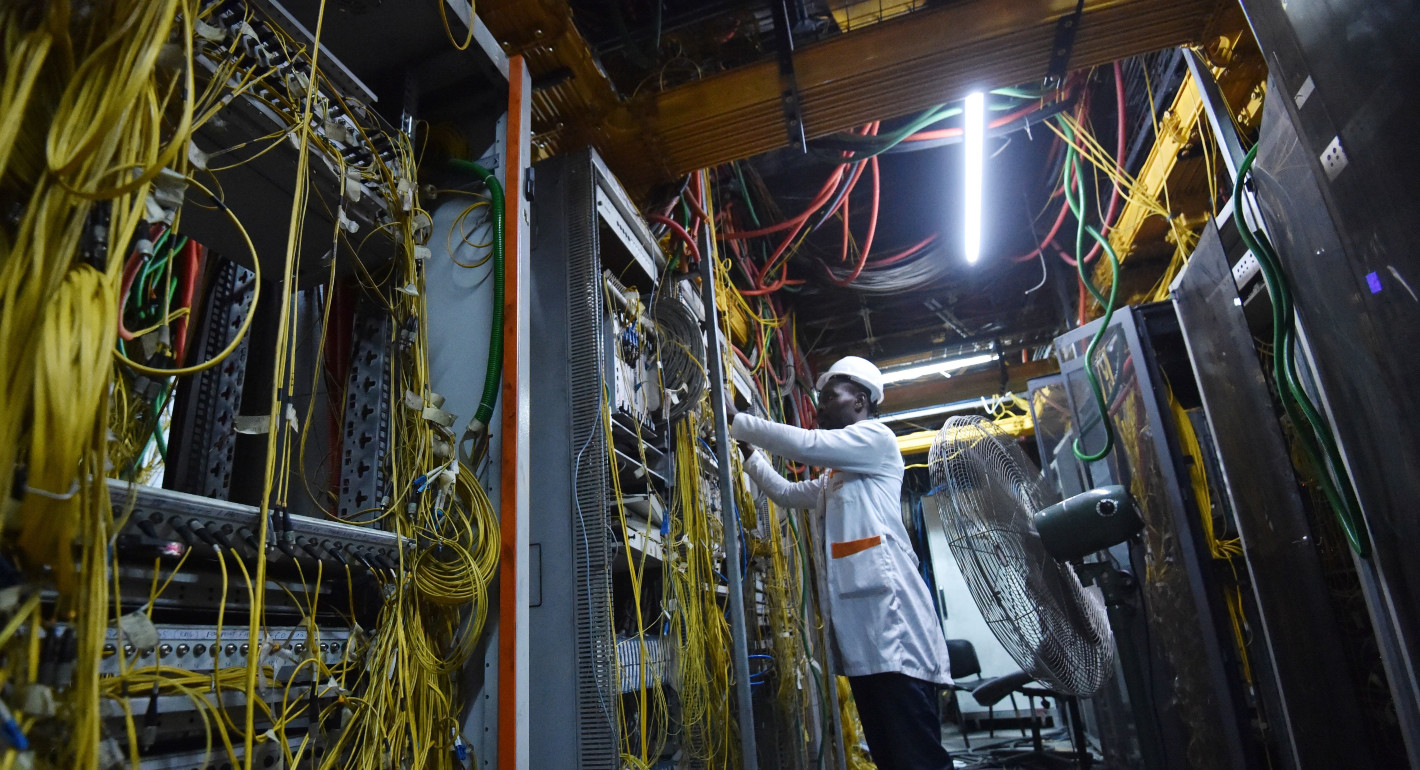
The Africa Technology Policy Tracker reveals policymakers’ priorities for the continent’s digital transformation.
Jane Munga

The future looks bleak for independent media worldwide, but there is a robust infrastructure of knowledge, organizations, and people to build upon.

Daniel Sabet, Susan Abbott

Defenders of democracy often split over perceptions, methods, urgency levels, and priorities.


Murat Somer, Jennifer McCoy