

Report
Mr. Husain Haqqani, Ashley J. Tellis
{
  "authors": [
    "Husain Haqqani"
  ],
  "type": "legacyinthemedia",
  "centerAffiliationAll": "dc",
  "centers": [
    "Carnegie Endowment for International Peace"
  ],
  "collections": [],
  "englishNewsletterAll": "ctw",
  "nonEnglishNewsletterAll": "",
  "primaryCenter": "Carnegie Endowment for International Peace",
  "programAffiliation": "russia",
  "programs": [
    "Russia and Eurasia"
  ],
  "projects": [],
  "regions": [
    "South Asia",
    "India",
    "Pakistan"
  ],
  "topics": [
    "Political Reform",
    "Democracy"
  ]
}
REQUIRED IMAGE
Source: Carnegie
Originally appeared in the Gulf News,
June 6, 2003
If General Pervez Musharraf expected the Pakistani nation to turn on his command like a military parade, he must now learn the difference between a parade and a nation the hard way.
From the unruly Jihadis to the officially approved university graduates who now populate the Punjab provincial assembly there is hardly a civilian who is following the general's script. The general wants Jaish-e-Muhammad founder Maulana Masood Azhar to lower his profile but he keeps appearing in public in defiance of these instructions.
The Punjab Assembly was expected to quietly pass a resolution endorsing the nation's "need" for a uniformed president but the opposition turned it into a fiasco. And the debate over the Legal Framework Order (LFO) simply refuses to wither away.
Pakistan's generals and their English-speaking, drawingroom dwelling supporters often lament that the Pakistani people are not ready for democracy. But in fact it is the generals‚ failure to understand the dynamics of politics that has obstructed Pakistan's gradual evolution into a mature state.
No nation can have discipline without rule of law. And there can be no rule of law unless laws are made in a transparent manner, with complete observance of a constitutional scheme that enjoys broad consensus.
The Pakistani military's conventional wisdom is that the country's only tragedy is its lack of capable leadership. From Ayub Khan to Musharraf, the generals have tried to fill this leadership vacuum with their superior talent. But their rejection of the normal process of politics has harmed the country far more than the alleged mediocrity of our political leadership.
Let us examine each one of the several tempests in teapots that the country is currently facing. First, the matter of the Jihadi leaders. If Pakistan followed the rule of law, it would be a matter of law whether organising Jihadi militias was lawful or not.
Then, individuals such as Maulana Masood Azhar would either have complete freedom to move around the country or none at all, depending on whether their conduct was lawful or otherwise. But what has happened so far has little to do with the law.
A few years ago, Pakistan's establishment thought that Jihad was a good instrument of strategy. Now, the same officials who asked religious leaders to mobilise their followers for Jihad not long ago are asking them to keep quiet or drop out of public view to save Musharraf international embarrassment over supporting militants. The Jihadi leaders refuse to be handled like puppets, hence their refusal to comply.
Next, the brouhaha in the Punjab Assembly. Since the elections of parliament and provincial legislatures last October, the government has shown nothing but contempt for the elected assemblies.
Instead of allowing parliament to vote on his proposed constitutional amendments and negotiating with the elected leaders to secure an outcome of that vote favourable to him, Musharraf chose to act aloof.
His assigned interlocutors with politicians, serving and retired intelligence officers, threatened or tried to bribe every politician failing to get an effective deal.
In the process, they also undermined the potential for political compromise among the politicians who had survived the hurdles put in their way in the course of elections. Political negotiation, after all, is not a skill taught at the Pakistan military academy or even at the school of intelligence.
The legislatures have not been entrusted with any legislation so far and have not even met sufficiently frequently.
The regime's penchant for secrecy is so pervasive that it has failed to share details of its co-operation with the United States in the global war against terrorism, even urging the local press to ignore information on the subject published on the CENTCOM website on the internet. (Questions: If co-operation with the U.S. is good for Pakistan, why hide its details from Pakistanis? If it is something to be ashamed of, why do it?)
In such circumstances, the government's effort to use the Punjab assembly to demonstrate support for Musharraf remaining in uniform was clearly a provocation for the opposition. Even then, pro-government politicians knew their side would be better served by allowing the opposition its say.
But the provincial Home Secretary, a former intelligence official and retired military officer who boasts of his friendship with "The Chief" decided to strong-arm the opposition.
The result was the shameful police attack on opposition members of the provincial assembly, accompanied by the ritual brutality against the press that attends such occasions.
Now the military regime is trying its best to "spin" its failure in managing dignified proceedings of the Punjab assembly into the traditional "our politicians are irresponsible" line of propaganda.
The argument of the uniformed ones can best be found in an article by a former four star general and vice chief of army staff published in a Karachi English daily. The general begins by saying, "The political rhetoric by our parliamentarians in public meetings, in the print media and the loud and rowdy rumpus by them inside the house reflects the disorder that ails our society".
He then argues that "indiscipline and chaos are a part of our political milieu" before launching into a list of major and minor issues he sees as causes of our national malaise.
Ironically, this list includes the nuisance of plastic shopping bags and wall chalking but does not include absence of constitutional governance or usurpation of civilian power by the military. Pakistan's generals have tried repeatedly to make the nation walk in a straight line but their efforts have come to naught.
It is time for them to realise that it is not "bloody civilians" who keep setting the nation back but their own tendency to consider themselves a solution to every problem. Last year, Musharraf argued that restricting the electoral process to university graduates would ensure a better quality of public representatives.
After the recent clashes in parliament and the Punjab assembly, that argument seems hollow. Similarly, the National Security Council had been introduced into the constitution as the body that would serve as a bridge between the military and the elected civilian leadership.
But now Musharraf argues that he must continue as president in uniform to be that bridge. Surely, one of those two bridges is redundant.
Politics has its own dynamic and until the military leadership recognises that, its desire for a "disciplined" Pakistani polity will only sow the seeds of greater chaos and confusion.
Making an entire nation walk in a straight line is impossible, which is why mature nations respect dissent and evolve procedures for allowing the minority to have its say while the majority gets its way.
Military training is insufficient preparation for leading a nation, which requires multi-faceted talents usually provided by a team of experienced politicians.
All of Pakistan's general-rulers thought they had laid the foundations of economic prosperity and political stability. But their limited knowledge kept their focus on a few aspects, leading them to drop the ball on other equally crucial issues.
Right now, too, Musharraf is pleased with the improvements in the government's finances with external assistance, ignoring that Pakistan averages seven suicides a day because of poverty and the number of those living below the poverty line has risen to 31 (possibly 34) per cent of the total population.
His political "strategy" of total control is likely to backfire as different political forces, from Jihadis to democrats, seek to mobilise an increasingly unhappy populace.
Pakistan would be better off if constitutional and political mechanisms were
allowed to run their course and General Musharraf, and his team of serving and
retired military officers, reverted to doing what they know best: obeying their
superiors and ordering their subordinates.
Former Visiting Scholar
Recent Work
Mr. Husain Haqqani, Ashley J. Tellis
Mr. Husain Haqqani
Carnegie does not take institutional positions on public policy issues; the views represented herein are those of the author(s) and do not necessarily reflect the views of Carnegie, its staff, or its trustees.
India’s demographic transition is underway, but its economic payoff remains far from guaranteed.
Apoorva Jadhav

On March 10, 2026, India’s Union Cabinet approved amendments to Press Note 3, a regulation that mandated government approval on all foreign direct investment (FDI) from countries sharing a land border with India. This amendment raises questions primarily about whether its stated benefits will materialize and if the risks have been adequately weighed. This piece will address the same.

Konark Bhandari
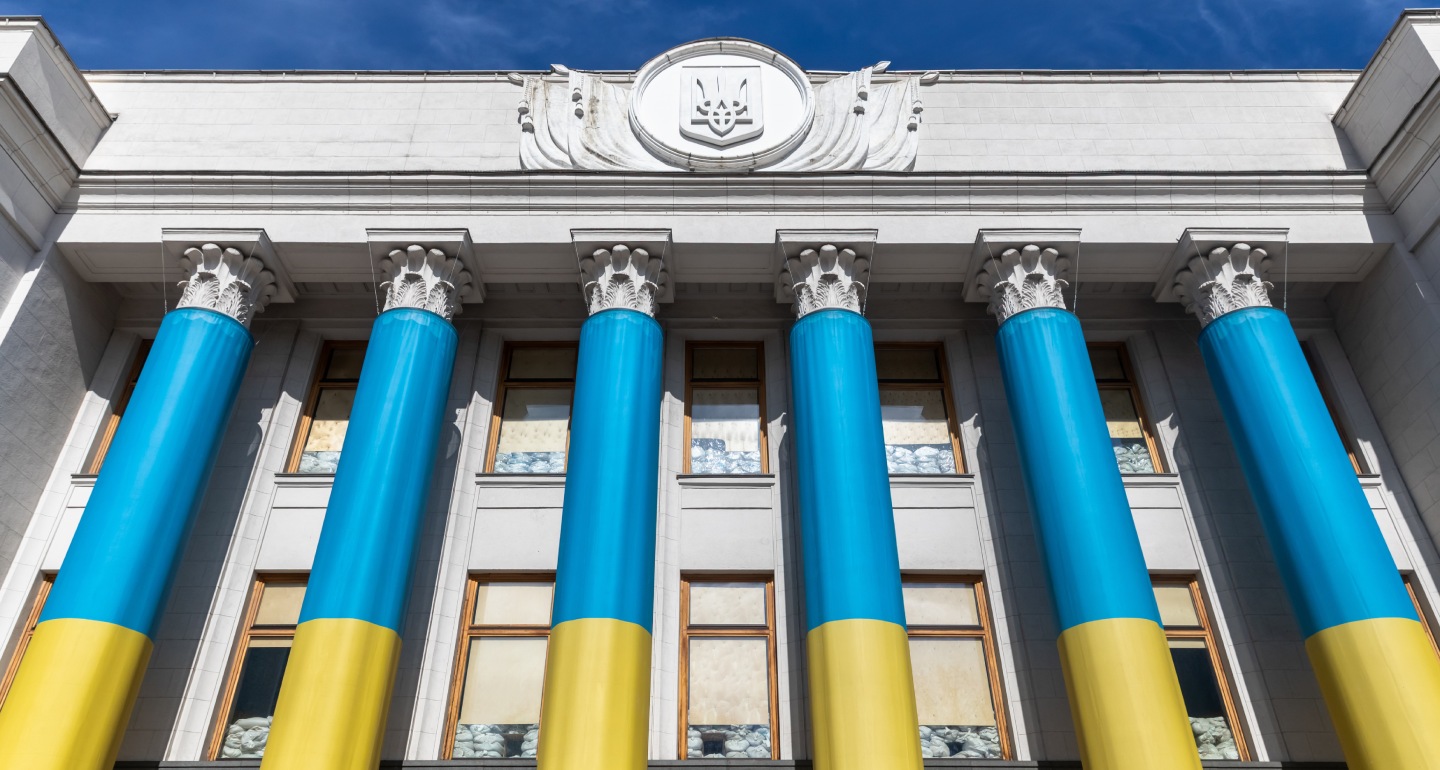
The return of parliamentary politics reflects a broader shift from earlier expectations of a settlement and elections toward the reality of a prolonged war.
Balázs Jarábik
The induction of INS Aridhaman, which features several technological enhancements, now gives India the third nuclear ballistic missile submarine to ensure continuous at-sea deterrent.
Dinakar Peri
The Russian state has opted for complete ideological control of the internet and is prepared to bear the associated costs.

Maria Kolomychenko