

Article
Леонид Гозман, Michael McFaul
{
  "authors": [
    "Michael McFaul"
  ],
  "type": "legacyinthemedia",
  "centerAffiliationAll": "dc",
  "centers": [
    "Carnegie Endowment for International Peace"
  ],
  "collections": [],
  "englishNewsletterAll": "ctw",
  "nonEnglishNewsletterAll": "",
  "primaryCenter": "Carnegie Endowment for International Peace",
  "programAffiliation": "russia",
  "programs": [
    "Russia and Eurasia"
  ],
  "projects": [],
  "regions": [
    "Caucasus",
    "Russia"
  ],
  "topics": [
    "Political Reform",
    "Foreign Policy"
  ]
}
REQUIRED IMAGE
Source: Carnegie
'New Russia' Ailing; Stand Up, Mr. Bush
Putin is presiding over a steady erosion of rights and freedoms.
By James M. Goldgeier and Michael McFaul
Originally published in Los Angeles Times on September 21, 2003.
At a time when relations between the United States and some of its traditional allies are strained, President Bush must be looking forward to Russian President Vladimir V. Putin's visit this week. The two men seem to have genuine rapport, and although Putin did not endorse the U.S. decision to invade Iraq, he does speak from Bush's script on the global war on terrorism. Bush also knows that Russia is in a position to offer real help in tackling critical security threats to the United States. The president hopes to secure commitments from Putin for Russian troops in Iraq and for cooperation in attempts to slow Iran's development of nuclear weapons and for help in defusing the standoff with North Korea.
Because Bush wants Putin's support on foreign policy issues, he may be tempted to remain silent at the summit about negative trends inside Russia. This would be a mistake. If Bush ignores clear signs that Russia is backing away from democracy, he will undermine democratic forces in Russia -- and he will bring into question the U.S. commitment to fostering democracy abroad.
The evidence of an erosion of democracy in Russia under Putin is now overwhelming. Since coming to power, he and his government have seized control of Russia's last independent national television networks and silenced or changed the editorial teams at several national newspapers and weeklies. Reporters Without Borders, which recently published its first worldwide freedom- of-the-press index, ranked Russia 121st out of 139 countries assessed.
On Putin's watch, state intrusion in Russian society has increased dramatically, from the arrest and harassment of human rights activists to the creation of state-sponsored "civil society" organizations whose mission is to crowd out independent actors. Even businesses are not immune from persecution: Over the summer, the state launched a politically charged criminal investigation into the giant oil company Yukos after its chief executive gave money to opposition political parties.
In Chechnya, Putin's armed forces continue to abuse human rights on a massive scale. During the 2000 presidential campaign, Bush remarked, "We want to cooperate with [the] Russian [government] on its concern with terrorism, but that is impossible unless Moscow operates with civilized restraint." It's true that Al Qaeda has supported terrorists in the region who continue to attack innocent Russians. But the gross violation of international norms by the Russian government in combating the problem has left a trail of devastation that will take years to overcome -- and has brought Russia no closer to ending the Chechen conflict.
Putin also seems increasingly determined to limit Western contacts with Russian society. His government has tossed out the Peace Corps, closed down the Chechnya office of the Organization for Security and Cooperation in Europe, declared the AFL-CIO's representative in Moscow persona non grata and denied visas to American academics.
Most ominously, the Kremlin has blatantly intervened to influence the electoral
process, including limiting the flow of information about the next parliamentary
vote in December and removing candidates in regional elections from the ballot
without just cause. In the upcoming presidential election in Chechnya, there
is now, thanks to the Kremlin, only one real candidate.
Putin's new rules also make it illegal for analysts to comment on the campaign.
His government has acted to limit the independence of Russia's oldest and most
respected polling firm, the All-Russian Center for the Study of Public Opinion,
something not surprising since most opinion polls show that a solid majority
of Russian citizens supports democracy (even if they are unprepared to fight
for it); that a growing portion does not support the military campaign in Chechnya;
and that only a minority is prepared to back the ruling party in the upcoming
parliamentary elections.
This backsliding from democracy is a potential threat to American national security. In the 1980s, the United States helped to destroy the communist regime in Afghanistan but failed to finish the job of democratic state-building. The consequences, as we learned on Sept. 11, were tragic. The same will be true in Iraq if we fail there. And the same will be true in Russia.
Bush has little power to reverse internal Russian trends, but he should at least not exacerbate them by pretending they do not exist. Most immediately, Bush must communicate to Putin at Camp David privately and to the people of Russia publicly that he recognizes and worries about these signs that democracy is eroding.
Just weeks before assuming her responsibilities as national security advisor, Condoleezza Rice wrote about the consequences of not speaking honestly about Russia's internal problems: "The United States should not be faulted for trying to help. But, as the Russian reformer Grigori Yavlinsky has said, the United States should have 'told the truth' about what was happening [inside his country]." She then attacked the Clinton administration's "happy talk" about Russia. Rice's message is even more relevant today. Yavlinsky still wants U.S. officials to tell the truth. Democracy-building takes decades, and America's public support for reformers and condemnation of antidemocratic trends can make a real difference.
In addition to honest rhetoric, the Bush administration must continue funding democracy assistance to Russia. For next year, the administration proposed cutting funding to Russia under the Freedom Support Act from $148 million to $73 million. Concerned members of Congress have pushed these numbers back up in the right direction, but the final budget has still not been approved. Drastic cuts for educational exchanges between Russia and the United States are also slated.
More than a decade after the collapse of the Soviet Union, the job of democracy-building in Russia is not only incomplete; it is becoming more difficult. This is no time for cutbacks. And if the United States abandons democratic activists in Russia now -- before democracy is firmly rooted -- what signal would this send to the democratic leaders we're trying to nurture in Iraq and Afghanistan?
Speaking before the Veterans of Foreign Wars national convention in August, Rice argued: "The people of the Middle East share the desire for freedom. We have an opportunity -- and an obligation -- to help them turn this desire into reality." Russians also want freedom. We still have an obligation to help them, as well.
James
M. Goldgeier is a professor at George Washington University. Michael
McFaul is a Hoover fellow and professor at Stanford University and a Senior
Associate at the Carnegie Endowment for International Peace. Their book, Power
and Purpose: U.S. Policy, Toward Russia After the Cold War, will be published
next month by Brookings Institution Press.
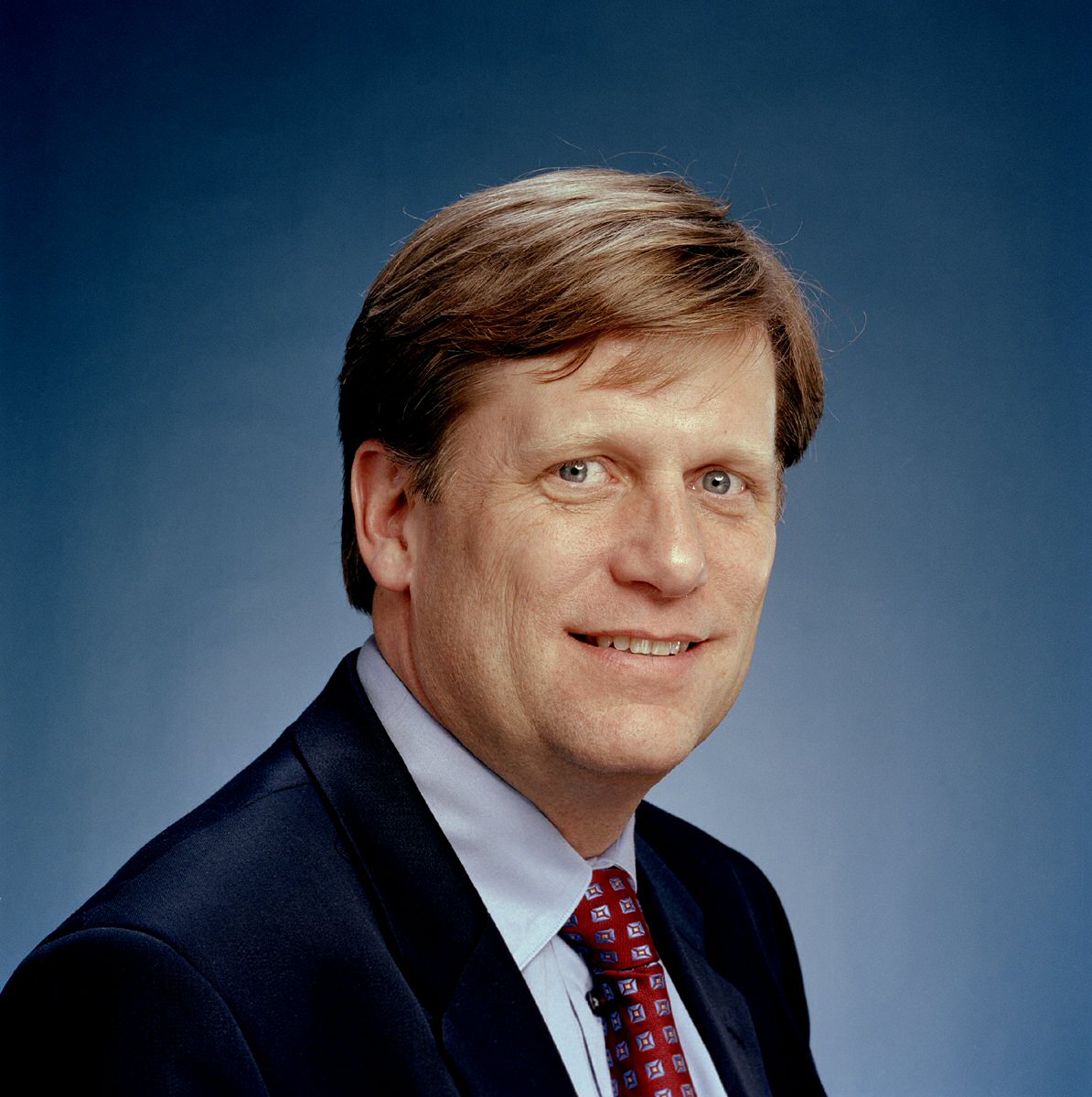
Former Senior Associate
In addition to his role at Carnegie, McFaul is Peter and Helen Bing Senior Fellow at the Hoover Institution and associate professor of political science at Stanford University.
Recent Work
Леонид Гозман, Michael McFaul
Michael McFaul, Sanja Tatic
Carnegie does not take institutional positions on public policy issues; the views represented herein are those of the author(s) and do not necessarily reflect the views of Carnegie, its staff, or its trustees.

For every ruble allocated to social policy, health, and education in 2027, double that amount is earmarked for the army, the police, and the security services.

Alexandra Prokopenko

The acknowledgment has sparked fears of a new arms race with China and Russia.

Chris O’Meara
Smaller powers cannot go it alone, but Canadian history shows that integration with the United States will not always be benign.
Paul Samson

The European Commissioner for Trade is headed to China. But after President Xi’s bridge-building visit to Washington, can a more isolated EU overcome Beijing’s stranglehold on critical raw materials? Who will blink first?

Rym Momtaz, ed.
The summit may be remembered as a fatal blunder, when Washington, Beijing, and the AI industry collectively chose ceremony over action.
Jeffrey Prescott