

Research
- +10
Rosa Balfour, Frances Z. Brown, Yasmine Farouk, …
{
  "authors": [
    "Moisés Naím"
  ],
  "type": "legacyinthemedia",
  "centerAffiliationAll": "",
  "centers": [
    "Carnegie Endowment for International Peace"
  ],
  "collections": [],
  "englishNewsletterAll": "",
  "nonEnglishNewsletterAll": "",
  "primaryCenter": "Carnegie Endowment for International Peace",
  "programAffiliation": "",
  "programs": [],
  "projects": [],
  "regions": [
    "North America",
    "United States",
    "South America",
    "China"
  ],
  "topics": [
    "Trade"
  ]
}
REQUIRED IMAGE
Source: Carnegie
Originally published in the Financial Times, on January 12, 2004
It seems neither realistic nor fashionable these days to expect summits of heads of state to yield concrete results. Thus, few expect important consequences from the current summit of western hemisphere leaders in Monterrey, Mexico. In this sense, the meeting has been a normal presidential summit. Unfortunately for Latin America, this normalcy is tragic.
Last year, for example, was normal: meagre growth, high instability, widespread poverty and nasty politics. The region's economies grew 1.5 per cent on average while the population rose 2.5 per cent, thus ensuring that 227m who live below the poverty line, or 44 per cent of the population, remain there.
It was also another year that highlighted the region's rollercoaster nature. After its catastrophic economic crash, Argentina recovered dramatically and its stock market posted the world's highest returns. Meanwhile, the Dominican Republic, Latin America's top performer since 1996, crashed. The region's exports soared by 8 per cent; but they had plummeted by 12 per cent in the previous two years. These regular booms and busts feed the political tribulations that are part of Latin America's "normalcy".
Bolivia is an extreme case that illustrates this awful combination of social conflict, mediocre economics and ugly politics. A reformist, democratically-elected president was ousted by street protests led by historically disenfranchised indigenous groups and by coca growers forced by the US war on drugs to stop cultivating their ancestral crop. These groups have acquired unprecedented political clout thanks to widespread popular frustration with reforms of the 1990s, the disrepute of traditional political parties and the globalisation that smoothly connects them with allies elsewhere. Different elements of Bolivia's predicament are found throughout Latin America. Bolivia's cocaleros, Brazil's sin terras (landless movement), Mexico's Zapatistas, Venezuela's Bolivarians and other such groups are quickly becoming the closest Latin America has had to a multinational political movement in a long time. But the instability is not just fed by political newcomers; old fashioned political conflict also continues to block reforms and fuel unrest. In Mexico, for example, a combination of poor economics, swelling political discontent and a weak president is thwarting progress.
The presence of President George W. Bush at the Monterrey summit was an attempt to signal Washington's renewed interest in the region. But the reality is that Latin America, usually seen as the US backyard, has become Atlantis, the lost continent.
But not everything is normal in Latin America. Two new trends have taken hold in the region's economic and political landscape. The first is that while the region was invisible in Washington, Latin Americans became more visible than ever in the US. Latinos are now the country's largest minority. As their numbers continue to swell, so will their political muscle.
Mr Bush's proposed immigration policy reforms are an acknowledgment that Latino voters have acquired some clout. Already, remittances from the US to Latin America exceed total foreign investment flows to the region. The Hispanic caucus in US Congress is bound to become more influential than the Black Caucus. While this alone will not make Latin America a US foreign policy priority, it will surely make it harder to neglect it.
The second trend is China's impact on Latin America's economies. While the region's exporters of manufactured goods are discovering they cannot compete against China, for exporters of raw materials and agricultural products, China has become a top client. Mexico and many Central American and Caribbean countries are seeing their maquiladoras, export processing industries, ravaged by competition from cheaper Chinese products.
In the region's southern cone, companies are benefiting from Chinese demand. Vale do Rio Doce, Brazil's largest iron ore producer, recently signed a 10-year supply contract with Shanghai Baosteel Group; Argentina's livestock and soybean producers see China as their main source of future growth; and China is now Chile's third-largest trading partner.
These two trends will not substantially change the region's legendary malignancies: inequality and poverty, dysfunctional politics and malfunctioning institutions. But they will become factors that cannot be ignored in the rethinking that Latin America desperately needs.

Distinguished Fellow
Moisés Naím is a distinguished fellow at the Carnegie Endowment for International Peace, a best-selling author, and an internationally syndicated columnist.
Recent Work



Rosa Balfour, Frances Z. Brown, Yasmine Farouk, …
Moisés Naím
Carnegie does not take institutional positions on public policy issues; the views represented herein are those of the author(s) and do not necessarily reflect the views of Carnegie, its staff, or its trustees.
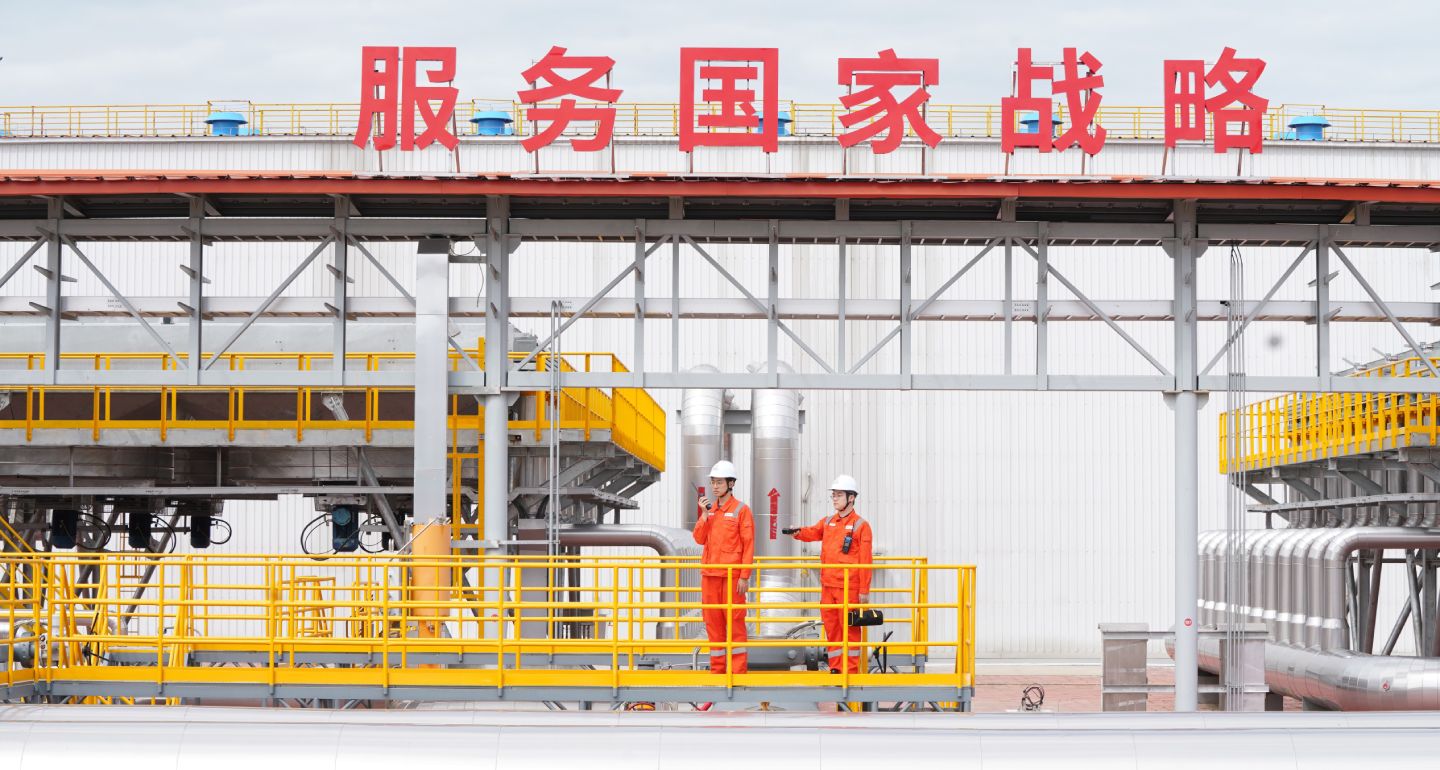
A leak of Russian gas price data helps establish that China is paying Russia far less than Central Asian countries and Gazprom’s former European customers.

Sergey Vakulenko

China’s political future will be shaped between now and next October. As the Communist Party enters its intense “campaign season” to prepare for a major political transition in 2027, reading Beijing's actions and responses may become more difficult as domestic politics weigh on its behavior more than usual.

Damien Ma

The EU can impose sanctions but struggles to enforce them without the United States. With Washington increasingly disinterested in backing European interests, the bloc must now fend for itself.


Nicu Popescu, Tiago Antunes

Rubio’s recent visit brought welcome attention, but more capital requires governance changes that may be a hard sell for regional governments.

Jennifer B. Murtazashvili

America’s foreign-policy objectives have grown more demanding while Americans have demanded greater focus on their own affairs.

Stephen Wertheim