

Other
Anders Aslund
{
  "authors": [
    "Anders Aslund"
  ],
  "type": "legacyinthemedia",
  "centerAffiliationAll": "dc",
  "centers": [
    "Carnegie Endowment for International Peace"
  ],
  "collections": [],
  "englishNewsletterAll": "ctw",
  "nonEnglishNewsletterAll": "",
  "primaryCenter": "Carnegie Endowment for International Peace",
  "programAffiliation": "russia",
  "programs": [
    "Russia and Eurasia"
  ],
  "projects": [],
  "regions": [
    "Eastern Europe",
    "Ukraine"
  ],
  "topics": [
    "Political Reform",
    "Democracy",
    "Economy",
    "Trade",
    "Foreign Policy"
  ]
}
REQUIRED IMAGE
Source: Washington Post
No event in Europe this year will be as important to the United States as the presidential election in Ukraine on Oct. 31, preceding the U.S. elections by only two days. Ukraine's democracy and geopolitical orientation are at stake.
The good news is that incumbent President Leonid Kuchma is not even attempting to run for reelection. After suspicions of his involvement in the murder of a journalist in 2000, his popularity rating plummeted and has now stabilized at 7 percent. The bad news is that the big businessmen he has helped to enrich appear determined to hold on to power by any means.
Two candidates dominate the stage: former prime minister Viktor Yushchenko and current Prime Minister Viktor Yanukovich. Yushchenko leads the broad liberal-conservative opposition bloc Our Ukraine, which holds about a quarter of the seats in Parliament. His liberal and democratic credentials are strong, and he favors stronger ties with the West.
Yanukovich springs from the Donetsk clan, the country's strongest business group. His constituency is the Ukrainian government and big business, and his geopolitical orientation is toward Russia. Remarkably, the prime minister has served two prison sentences for violent crimes.
Ukraine represents a curious disconnect between politics and economics. For the past four years, the Ukrainian economy has been booming, growing by no less than 12.7 percent during the first half of this year, following 9 percent growth in 2003. Both of the leading candidates embrace the free-market economy and private enterprise, which have generated these successes.
But the economic boom notwithstanding, only 2 percent of Ukrainians consider themselves happy, according to a recent opinion poll. The general perception is that only a handful of large cities really benefit, and few share the enormous profits. Poverty remains widespread and social services continue to deteriorate.
Politically, Ukraine is becoming more repressive by the day as the government closes down one media outlet after another on flimsy grounds ranging from licensing and tax violations to libel. Yanukovich's supporters control all national TV channels and most of the print media. The state administration is being mobilized for Yanukovich's campaign, and the state tax service is harassing businessmen who dare to support Yushchenko. In a recent mayoral election, the government side won the mayor's office by outright falsification of the election results, and it refuses to relinquish it. Yanukovich is not even prepared to sign an agreement on working for free and fair elections.
Russia's involvement in Ukraine's domestic politics is palpable. Russian President Vladimir Putin meets Kuchma virtually every month, and recently he has also done so with Yanukovich. In the past year, Putin has tied Ukraine closer to Russia through dozens of economic agreements, and Ukrainian exports to Russia have skyrocketed. Heavy-handed Russian political advisers dominate the current election campaign, and they all savage Yushchenko.
In the opinion polls, however, Yushchenko has a commanding lead. The latest poll gave him 42 percent in a runoff vote to Yanukovich's 36 percent. In spite of the risks of persecution, more businessmen are joining his camp and calling for the rule of law. During a recent trip to Kiev, I was told by Yuriy Yekhanurov, one of Yushchenko's deputies, that Yushchenko's campaign staff is convinced that Yushchenko will win the election but fear that the government side will steal it by falsifying the vote count. Alas, Yushchenko was seriously poisoned in the midst of the campaign and nearly paralyzed.
The talk in Kiev is that Ukraine may experience a velvet revolution, as Georgia did in December. The chief of Yanukovich's campaign staff has publicly accused Yushchenko's followers of plotting such a revolution. A recent opinion poll found that 84 percent believed that "citizens had the right to take protest actions to the streets if the election results were falsified."
What can the United States do to support democracy in Ukraine?
First, President Bush should declare that he considers democracy in Ukraine to be vital to both U.S. and Ukrainian interests, rather than praising Kuchma for sending 1,650 troops to Iraq.
Second, the key to post-election developments will be the assessment of whether the elections were free and fair or stolen. Ukraine has accepted international election observers, and the United States and like-minded countries should send more of them than ever before. This nation harbors a vigorous Ukrainian diaspora that could supply thousands of qualified election observers. Hard evidence from polling stations and exit polls could influence the course of Ukrainian history, especially since U.S.-financed radio stations can broadcast the findings back to the Ukrainian people.
The writer is director of the Russian and Eurasian Program at the Carnegie Endowment for International Peace.
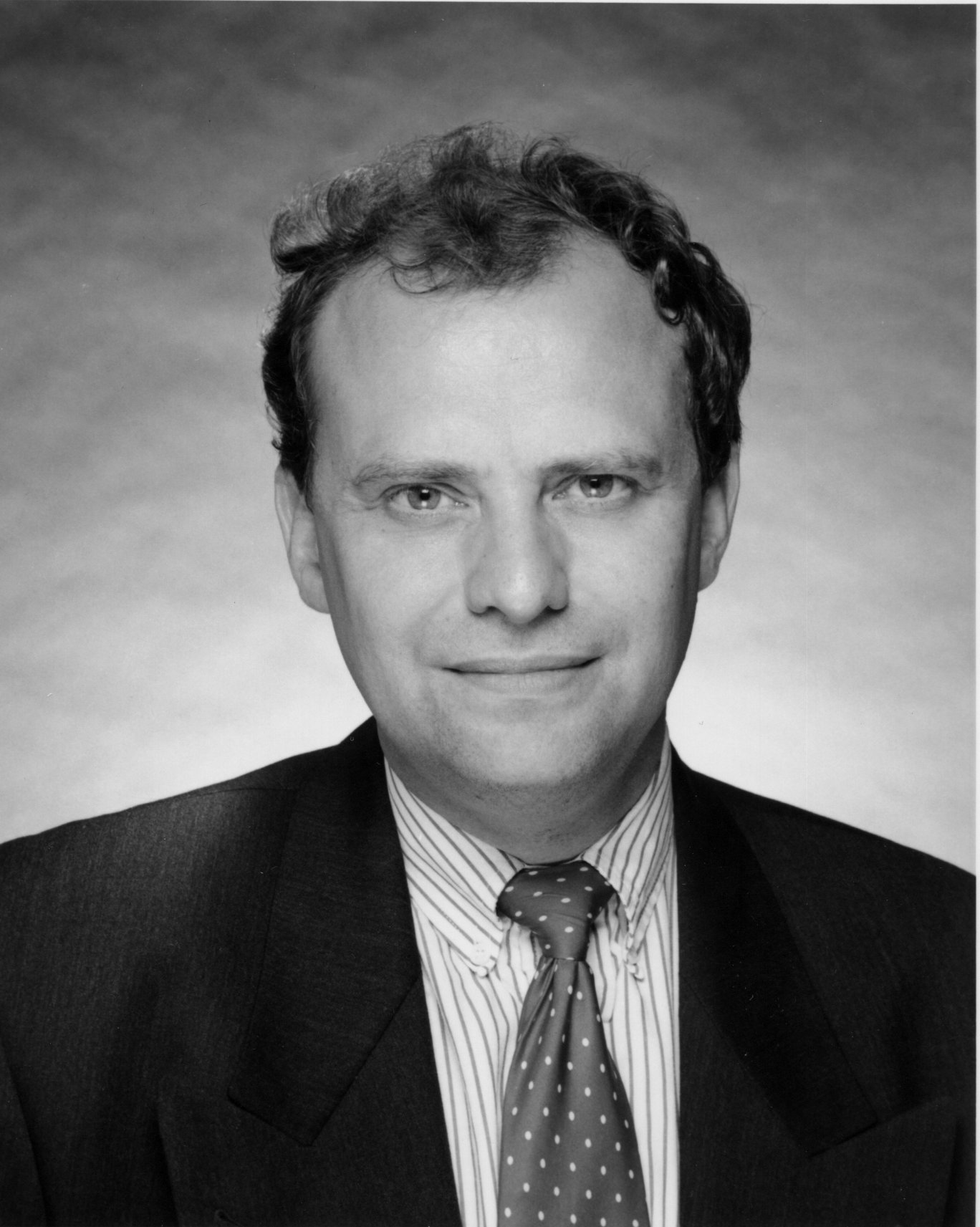
Former Senior Associate, Director, Russian and Eurasian Program
Recent Work
Anders Aslund
Anders Aslund
Carnegie does not take institutional positions on public policy issues; the views represented herein are those of the author(s) and do not necessarily reflect the views of Carnegie, its staff, or its trustees.
Reestablishing a dialogue with Moscow is not a goal in its own right. The goal is to guarantee the independence of Ukraine and the peace and security of Europe.
Arkady Moshes
Washington’s transactional foreign policy is making it indistinguishable from Beijing’s, with consequential implications for African agency.
Jane Munga
Ukraine’s increasingly confrontational posture on Belarus reflects Kyiv’s effort to shape the emerging regional order in Eastern Europe. Kyiv wants to limit European normalization with Minsk—and any future rapprochement with Russia.

Balázs Jarábik
The ruling elites in contemporary Russia are not a political class, but a community of managers who are not subject to competition or public accountability. The state is becoming an operating apparatus without any internal autonomy.

Alexandra Prokopenko
The Franco-German relationship is on the rocks again. But unlike previous moments of tension, the epochal changes on the world stage require that both step up investment in their bilateral ties.

Rym Momtaz