

Commentary
As the U.S. stumbles in its war with Iran, we are likely to see an acceleration of its disengagement from the region.
Michael Young
{
  "authors": [
    "Michael Charles Beckley"
  ],
  "type": "legacyinthemedia",
  "centerAffiliationAll": "",
  "centers": [
    "Carnegie Endowment for International Peace"
  ],
  "collections": [],
  "englishNewsletterAll": "",
  "nonEnglishNewsletterAll": "",
  "primaryCenter": "Carnegie Endowment for International Peace",
  "programAffiliation": "",
  "programs": [],
  "projects": [],
  "regions": [
    "United States",
    "Middle East",
    "Iraq"
  ],
  "topics": [
    "Political Reform",
    "Democracy",
    "Military",
    "Foreign Policy"
  ]
}
REQUIRED IMAGE
Junior Fellow Michael Beckley argues that a U.S. exit from Iraq is still years away.
Source: Weekly Standard
Speaking on Fox News on March 20, Defense Secretary Donald Rumsfeld insisted that he has no timetable for the withdrawal of American forces from
In fact, while the security situation on the ground is improving, it remains violent and chaotic. Insurgents massacre Iraqis every day, parts of the country still lack reliable supplies of electricity and water, and the process of establishing a permanent government, as heartening as it has been, could still break down into civil war. Moreover, the fledgling Iraqi security forces lack the numbers, training, and leadership to contain conflict without substantial outside assistance. In this environment, it makes no sense to believe that the elections opened the door for an early American exit. In fact, large numbers of American troops will likely be needed to secure
Many in both parties hope that increasingly self-sufficient Iraqi security forces can begin to replace coalition troops substantially within the next year or two. Despite boasting that Iraqi troops now number close to 150,000, Rumsfeld wisely refrained from supporting such wishful thinking. As an analyst with the General Accounting Office recently testified, the
No matter how many Iraqi troops are trained in the coming months, Iraqi units will only be as good as the officers leading them. As Army Brig. Gen. Carter Ham, the commander of multinational forces around
Any withdrawal of coalition forces, therefore, will depend on the establishment of a viable Iraqi chain of command, built from scratch. As Phebe Marr has pointed out, Saddam's army ran on loyalty, not military skill. Officers who did not show loyalty were passed over for promotion or purged. This loyalty-based system produced ineffective leaders who equated rank with privilege rather than responsibility. According to many American advisers in
Since simply readmitting former officers will not fill the leadership void, much of the future officer corps will need to come from today's inexperienced recruits. Training a typical soldier takes months; training a leader takes years. The current Pentagon strategy embeds
NATO countries recently pledged to bolster their small training mission, but
Even under the best-case scenario, American forces will be needed to keep the lid on conflict for many years. That may startle those who want to believe that the successful elections in
Advocates of near-term withdrawal may be right when they say this war is "unwinnable" in the sense that we cannot eradicate the insurgency. A more achievable goal is to keep the insurgency at bay, creating time and space for political progress. But until Iraqi security forces can operate independently, a full American commitment unconstrained by arbitrary timetables for withdrawal will be vital to a peaceful and democratic
Michael Charles Beckley
Carnegie Endowment
Carnegie does not take institutional positions on public policy issues; the views represented herein are those of the author(s) and do not necessarily reflect the views of Carnegie, its staff, or its trustees.

As the U.S. stumbles in its war with Iran, we are likely to see an acceleration of its disengagement from the region.

Michael Young
Why governance of rapidly evolving technology will be distributed and complex.


Stewart Patrick, Scott Singer

It should address the shortcomings of previous crisis communication efforts and adapt to the demands of frontier AI.

Lucy Luo

If the Russian-speaking community in Latvia cannot articulate their interests without being seen as disloyal, they could end up embracing a pro-Kremlin agenda.

Sergejs Potapkins
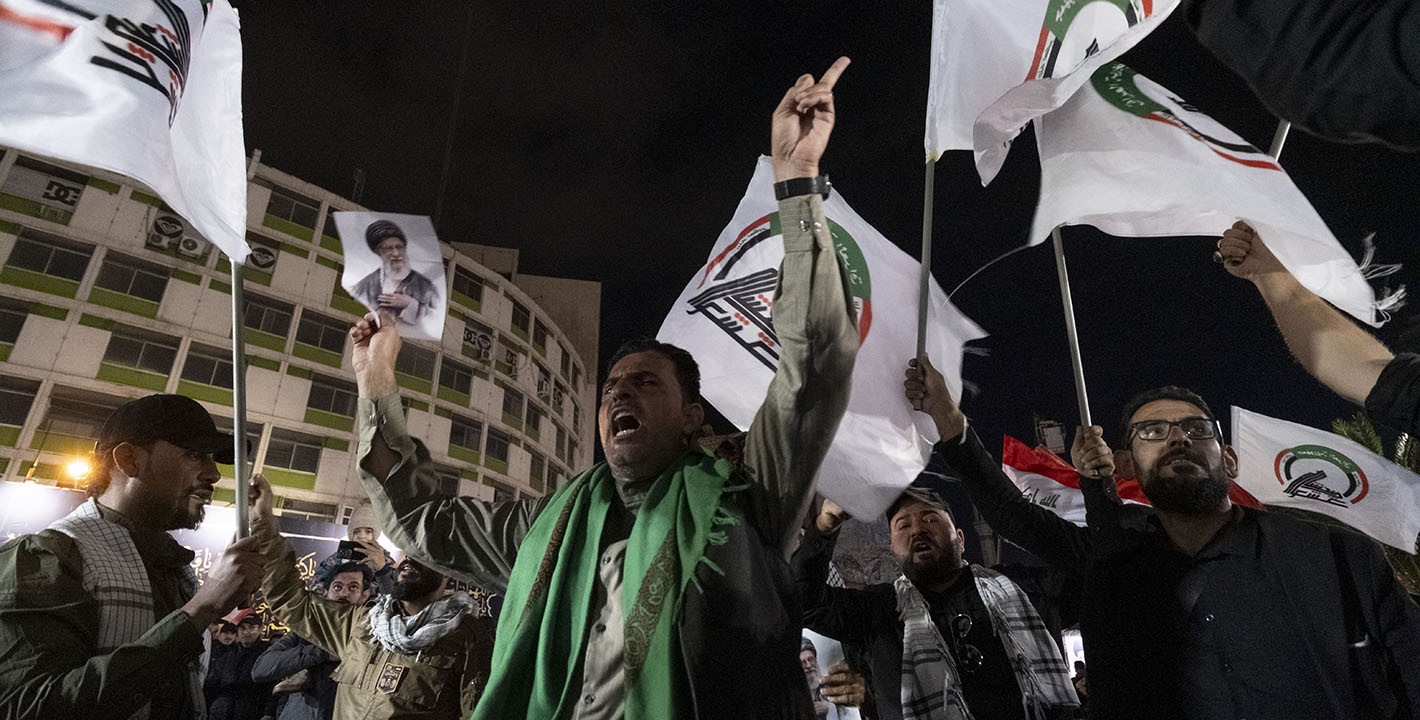
The Zaidi government’s objective to collect weapons is constrained by regional conflict, but it can take certain measures at home.
Ali Al-Mawlawi