

Article
Леонид Гозман, Michael McFaul
{
  "authors": [
    "Michael McFaul"
  ],
  "type": "legacyinthemedia",
  "centerAffiliationAll": "dc",
  "centers": [
    "Carnegie Endowment for International Peace"
  ],
  "collections": [],
  "englishNewsletterAll": "ctw",
  "nonEnglishNewsletterAll": "",
  "primaryCenter": "Carnegie Endowment for International Peace",
  "programAffiliation": "russia",
  "programs": [
    "Russia and Eurasia"
  ],
  "projects": [],
  "regions": [
    "Caucasus",
    "Russia"
  ],
  "topics": [
    "Political Reform"
  ]
}
REQUIRED IMAGE
Source: Moscow Times
As a visiting scholar at Moscow State University in the fall of 1990, I collaborated with three other academics then based at the university -- Steve Fish, Sergei Markov and Nikolai Zlobin -- to start a Russian-American discussion group on democratic politics. In various forms, our tusovka continued to meet for the next decade. Many of the participants in this discussion group are the central characters in Andrew Wilson's important new book, "Virtual Politics: Faking Democracy in the Post-Soviet World."
Our meetings in the fall of 1990 and spring of 1991 were heady and heated encounters. In retrospect, many analysts came to view this period as the "implosion" of the Soviet Union, as if innate structural forces inevitably compelled this last great empire on earth to disintegrate. At the time, however, most of us thought we were witnessing an "explosion" of unprecedented political activity, complete with charismatic new leaders, popular fronts and biweekly demonstrations on Manezh Square whose participants could be counted in the hundreds of thousands. Politics seemed actual and genuine, not virtual or fake.
In fact, politics in that last year of the Soviet Union were anything but normal; they were revolutionary. The rules of the game were ill-defined, the methods of struggle were extra-constitutional and confrontational, and the outcome of the drama was entirely uncertain. Nevertheless, after the failed August 1991 coup, and especially after the collapse of the Soviet Union later that year, we expected a new democratic era for Russian politics to begin. Our group discussions turned to topics like electoral systems, political party building, left-right divides and Western campaign techniques like door-to-door canvassing and free-media generation.
This transition to "normal" democratic politics never occurred. Instead, a variety of more mysterious political practices took root in Russia and throughout the former Soviet Union. PRshchiki, or political technologists, became the main actors in elections, not political parties. Their trade largely consisted -- and consists to this day -- of creating the illusion of normal electoral politics. As this industry grew, many of our Russian discussion-group participants, originally trained as academics, stopped trying to analyze the nonexistent institutions and organizations of a democratic Russia, and instead joined the lucrative business of staging virtual politics.
Our discussions gradually became more and more abstract, peppered with references to such vague concepts as "administrative resources" or the "party of power," and filled with innuendo about who was secretly on the Kremlin's payroll. As a Western social scientist trained to place a high premium on hard data and verifiable facts, I grew increasingly frustrated over the course of the 1990s. What was real and what was virtual was becoming impossible to decipher. To this hazy, confusing picture, Wilson adds bright and penetrating light. "Virtual Politics" is the first truly comprehensive account of the sophisticated industry of political technology that has emerged from the collapse of the Soviet Union, most profoundly in Russia and Ukraine. Wilson discusses democracy in the post-Soviet world not as it should be, but as it is. He carefully documents the wide array of methods used by political technologists, both in and out of the government, to destroy political enemies, invent pro-government parties and personalities, and even create, manipulate and control so-called opposition parties. The book is a treasure chest of details about the region's politics, which, until now, have been carefully hidden from the public.
At first glance, an American reader would find something familiar about the methods used to fake politics in Russia and Ukraine. There are similarly virtual elements to American political parties, which do not have membership cards and maintain almost no permanent offices throughout the country and very few full-time staff. K Street in Washington is filled with firms specializing in the invention of grassroots movements that pressure the government to pass legislation or stop regulation on behalf of "the people," while actually supporting corporations or special interests. As in Russia, campaign experts in the United States are also hired guns - not party officials - ready to work for anyone for the right price. Most of the successful lobbying firms in Washington have both Democrats and
Republicans on their staffs, a demonstration of their commitment to profits, not ideas. Russian employees at companies like Nikkola M or Image-Kontakt would feel very much at home in these U.S. firms. And yet, as Wilson so impressively demonstrates, the system in Russia, Ukraine and elsewhere in the region has one fundamental difference from the American model: the role of the state.
In the United States, this industry is still a private one. In Russia, it is becoming increasingly nationalized. The Kremlin has taken control of television (the main instrument of the PRshchiki), employed directly or indirectly many of the specialists in the industry and, by eliminating direct elections for governors and State Duma deputies, destroyed the main source of revenue for independent PR firms. The state authorities, to varying degrees, control nearly everything that matters. Wilson has written a book that everyone interested in post-Soviet politics must read. Paying careful attention to detail (one chapter has an amazing 220 footnotes), he unveils the names, networks and figures of a profession that is hardly ever discussed with any precision.
Yet despite his valiant efforts at fact, he is often constrained by his sources, many of which specialize in fakery and deception. During a discussion of the 2003 parliamentary campaign, for instance, we read that "estimates of United Russia's total war chest range from $400 to $500 million and even $1 billion." The sources for these numbers, however, are a fellow Western researcher and the web site www.stringer.ru, which, we learned earlier in the book, is a platform for spreading rumors and half-truths. In a passage about Vladimir Putin's victory in the 2000 presidential election, Wilson reports that "the electoral commission awarded him 52.9 percent, but the truer figure was somewhere in the high forties" without providing any documentation to support the latter claim.
There is similarly little evidence for Wilson's report that, in the 1993 parliamentary election, Zhirinovsky was given an extra 6 million votes and the Communists an extra 1.6 million. My hunch is Wilson is probably right about these claims, but credible support for these provocative assertions is weak. The absence of hard evidence in Wilson's book is a limitation that must be noted, though not dwelled upon. On the contrary, Wilson should be applauded for making as much as he does from the limited data. What he is more responsible for -- indeed, the only slightly disappointing aspect of the book -- is the blending together of all virtual politics in the region as if they work the same way everywhere. In fact, the contrasts between Russia and Ukraine are just as interesting as the continuities. When then-Ukrainian President Leonid Kuchma and his cronies made their bid to stay in power in the fall of 2004, they turned to the same tricks of virtual politics that Putin and the Kremlin had perfected. And yet, they failed. Why? Paradoxically, for a study of virtual politics and fake democracy, the book jacket shows a photo of tens of thousands of Ukrainians carrying flags on Independence Square during the Orange Revolution, as real an expression of genuine democratic politics as any in the last decade. Even if it often proves ephemeral, the phenomenon of virtual democracies losing control and allowing for expressions of real politics and genuine democracy is a topic worthy of study. The subject of Wilson's next book? I hope so.
Michael McFaul is a Hoover Fellow and professor of political science at Stanford and a nonresident senior associate at the Carnegie Endowment for International Peace.
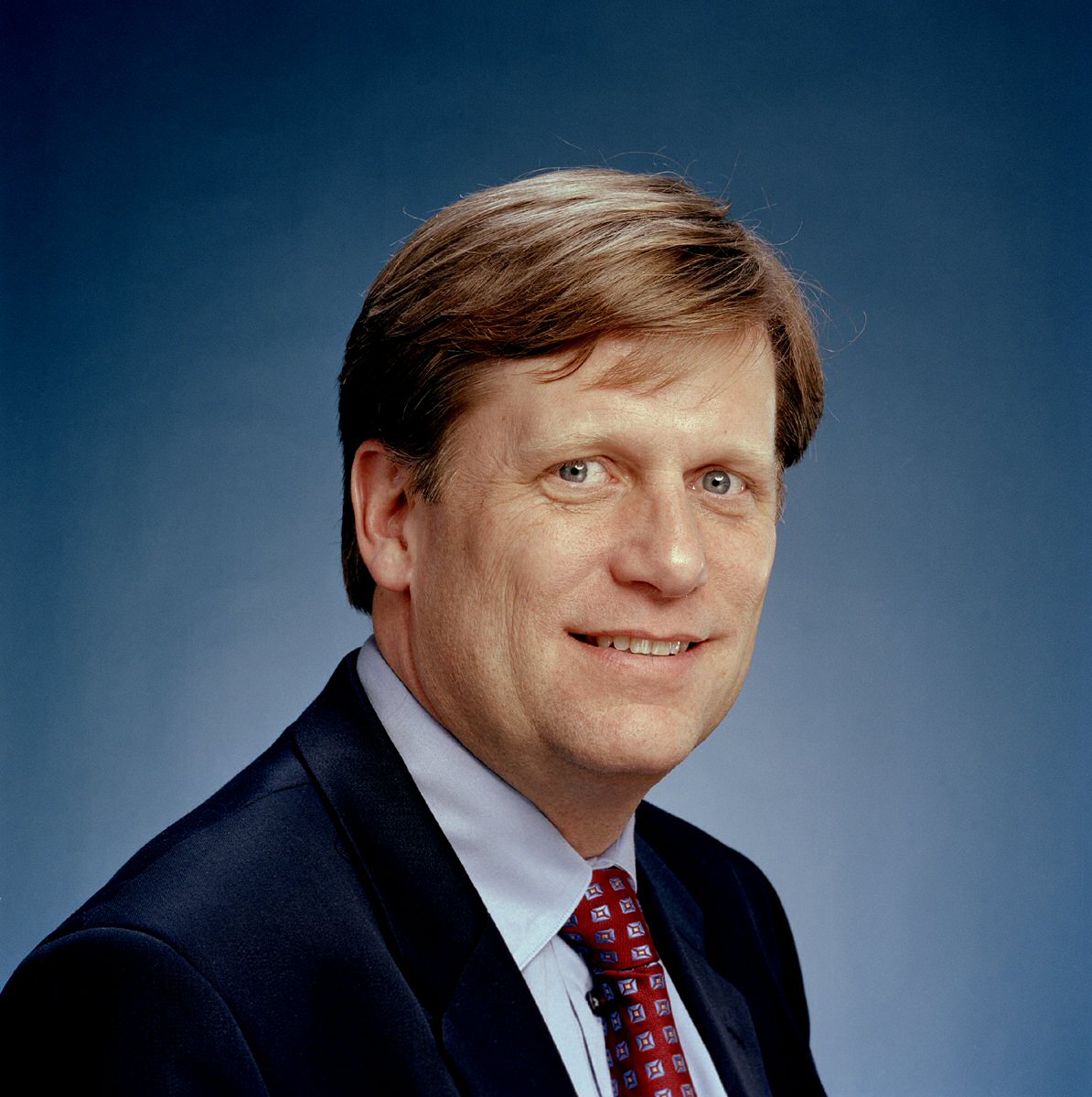
Former Senior Associate
In addition to his role at Carnegie, McFaul is Peter and Helen Bing Senior Fellow at the Hoover Institution and associate professor of political science at Stanford University.
Recent Work
Леонид Гозман, Michael McFaul
Michael McFaul, Sanja Tatic
Carnegie does not take institutional positions on public policy issues; the views represented herein are those of the author(s) and do not necessarily reflect the views of Carnegie, its staff, or its trustees.

A leak of Russian gas price data helps establish that China is paying Russia far less than Central Asian countries and Gazprom’s former European customers.

Sergey Vakulenko

China’s political future will be shaped between now and next October. As the Communist Party enters its intense “campaign season” to prepare for a major political transition in 2027, reading Beijing's actions and responses may become more difficult as domestic politics weigh on its behavior more than usual.

Damien Ma

The EU can impose sanctions but struggles to enforce them without the United States. With Washington increasingly disinterested in backing European interests, the bloc must now fend for itself.


Nicu Popescu, Tiago Antunes

Japan’s long-term security policy is driven by concerns about China, and there is little appetite for (or interest in) pursuing a confrontation with Moscow.

James D.J. Brown

Russia is testing the waters of NATO’s mutual defense clause. What do strikes in Romanian territorial waters mean for the alliance’s posture toward Moscow?

Dimitar Bechev