

Commentary
The EU can impose sanctions but struggles to enforce them without the United States. With Washington increasingly disinterested in backing European interests, the bloc must now fend for itself.
Nicu Popescu, Tiago Antunes
{
  "authors": [],
  "type": "pressRelease",
  "centerAffiliationAll": "dc",
  "centers": [
    "Carnegie Endowment for International Peace"
  ],
  "collections": [
    "U.S. Nuclear Policy"
  ],
  "englishNewsletterAll": "ctw",
  "nonEnglishNewsletterAll": "",
  "primaryCenter": "Carnegie Endowment for International Peace",
  "programAffiliation": "NPP",
  "programs": [
    "Nuclear Policy"
  ],
  "projects": [],
  "regions": [
    "North America",
    "United States",
    "Middle East",
    "Iran",
    "United Kingdom"
  ],
  "topics": [
    "Nuclear Policy",
    "Nuclear Energy"
  ]
}
REQUIRED IMAGE
FOR IMMEDIATE RELEASE: May 31, 2006
CONTACT: Jennifer Linker, +1 202/939-2372, jlinker@CarnegieEndowment.org
Welcoming this morning’s statement on Iran by Secretary Rice, Carnegie President Jessica Tuchman Mathews said:
“This is an important step, which should be welcomed by the entire world, including Iran. The new policy advances both U.S. and global security interests by responding in a calm and sensible way to Iran's invitation to dialogue. A negotiated solution is the way forward and the Iranians must stop their enrichment and reprocessing activities for talks to proceed. It makes no sense to talk while they build. Now the onus is on the Iranian regime to respond in a similarly constructive manner.”
For related analysis and commentary from the Carnegie Endowment go to www.CarnegieEndowment.org
• “Speaking to Tehran, With One Voice,” Jessica Mathews
• “Russia and the Iranian Nuclear Crisis,” Alexei Arbatov
• “The Russia Card,” Rose Gottemoeller
• “Israel Urges U.S. Diplomacy on Iran,” Ze'ev Schiff
• “Bush Should Engage Iranian President in Dialogue, Not Back Away,” George Perkovich
• “Is the Nuclear Non-proliferation Regime in Crisis?,” Pierre Goldschmidt
• “Options Available to the United States to Counter a Nuclear Iran,” George Perkovich
For commentary on the Iranian nuclear crisis from Carnegie experts based in Washington, DC, or Moscow please contact:
Peter Reid
Vice President for Communications (Washington)
Tel: +1 202 939 2319
preid@CarnegieEndowment.org
Jennifer Linker
Communications Manager (Washington)
Tel: +1 202 939 2372
jlinker@CarnegieEndowment.org
Natalia Bubnova
Deputy Director of Communications (Moscow)
Tel: + 7 495 935-8904 (ext. 230)
Natalia.Bubnova@carnegie.ru
###
Carnegie does not take institutional positions on public policy issues; the views represented herein are those of the author(s) and do not necessarily reflect the views of Carnegie, its staff, or its trustees.

The EU can impose sanctions but struggles to enforce them without the United States. With Washington increasingly disinterested in backing European interests, the bloc must now fend for itself.


Nicu Popescu, Tiago Antunes

Rubio’s recent visit brought welcome attention, but more capital requires governance changes that may be a hard sell for regional governments.

Jennifer B. Murtazashvili

America’s foreign-policy objectives have grown more demanding while Americans have demanded greater focus on their own affairs.

Stephen Wertheim

China has showcased its engineering prowess with small modular reactor demonstration projects. But turning these technological achievements into commercial success will be a greater challenge.

Tong Zhao
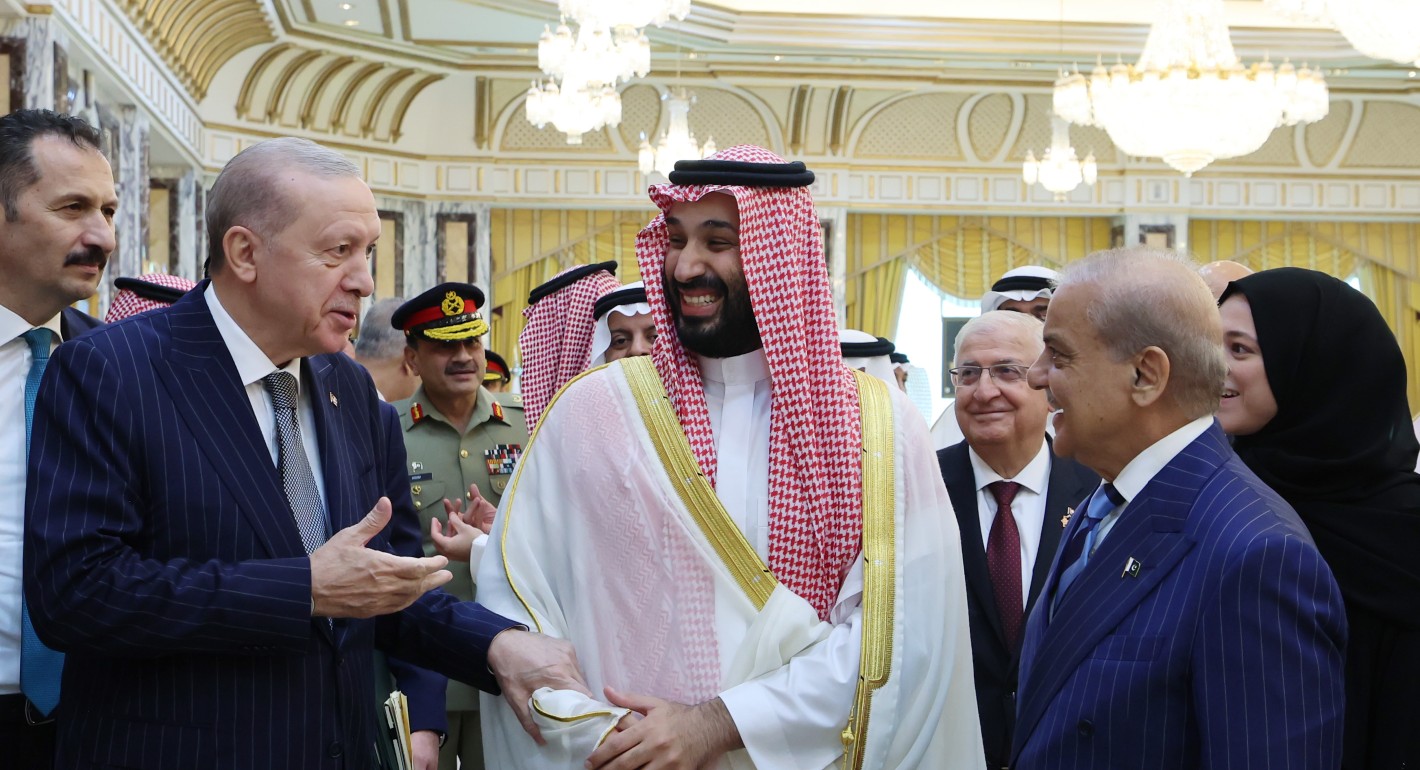
Why Pakistan, Saudi Arabia, and Turkey are joining forces on regional security.


Alper Coşkun, Amr Hamzawy