

Paper
Paul Salem
{
  "authors": [
    "Paul Salem"
  ],
  "type": "testimony",
  "centerAffiliationAll": "dc",
  "centers": [
    "Carnegie Endowment for International Peace",
    "Malcolm H. Kerr Carnegie Middle East Center"
  ],
  "collections": [],
  "englishNewsletterAll": "democracy",
  "nonEnglishNewsletterAll": "",
  "primaryCenter": "Malcolm H. Kerr Carnegie Middle East Center",
  "programAffiliation": "DCG",
  "programs": [
    "Democracy, Conflict, and Governance",
    "Middle East"
  ],
  "projects": [],
  "regions": [
    "Middle East",
    "Israel",
    "Lebanon"
  ],
  "topics": [
    "Political Reform",
    "Democracy",
    "Security",
    "Military",
    "Foreign Policy"
  ]
}
Source: Getty
Through the efforts of the Lebanese government and the international community, the war with Israel was brought to a negotiated end through UN Resolution 1701 that lays the foundation for lasting security and stability in and around Lebanon. 1701 provides a great opportunity to consolidate a secure, democratic and prosperous Lebanon
Source: US Senate Foreign Relations Committee Hearing

Lebanon today stands on the threshold of a new era. After the devastation of war, comes the opportunity to secure its borders, reform its democratic institutions, and relaunch its once dynamic economy. The challenges before the Lebanese government are numerous:
At the security level, the deployment of the Lebanese armed forces--with essential support from the UNIFIL--to reclaim control of the country’s land, sea and air borders, puts back in place the essential cornerstone of Lebanese statehood and reverses the reality of four decades in which the state did not control the borders. The Lebanese government must consolidate this move by continuing to strengthen the armed forces and maintaining the national political support and will that is essential to their success. Securing Lebanon’s borders from outside interference helps secure Lebanon’s internal unity; and that unity, in turn, stabilizes the country and contributes to the stability of the region.
The government still faces a challenge in securing the other cornerstone of statehood, which is a monopoly on armed force. The disarmament of all non-governmental armed groups in Lebanon is a basic tenet of the Taif Agreement of 1989 on which Lebanon’s post civil war consensus has been built; it was also reiterated in resolutions 1559 and 1701. The disarmament of the remaining militias in Lebanon--Hizbullah and the armed Palestinian groups--was high on the agenda of the National Dialogue meetings that were taking place in Lebanon until this past June. Agreement was reached on disarming Palestinian groups that are situated outside the Palestinian camps, but talks broke down before agreement could be reached on the full disarmament of Palestinian groups or Hizbullah.
The decommissioning of Hizbullah, like the decommissioning of the IRA, is possible but is also a complicated and mainly political challenge. Hizbullah is the principal party of the Shiite community in Lebanon and is represented in Parliament and government, and as a political party raises valid points about defense of the south, the effectiveness of the state, foreign policy, social justice and welfare, and the share of the Shiite community in government. While weaning Hizbullah away from its military role and its over-dependence on Iran, the government must answer some of the concerns of the community Hizbullah represents through beefing up the Lebanese army so it can truly promise defense and security to the long-suffering inhabitants of south Lebanon, and through wider partnership of the Shiite community in government, and a more efficient and less corrupt state which can deliver development beyond Beirut, and prosperity beyond the upper middle class.
The challenge is to consolidate security by moving ahead with urgently needed political reforms. These would include the passage of a new electoral law (a draft of which was already presented in June by the government’s own-appointed National Electoral Commission), the passage of a new administrative decentralization law, the consolidation of the constitutional court and the judiciary, as well as serious initiatives to increase efficiency in the civil service and combat political and bureaucratic corruption. It would also include reaching out to the Shiite community, in this hour of their greatest distress, as full partners in government, within the parameters of this reborn sovereign, independent and united Lebanon.
Prime Minister Fouad Siniora and speaker of Parliament Nabih Berri have declared their commitment to this process; these words must be turned into deeds in government and in Parliament.
In terms of relief, reconstruction and economic revival, the challenges are clear and urgent. Although it was slow in providing immediate relief, the government has moved quickly in assessing the massive damages, clearing away rubble, rebuilding roads and bridges, and setting up a mechanism to provide assistance for citizens to rebuild homes and businesses, and organizing aid. The Arab and international community, including the united states, has been extremely generous in extending reconstruction aid to Lebanon. The challenge before the government is managing reconstruction quickly and efficiently, and avoiding the waste and corruption that plagued the post civil war reconstruction process in the 1990s. In terms of reviving the economy, Lebanon does not need aid, it simply needs the renewal of faith in Lebanon from among investors, businesses and tourists. This faith was coming back quickly before this latest war; it can be recaptured again.
Beyond Lebanon, the US and the international community have an interest to stand behind the full and robust implementation of Resolution 1701: in supporting the Lebanese state, the Lebanese armed forces, UNIFIL, and the reconstruction process. More importantly, the international community must guard against the unraveling of 1701 by trying to ensure that none of Lebanon’s neighbors—all of whom have accepted 1701—act to break it. A despondent Israel, concerned about its army’s loss of prestige, should be dissuaded from launching any further attacks simply to reassert its superiority. A cornered Syrian government, fearful of its loss of influence and an ongoing UN investigation, should be coaxed on the road to peace not war. And regarding Iran, regional stability would be better served through strong multilateral diplomacy to deal with Iran’s nuclear ambitions, rather than war.
A stable and peaceful Lebanon can contribute to a stable and peaceful region; but an explosive region will sooner or later come back to destroy Lebanon. Resolution 1701 is an important building block for peace in the region; but it must be buttressed by further negotiations and further agreements in the region. The Arab countries unanimously declared their commitment to full peace with Israel in the Beirut summit of 2002. Syria, even today, has indicated its interest in peace in exchange for its occupied land in the Golan.
Making peace will not be, and never is easy; but waging perpetual war is not a viable alternative. It is my view that the United States and the international community should build on the momentum of 1701 and should bring their immense capacities and resources to bear—not on waging another war—but on building a formidable alliance to bring about a negotiated, just and lasting end to the Arab-Israeli conflict.
That objective is within our reach. Lebanon needs it; the region needs it; the world needs it. The bible says, Blessed are the Peacemakers. Indeed, let all men and women of good faith, in this august Senate and in this nation, turn their energies to building peace. Let us restart this century anew; not as a century of conflict and war, as the perpetrators of September 11 wanted it, but as a century of peace and prosperity, as all good people of the world--Arab and American--Muslim, Christian and Jew--want it.
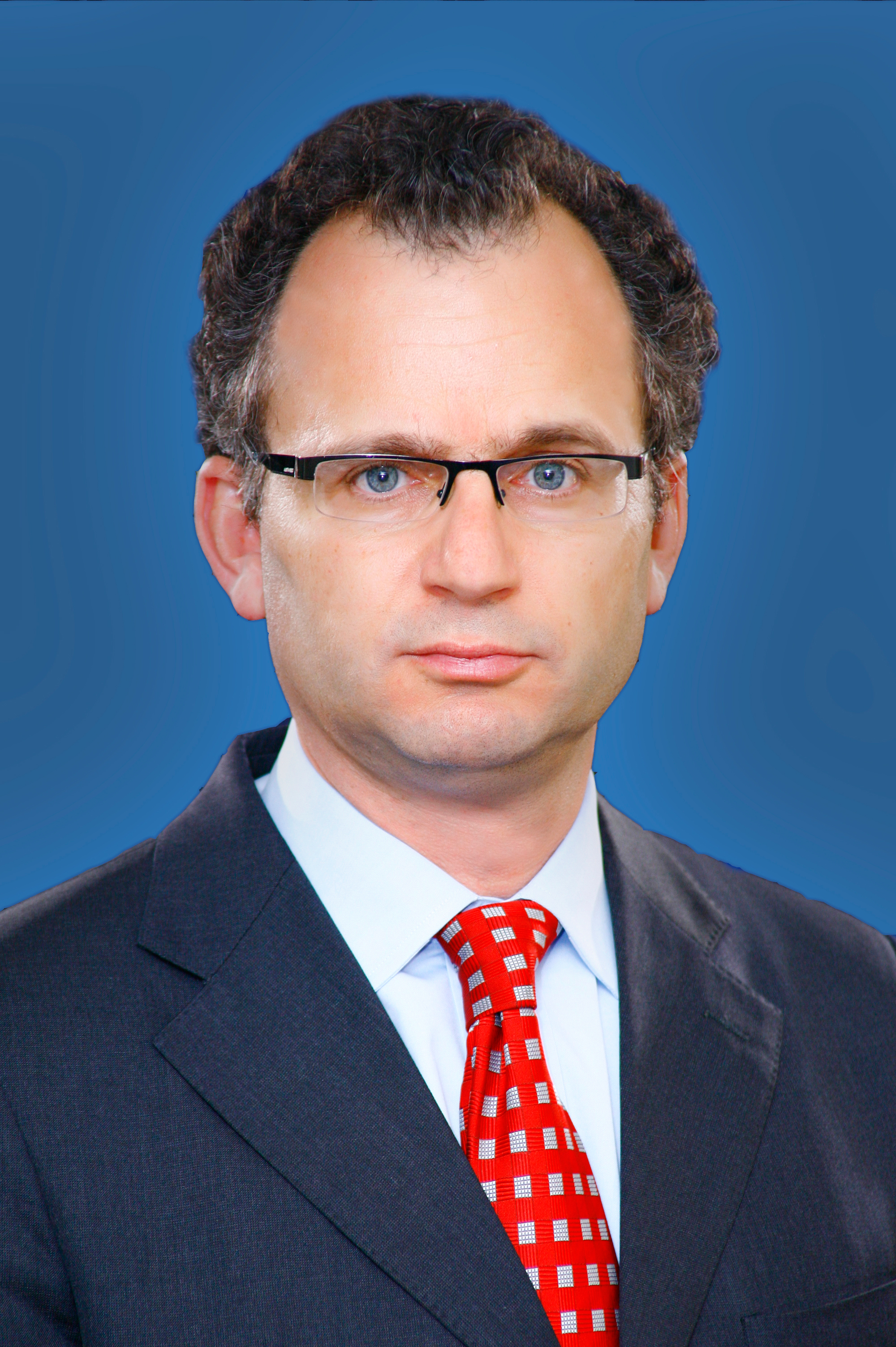
Senior Fellow at the Middle East Institute
Paul Salem is a senior fellow at the Middle East Institute.
Recent Work
Paul Salem
Paul Salem
Carnegie does not take institutional positions on public policy issues; the views represented herein are those of the author(s) and do not necessarily reflect the views of Carnegie, its staff, or its trustees.

Despite a new textbook, an influx of Russian teachers and managers, and an end to the teaching of Ukrainian, the Kremlin is unlikely to have “reprogrammed” locals.

Konstantin Skorkin
Fatima El Mansouri is the country’s first female prime minister. She’s also a privileged insider in a largely ceremonial position.

Sarah Yerkes

The acknowledgment has sparked fears of a new arms race with China and Russia.

Chris O’Meara

Smaller powers cannot go it alone, but Canadian history shows that integration with the United States will not always be benign.
Paul Samson

The European Commissioner for Trade is headed to China. But after President Xi’s bridge-building visit to Washington, can a more isolated EU overcome Beijing’s stranglehold on critical raw materials? Who will blink first?

Rym Momtaz, ed.