

Commentary
Maria Lipman
{
  "authors": [
    "Maria Lipman"
  ],
  "type": "legacyinthemedia",
  "centerAffiliationAll": "",
  "centers": [
    "Carnegie Endowment for International Peace",
    "Carnegie Russia Eurasia Center"
  ],
  "collections": [],
  "englishNewsletterAll": "",
  "nonEnglishNewsletterAll": "",
  "primaryCenter": "Carnegie Russia Eurasia Center",
  "programAffiliation": "",
  "programs": [],
  "projects": [],
  "regions": [
    "Central Asia",
    "Turkmenistan"
  ],
  "topics": [
    "Political Reform",
    "Economy",
    "Trade"
  ]
}
Source: Getty
Although the official statement yesterday on Turkmenistan's president spoke of his "divine foresight," not even this dictator could foresee his own death or what will happen to his country afterward.
Source: The Washington Post

Saparmurad Niyazov, who died unexpectedly yesterday after a heart attack, was a tyrant par excellence. He presided over a closed and repressive regime as uncontested master of the Turkmen people. Those who dared challenge his absolute power were arrested and tortured, then sentenced to long prison terms. Any sign of dissent was fiercely suppressed.
Among his more recent victims were two journalists who worked for foreign news outlets and one human rights activist. Ogulsapar Muradova, 58, who worked for Radio Free Europe/Radio Liberty, died in prison. Her body showed obvious signs of torture.
Niyazov was the last communist leader of Turkmenistan when it was still part of the Soviet Union. He inherited his country after it was suddenly transformed into an independent state upon the collapse of the U.S.S.R. 15 years ago. He proclaimed himself Turkmenbashi, Father of All Turkmen, and began reshaping his land according to his whims.
The result was that Turkmenistan was plunged into the Middle Ages. Niyazov closed theaters, libraries and newspapers. He limited access to education, travel and medical services. In an abrupt move last year, he ordered that all hospitals be closed except those in the Turkmen capital, Ashgabat. He dramatically cut pensions to the elderly. Houses of those suspected of disloyalty were routinely torn down.
State-controlled media and government officials eulogized the Father of All Turkmen for his loving care for his people. Statues and portraits of him are in the streets of Turkmen towns, many of them renamed after himself and his mother. A gigantic golden statue of Niyazov erected in Ashgabat is equipped with a mechanism ensuring that the Turkmen leader is always facing the sun.
Turkmenbashi authored a book titled "Ruhnama" ("Spirituality") and ordered that all Turkmen schoolchildren, college students and government officials and civil servants study it thoroughly. As befits a divine leader, he claimed to command nature itself. One report has it that he demanded that a crop be harvested early because he'd become tired holding back the rain.
Turkmenbashi renamed months and days of the week and redefined measures of human age, which he subdivided into special periods of his own invention -- at 61 he entered the period of "spiritual greatness." He had his hair dyed black and was not to enter "old age" until he reached 85.
He died at 66, and the immediate future of his country is in the hands of his inner circle. But whoever succeeds Turkmenbashi will have a hard time establishing his own stature and defining his legitimacy, whether it is that of a popularly recognized ruler or the winner of a power struggle.
In fact, the struggle seems inevitable. Niyazov's regime implied that he was Turkmenistan's ruler for eternity, and any plans for succession were simply ruled out. Just as it was after Stalin's death, members of the leader's inner circle must be seized by fear and deep distrust of each other. Some of the Turkmen officials who had earlier fled abroad to avoid repression are talking about coming back, further aggravating the struggle. Chances are that this fight will not be contained within the elites but that it will spill over and turn into popular unrest.
In spite of Turkmenistan's sinister regime, world players -- Russia first and foremost -- have shown great interest in the country because of its rich resources, especially natural gas. Turkmenbashi was a difficult partner for Vladimir Putin -- whimsical and disrespectful, even defiant at times. Under his rule, Turkmen citizens who had Russian passports were commonly subjected to harassment. But Turkmenistan's gas plays a key role in Putin's policy of using energy as a tool of political influence, and so he put up with Niyazov's unruly behavior. (Right now Russia buys Turkmen gas wholesale and resells it. Observers are already warning that a destabilization of Turkmenistan might affect its gas supplies and, consequently, Russia's.)
Since Central Asia has increasingly become an area of rivalry between Russia and the United States, the U.S. government hasn't been very demanding with regard to Niyazov's rule, either. And the Turkmen president eagerly took advantage of the U.S.-Russia rivalry. He agreed to harbor a U.S. military base after it was driven out of Uzbekistan, a favor that ensured that the U.S. administration would show tolerance for blatant abuses of human rights in Turkmenistan, regardless of President Bush's proclaimed mission of bringing freedom and democracy to the world.
Niyazov lived in self-isolation, rarely leaving his country and never binding himself by any alliances. His successor will hardly be able to stay so distanced. Turkmenistan's resources are an obvious source of power, and in the fight to control them, members of the Turkmen elite sooner or later will be tempted to look abroad for backing. The stakes in this geopolitical game could be quite high. For Russia, having a reliable and more compliant partner in Turkmenistan would mean a significant consolidation of its energy weapon, as well as its position vis-a-vis former Soviet states.
One would hope that change will at least improve somewhat the situation of the Turkmen people. But with the balance of power in Central Asia at stake, it's unlikely that human rights abuses will be of major concern to the contestants in this tug-of-war.
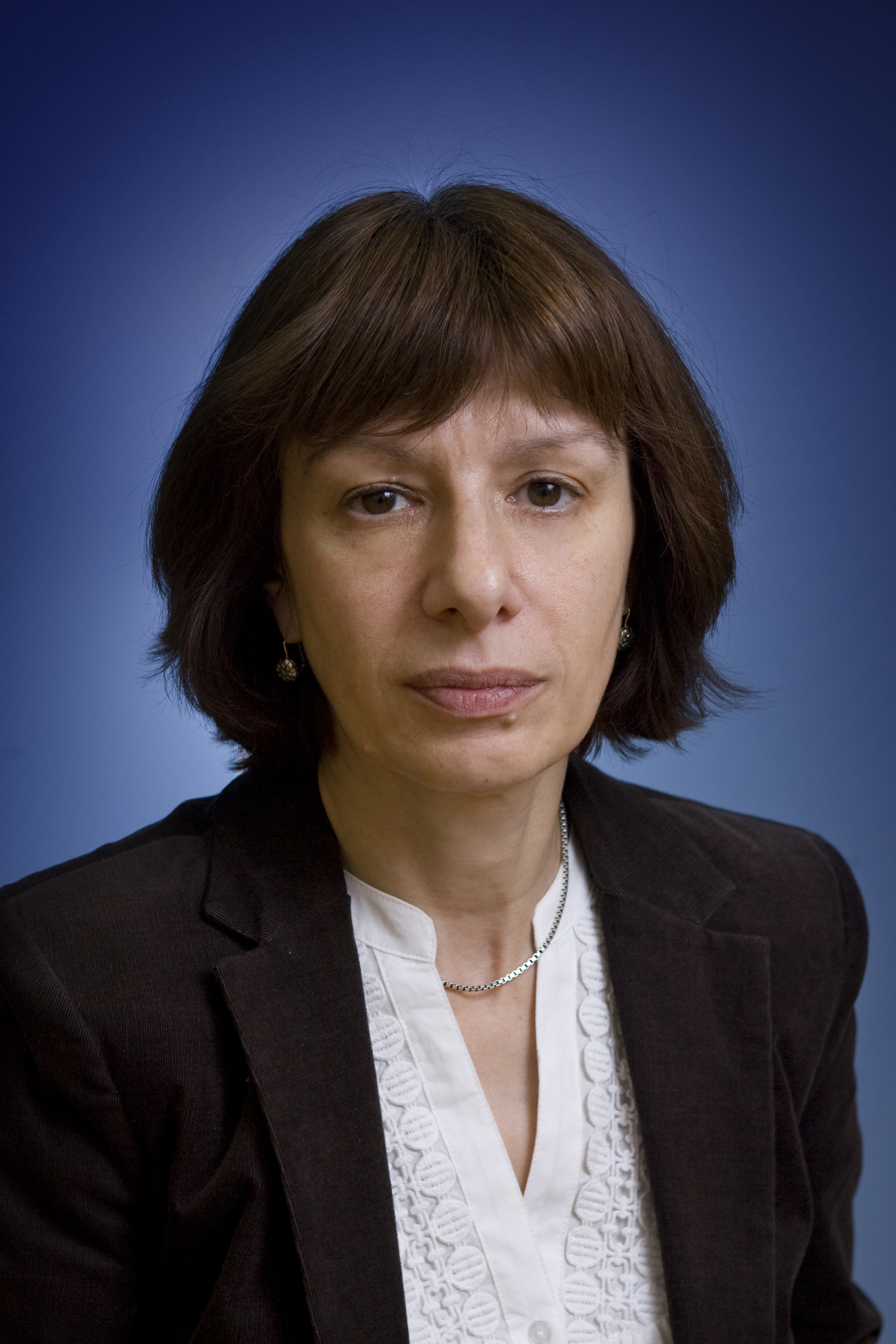
Former Scholar in Residence, Society and Regions Program, Editor in Chief, Pro et Contra, Moscow Center
Lipman was the editor in chief of the Pro et Contra journal, published by the Carnegie Moscow Center. She was also the expert of the Carnegie Moscow Center’s Society and Regions Program.
Recent Work
Maria Lipman
Maria Lipman
Carnegie does not take institutional positions on public policy issues; the views represented herein are those of the author(s) and do not necessarily reflect the views of Carnegie, its staff, or its trustees.

A summer of escalation in the Black Sea has hurt Ukraine economically and is exacerbating world food security. A truce is needed—as is a broader reframing of Europe’s Ukraine strategy.

Thomas de Waal

If the Russian-speaking community in Latvia cannot articulate their interests without being seen as disloyal, they could end up embracing a pro-Kremlin agenda.

Sergejs Potapkins

Russia’s ruling party would have benefited from Putin appearing as its distant patron, but as an active frontman imposing his views on the public, he has done nothing but harm both the party’s election campaign and the ruling system overall.

Andrey Pertsev
The Bureau of Industry and Security needs to adjust its focus and practices to maintain its position as the U.S. government’s primary champion of international technological competition.
Geoffrey Irving

Depleted financial reserves and a shrinking tax base mean it is no longer possible to simultaneously deliver high defense spending, price stability, and economic growth.

Alexandra Prokopenko