

Commentary
It should address the shortcomings of previous crisis communication efforts and adapt to the demands of frontier AI.
Lucy Luo
{
  "authors": [
    "Nikolai Petrov"
  ],
  "type": "legacyinthemedia",
  "centerAffiliationAll": "dc",
  "centers": [
    "Carnegie Endowment for International Peace",
    "Carnegie Europe"
  ],
  "collections": [],
  "englishNewsletterAll": "ctw",
  "nonEnglishNewsletterAll": "",
  "primaryCenter": "Carnegie Endowment for International Peace",
  "programAffiliation": "russia",
  "programs": [
    "Russia and Eurasia"
  ],
  "projects": [],
  "regions": [
    "Caucasus",
    "Russia",
    "Eastern Europe",
    "Belarus",
    "Europe"
  ],
  "topics": [
    "Political Reform",
    "Security",
    "Foreign Policy"
  ]
}
Source: Getty
The intense personal conflict between Putin and Belarussian President Lukashenko has deepened. The underlying causes have existed for some time. There are two explanations as to why problems have erupted now. One is that the Kremlin lost patience with Lukashenko's insolence. The second is that Russian leaders want to eliminate this obstacle before Putin's successor comes to power.
Source: Moscow Times

Although the conflict has only now degenerated into an open public conflict, the underlying causes have existed for some time. There are two explanations as to why problems have erupted now. One is that the Kremlin finally lost patience with Lukashenko's constant insolence. The second is that Russian leaders want to eliminate this obstacle now, before Putin's successor comes to power.
A combination of these two theories lets us view this conflict through the prism of the struggle for power in Russia. President Boris Yeltsin first suggested a Belarus-Russia union in an effort to boost his chances for re-election in 1996. The idea gained new impetus ahead of the 2000 election, and the accompanying prospect of transferring power to Yeltsin's successor and a number of different approaches to unification were considered.
Putin won both in 2000 and 2004, and we now stand on the eve of a new election and the transfer of power from a strong and popular president to someone else. There is an absence of any politicians independent of the Kremlin who can contend seriously for the presidency. Time is also running out for the promotion of new candidates, so the shortlist of hopefuls for the office will soon be effectively closed. Everything seems to be under control.
Lukashenko, who could come out in favor of reviving the unification project and present himself as a candidate to head the coalition of anti-Western powers, is the only remaining loose end. He has a positive image with many Russians, particularly with those in the regions. Lukashenko built a socialist-oriented government, preserved Soviet-era industry and agriculture, held corruption in check, spoke his mind to Western powers and hasn't been unduly influenced by oligarchs.
A Belarus-Russia union would seem to be unfeasible, given the enormous difference in the economic potentials of the two countries and the differences in the form of their governments. Political elites in Moscow can't imagine themselves being placed on the same footing as those in Minsk, and can't think of Belarus becoming anything more than a Russian region. When Tatarstan declared in the mid-1990s that it would demand special status if Belarus were granted a special arrangement within Russia, it demonstrated just how problematic this would be.
Having had a taste of sovereignty, Belarus would never be willing to relinquish it under any leader. So the only possible chance for the union would be if the leader of the smaller country, Belarus, ended up as the leader of both.
Putin already has two semi-official successors who, with the help of huge PR campaigns, lead all other possible candidates in political popularity ratings.
Lukashenko can't seriously be considered as a competitor for Putin, and this is part of the cause of the personal enmity he feels toward his Russian colleague. Under Putin's patronage, nevertheless, Lukashenko has also been protected from the emergence of any serious contender for the presidency of Belarus. But Lukashenko is a strong and experienced populist politician who can generate popularity with far fewer resources at hand than those available to Putin. He can compete effectively for popularity -- and not just in Belarus -- and would have a real advantage over any newcomer emerging from under Putin's wing.
During the Yeltsin era, Lukashenko was perceived as a strong and popular candidate among Russia's political elite. He constantly traveled throughout Russia, establishing direct contacts with regional leaders. The contrast between Lukashenko and the less agile and less popular Yeltsin was striking, provoking Yeltsin's jealousy. And although the Kremlin ultimately prohibited Lukashenko from traveling around Russia, the contacts he made still exist. To this day, Minsk willingly plays host to Russian leaders, including those from the regions.
Of course, little mention is made of Lukashenko's popularity among both the general population and political elites in Russia, but evidence that it exists can be seen in the current conflict and the reactions from powerful politicians within nationalist and Communist blocs. The reactions are not anti-Putin; they are pro-Lukashenko.
Even with the most recent energy agreement, this logic would suggest that the conflict will continue and will be a fight to the death. It can end only with the humiliation and open failure of one of the two political opponents.
Nikolai Petrov
Carnegie does not take institutional positions on public policy issues; the views represented herein are those of the author(s) and do not necessarily reflect the views of Carnegie, its staff, or its trustees.

It should address the shortcomings of previous crisis communication efforts and adapt to the demands of frontier AI.

Lucy Luo

If the Russian-speaking community in Latvia cannot articulate their interests without being seen as disloyal, they could end up embracing a pro-Kremlin agenda.

Sergejs Potapkins
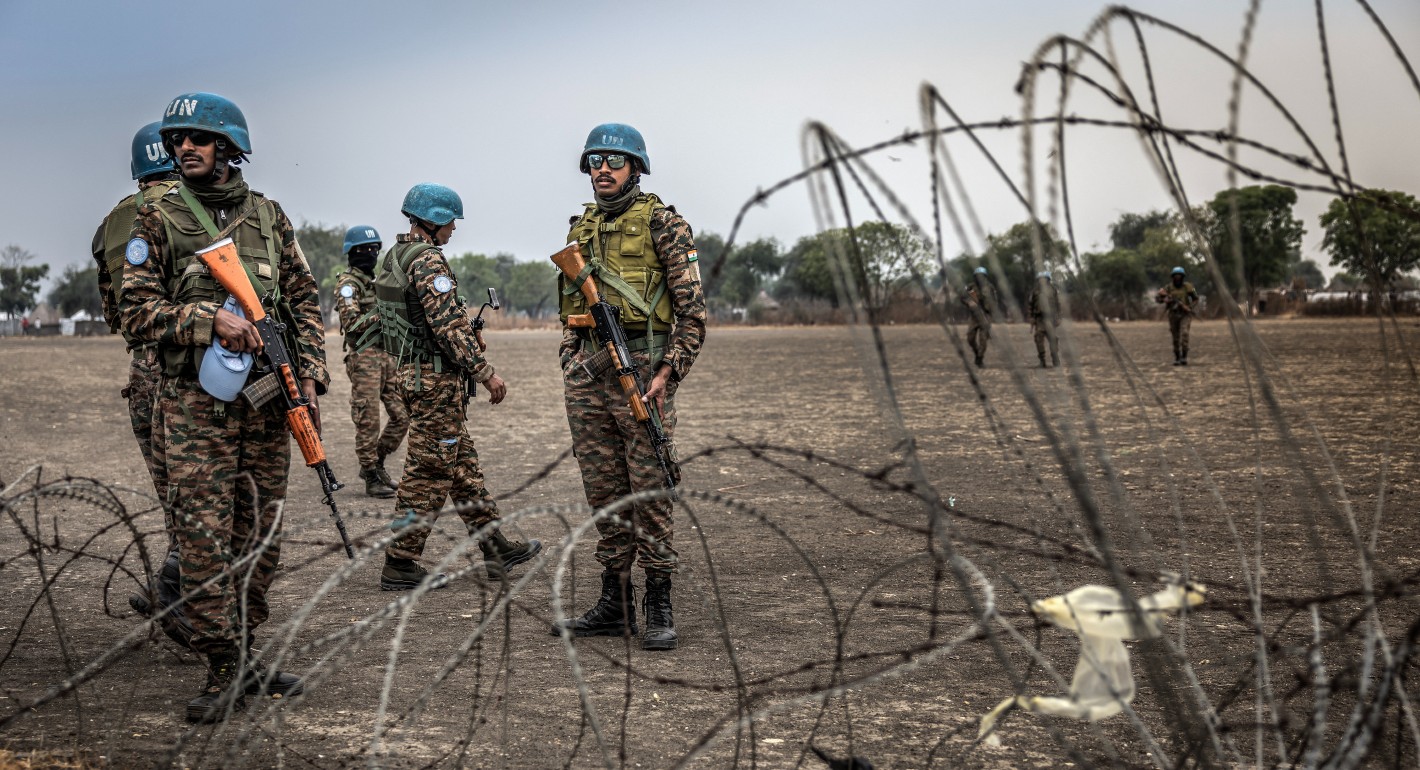
Washington’s decision to support some UN functions while letting others wither is pulling the organization apart at the seams.

Stewart Patrick, Theodore Zaritsky

Are Germany’s economic, industrial, and political struggles becoming a liability for the EU’s ability to rise to the geopolitical moment?

Rym Momtaz, ed.

Russia’s ruling party would have benefited from Putin appearing as its distant patron, but as an active frontman imposing his views on the public, he has done nothing but harm both the party’s election campaign and the ruling system overall.

Andrey Pertsev