

Q&A
- +2
Judy Dempsey, Alexander Gabuev, Rose Gottemoeller, …
{
  "authors": [
    "Rose Gottemoeller"
  ],
  "type": "legacyinthemedia",
  "centerAffiliationAll": "dc",
  "centers": [
    "Carnegie Endowment for International Peace"
  ],
  "collections": [],
  "englishNewsletterAll": "ctw",
  "nonEnglishNewsletterAll": "",
  "primaryCenter": "Carnegie Endowment for International Peace",
  "programAffiliation": "russia",
  "programs": [
    "Russia and Eurasia"
  ],
  "projects": [],
  "regions": [
    "Caucasus",
    "Russia"
  ],
  "topics": [
    "Foreign Policy",
    "Nuclear Policy"
  ]
}
Source: Getty
President Vladimir Putin has sharply criticized the United States and NATO and suspended Russian participation in the Conventional Forces in Europe Treaty. Russians are clearly frustrated with what they perceive to be a lack of respect for their concerns, but Putin's omissions are important clues to Russian tactics in this scrap with the United States.
Source: The New York Times

The trend started with his Feb. 10th speech in Munich, and in Moscow on April 26th his annual address to Parliament carried it forward. He railed against foreigners trying to change the economic and political system, even the culture, of the Russian Federation and called for a new law to prevent such imprecations. He also suspended Russian participation in a key arms- control agreement, the Conventional Forces in Europe treaty.
This line of attack has been difficult to stomach because it seems so unjustified. Russians are clearly frustrated with what they perceive to be a lack of respect for their concerns, especially regarding the proposed deployment of American missile defenses in Poland and the Czech Republic. But to insist that the United States and NATO are the enemy?
The argument contradicts Russia's own interests, never mind that it has little link to reality.
But the tough dog didn't bark on every subject, and the omissions are important clues to Russian tactics in this junkyard scrap with the United States.
Putin had little to say, for example, about the defense budget and procurement of high-technology weapon systems. Instead, he focused on providing apartments for the troops.
In the 2004 election year, Putin flew in fighter planes and went to sea on nuclear submarines, promising the armed forces a range of new, modern weapons. It was his way of cementing his authority within the Ministry of Defense. Nowadays, with his authority well in place, he can afford to promise apartments to the troops and say no more.
Another issue he left unaddressed was the Intermediate-Range Nuclear Forces Treaty. For over a year, Russian military spokesmen have been threatening to withdraw from this treaty, often as a response to United States missile defenses but sometimes to bring Russian missile deployments in line with neighboring countries. The Russians have complained, for example, that the Chinese are allowed to have intermediate-range missiles but they are not.
Putin might have launched another attack on the missile treaty in his speech. Instead, he took a swipe at Conventional Forces in Europe treaty, but in a way that left the door open for talks to solve a long standoff with NATO, which wants Russia to withdraw its troops from Georgia and Moldova. This is a problem that can be resolved without dealing a major blow to security in Europe.
Not so withdrawal from the missile treaty: Here Russia would begin a slide toward ruin of the nuclear arms-control system put in place in the closing decade of the Cold War. So Putin had good reason to stay silent on the missile treaty, and he had the backing to do so. The Russian debate on the treaty is subtly shifting, with new attention to the missiles Russia will really need in the future.
Some Russians, for example, are arguing that the newest Russian intercontinental ballistic missile, the Topol, is already in production and could easily handle intermediate-range missile tasks as a kind of "universal missile." Other experts are arguing in favor of modern supersonic cruise missiles, claiming they are cheaper to produce and perfectly capable of responding to intermediate-range threats against Russia.
Putin thus has found a way to work the issue within his system, without sacrificing Russia's option to lead on nonproliferation policy. The Kremlin has done so to good effect in recent months, working with its negotiating partners - even that "enemy" the United States - to advance issues with Iran and North Korea. Putin has left himself room to maneuver.
Washington and Moscow should be looking for new openings, which is difficult with both sides trading barbs the media can magnify.
Topic No. 1 should be Russia's concern about missile defenses in Europe. Washington has worked this issue well in recent weeks, offering Moscow a chance to participate in technical and operational aspects of the system. The fact that Russia is not ready to say yes should be no deterrent. Reversing a Russian policy so loudly declared will take time.
Washington can speed up the process by offering up some confidence-building measures. One option would be to look again at measures the two countries have already negotiated, since the Russian system responds well to legal agreements. For example, in 1997 the United States and Russia negotiated the New York Protocols to improve Russia's confidence in the nature of the U.S. national missile defense system. These measures could be re-examined to see whether they can be modified to assuage Russia's concerns about defenses in Europe.
We should not forget our long history of working through problems of even the most sensitive kind. If we can get out of this junkyard, we should really be able to make progress.
This article also appeared in the International Herald Tribune, with the title, "Tough Dog, Selective Bark."
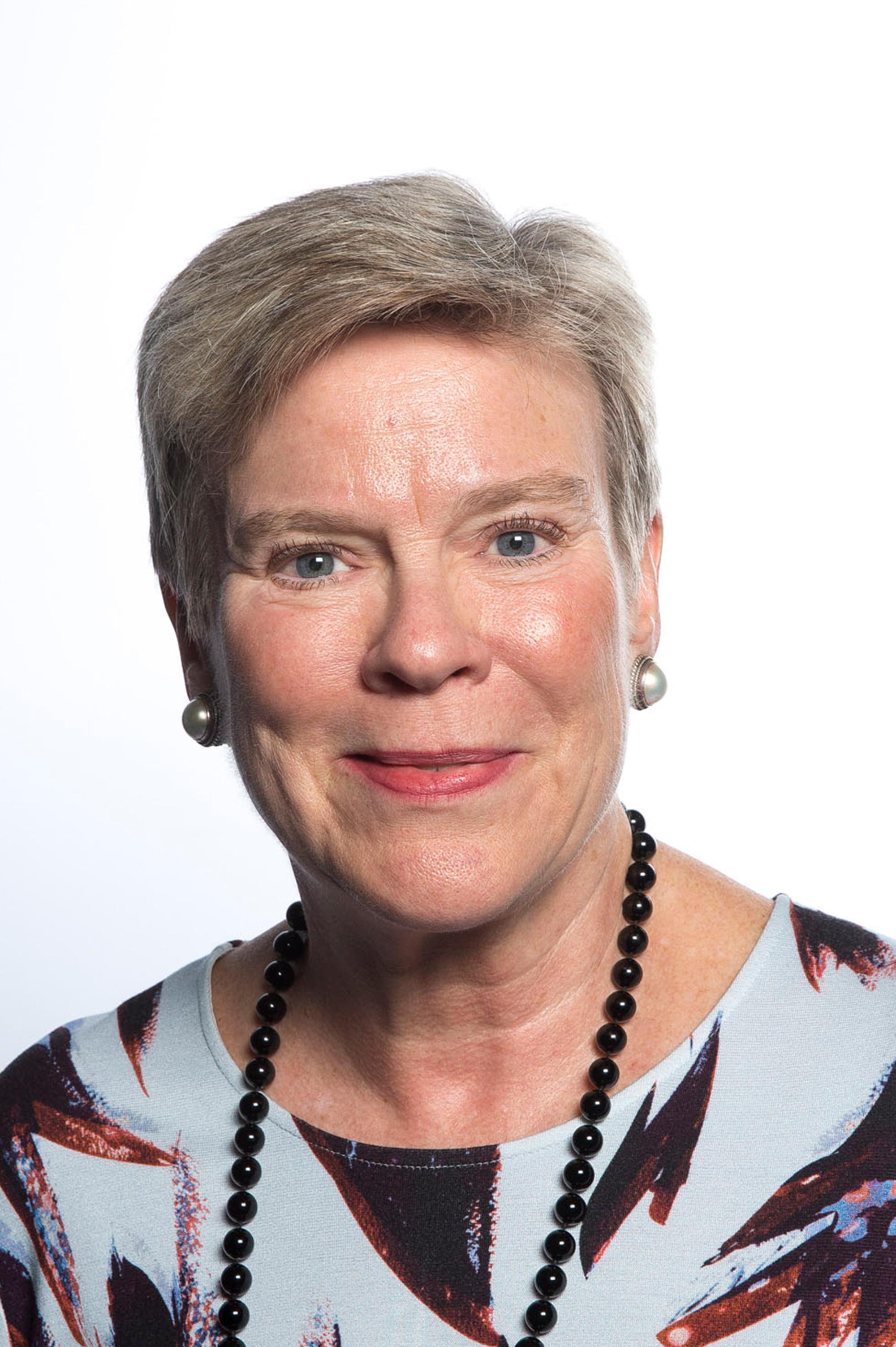
Nonresident Senior Fellow, Nuclear Policy Program
Rose Gottemoeller is a nonresident senior fellow in Carnegie’s Nuclear Policy Program. She also serves as lecturer at Stanford University’s Freeman Spogli Institute for International Studies and is a research fellow at the Hoover Institution. Ambassador Gottemoeller served as the deputy secretary general of NATO from 2016 to 2019.
Recent Work


Judy Dempsey, Alexander Gabuev, Rose Gottemoeller, …
Carnegie does not take institutional positions on public policy issues; the views represented herein are those of the author(s) and do not necessarily reflect the views of Carnegie, its staff, or its trustees.

Ahead of a tough winter for Ukraine, Donald Trump’s swing back toward Russia bodes ill. But instead of panicking, Kyiv’s European allies are focusing on action.

Rym Momtaz

Without a ceasefire with Ukraine on attacking each other’s energy infrastructure—to which the Kremlin is unlikely to agree—the diesel agreement between Putin and Trump is largely for show, rather than representing a genuine increase in the volumes of Russian diesel on the global market.

Sergey Vakulenko

Funding Ukraine remains a priority for European leaders. As Russia’s war of aggression heads into another winter, two feasible options to mobilize support for Kyiv should be fast-tracked.


Vladyslav Rashkovan, Gregory P. Wilson

Russian strikes are weakening the economy sustaining Ukraine’s war effort. Closing the growing funding gap will require more European support and politically contentious reforms in Kyiv.

Balázs Jarábik

While the EU and European governments are embracing the much-lauded middle-power moment, this entails three difficult conundrums.

Richard Youngs