• Research
  • Emissary
  • About
  • Experts
Carnegie Global logoCarnegie lettermark logo
DemocracyIran
  • Donate
{
  "authors": [
    "Josh Kurlantzick"
  ],
  "type": "legacyinthemedia",
  "centerAffiliationAll": "dc",
  "centers": [
    "Carnegie Endowment for International Peace"
  ],
  "collections": [],
  "englishNewsletterAll": "asia",
  "nonEnglishNewsletterAll": "",
  "primaryCenter": "Carnegie Endowment for International Peace",
  "programAffiliation": "AP",
  "programs": [
    "Asia"
  ],
  "projects": [],
  "regions": [
    "China"
  ],
  "topics": []
}

Source: Getty

In The Media

Into Africa

Link Copied
By Josh Kurlantzick
Published on Jun 3, 2007
Program mobile hero image

Program

Asia

The Asia Program in Washington studies disruptive security, governance, and technological risks that threaten peace, growth, and opportunity in the Asia-Pacific region, including a focus on China, Japan, and the Korean peninsula.

Learn More

Source: Boston Globe

Embarking upon a 12-day tour of Africa earlier this year, Chinese President Hu Jintao likely expected a warm welcome. Over the past five years China had emerged as a new power on the continent: Trade between China and Africa is growing by nearly 50 percent annually, Beijing may soon become Africa’s top aid donor, and in the winter China hosted nearly every African leader for a historic summit in Beijing. On Hu’s previous trip to the continent, in 2004, African leaders basked in China’s new interest.

This article was originally published in the June 3, 2007 edition of the Boston Globe.  Click here to read the full article.

About the Author

Josh Kurlantzick

Former Visiting Scholar, China Program

A special correspondent for The New Republic, a columnist for Time, and a senior correspondent for The American Prospect, Kurlantzick assesses China’s relationship with the developing world, including Southeast Asia, Africa, and Latin America.

    Recent Work

  • In The Media
    Fighting Terrorism With Terrorists

      Josh Kurlantzick

  • Other
    Beijing’s Safari: China’s Move into Africa and Its Implications for Aid, Development, and Governance

      Josh Kurlantzick

Josh Kurlantzick
Former Visiting Scholar, China Program
Josh Kurlantzick
China

Carnegie does not take institutional positions on public policy issues; the views represented herein are those of the author(s) and do not necessarily reflect the views of Carnegie, its staff, or its trustees.

More Work from Carnegie Endowment for International Peace

  • Research
    China’s Construction of Police Training Facilities in Global South Likely to Expand Global Security Leadership

    China’s police training infrastructure construction projects provide benefits to recipient countries, promote China’s image as a major global security provider, and are likely to reinforce alignment between Beijing’s security priorities and those of countries in the Global South.


      • Sheena Chestnut Greitens
      • +2

      Cameron Waltz, Sheena Chestnut Greitens, Kim Nguyen, …

  • Two men sitting on a stage and speaking
    Commentary
    Emissary
    What Would Need to Happen to Slow AI Development?

    AI capabilities are moving fast. Most institutions—including governments—can’t keep up.

      • Anton Leicht

      Anton Leicht, Scott Singer

  • Commentary
    Diwan
    On AI, Cairo Plays China and the U.S. Off Against Each Other

    Huawei pushed hard to enter the Egyptian data centers market, until the Americans made a better offer.

      • Angie Omar

      Angie Omar

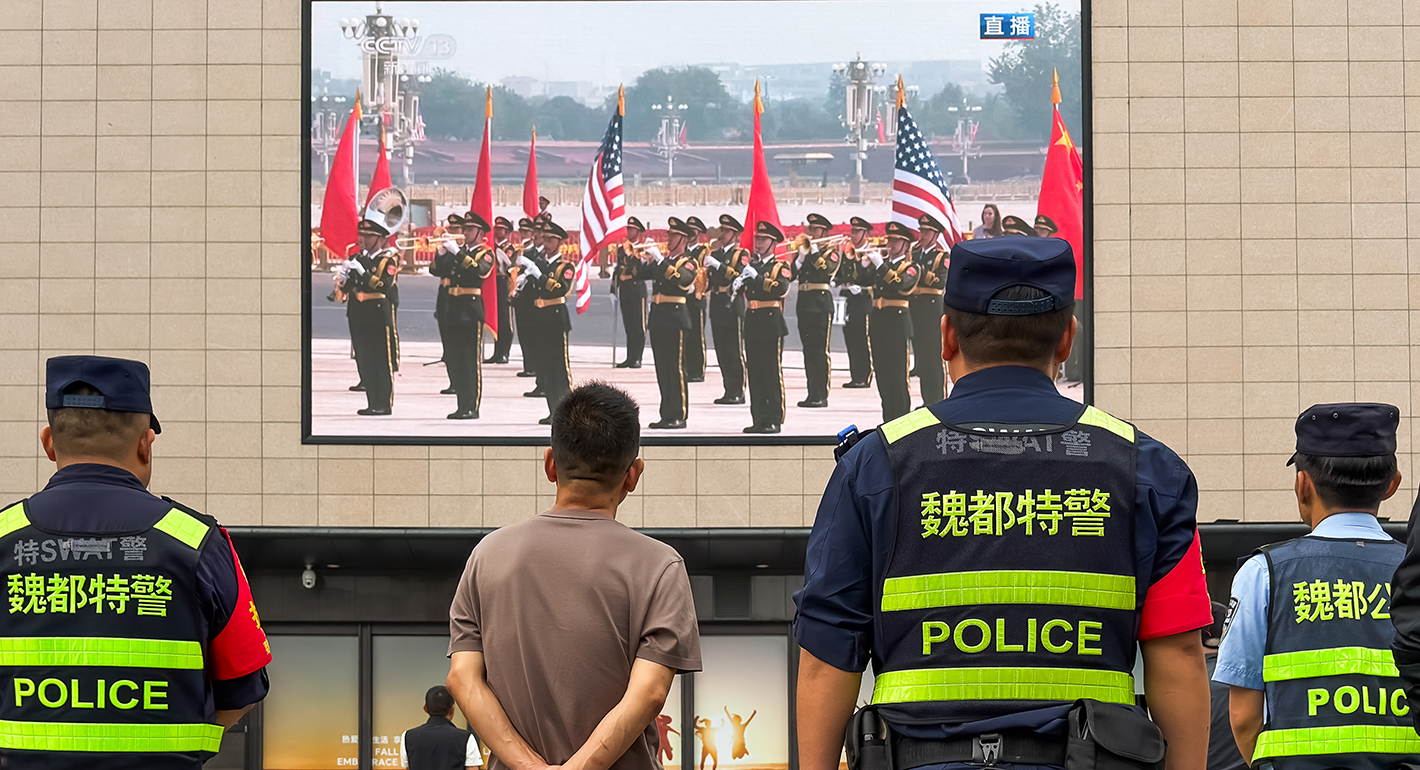
  • olice officers and residents stand in front of a shopping mall while a large outdoor screen broadcasts a military welcome ceremony featuring U.S. and Chinese flags for U.S. President Donald Trump hosted by Chinese President Xi Jinping at the Great Hall of the People on May 14, 2026
    Paper
    American Power: A View from China

    Chinese strategists are once again debating whether American power is declining and whether U.S. hegemony is experiencing irreversible decay.

      Wu Xinbo

  • Commentary
    Carnegie Politika
    As It Turns 25, the Shanghai Cooperation Organization Reflects the New World Order

    With the growth in points of friction between the great powers, organizations like the SCO will continue to play a role in the strategic adaptation of the smaller powers caught between them.

      Temur Umarov

Get more news and analysis from
Carnegie Endowment for International Peace
Carnegie global logo, stacked
1779 Massachusetts Avenue NWWashington, DC, 20036-2103Phone: 202 483 7600
  • Research
  • Emissary
  • About
  • Experts
  • Donate
  • Programs
  • Events
  • Blogs
  • Podcasts
  • Contact
  • Annual Reports
  • Careers
  • Privacy
  • For Media
  • Government Resources
Get more news and analysis from
Carnegie Endowment for International Peace
© 2026 Carnegie Endowment for International Peace. All rights reserved.