

In The Media
John Judis
{
  "authors": [
    "John Judis"
  ],
  "type": "legacyinthemedia",
  "centerAffiliationAll": "",
  "centers": [
    "Carnegie Endowment for International Peace"
  ],
  "collections": [],
  "englishNewsletterAll": "",
  "nonEnglishNewsletterAll": "",
  "primaryCenter": "Carnegie Endowment for International Peace",
  "programAffiliation": "",
  "programs": [],
  "projects": [],
  "regions": [
    "North America",
    "United States"
  ],
  "topics": [
    "Political Reform"
  ]
}
REQUIRED IMAGE
Today, instead of Republicans trumpeting Kentucky as a realignment state, it is Democrats who see the state as indicative of their rising national fortunes. "I think that, in many ways, Kentucky's election will be a harbinger of movement across the country," Democratic gubernatorial candidate Steve Beshear tells me while campaigning in Lexington last week.
Source: The New Republic
Lexington, Kentucky
Kentucky, Fred Barnes declared on Fox News in November 2003, "is a realignment state." He and other jubilant Republicans certainly had reason to think so. What had once been a Democratic stronghold--Bill Clinton carried the state in 1992 and 1996, and Democrats controlled the governor's mansion for more than a generation--seemed to be slipping into Republican hands. Both of Kentucky's senators were Republicans, as were five of its six House members. George W. Bush had won the state by a solid margin in 2000. And Ernie Fletcher was about to become Kentucky's first GOP governor since 1967.
Ah, what a difference four years make. Today, instead of Republicans trumpeting Kentucky as a realignment state, it is Democrats who see the state as indicative of their rising national fortunes. "I think that, in many ways, Kentucky's election will be a harbinger of movement across the country," Democratic gubernatorial candidate Steve Beshear tells me while campaigning in Lexington last week. With days to go before the election,the blue-eyed, silver- haired Beshear--who looks like an aging matinee idol--is energetically seeking votes in a middle-class subdivision here, but, really, he's just running up the score: For months, polls have shown him routing Fletcher. And, three days later, with an 18-point margin of victory, he does just that.
In some ways, Fletcher was an easy target. He had won office in 2003 on a promise to "clean up the mess in Frankfort" and to abolish "the good-ol'-boy system" that had led Democratic governors to flout the state's merit-based method for awarding government jobs. But, two and a half years later, a grand jury indicted 13 of Fletcher's aides and associates for doing exactly what he had promised not to do: handing out jobs based on political loyalty rather than merit. And Fletcher hardly helped his case by issuing a blanket pardon to any administration officials who had been or would be indicted.
But Beshear's lopsided victory this week was about more than local corruption. It was also the latest indication that Kentucky may be moving back into the Democratic column. That will have significance beyond this year and beyond Kentucky's borders. If the Democrats can carry Kentucky in 2008, they will be well on their way to winning a majority in the Electoral College--and perhaps producing a realignment of their own.
The GOP's grip on Kentucky began to loosen in 2004. Bush carried the state, but, according to exit polls, 40 percent of those who voted for him did so because they disliked John Kerry. In the Senate race that year, Republican Jim Bunning barely won reelection by two points against a little-known state senator. Then, two years later, Democrat John Yarmuth, the editor of an alternative Louisville newsweekly and, by his own description, an "unabashed liberal," upset five-term Representative Anne Northup. Democrats have also outpaced Republicans in new party registrants, adding 128,392 members from June 2005 to October 2007 while the GOP gained just 97,871. And, this week, in addition to reclaiming the governorship, Democrats scored landslide victories in statewide races for attorney general, treasurer, and auditor.
All of which suggests that voter dissatisfaction with the GOP is not confined to Fletcher. Even Mitch McConnell, the state's long-serving Republican senator who is up for reelection in 2008, does not appear immune. "McConnell is the most scared I've ever seen," says Al Cross, former chief political writer for Louisville's Courier-Journal. More surprising still, Hillary Clinton was statistically even with Republican front-runner Rudy Giuliani in a recent Survey/USA poll. Says Yarmuth, "If you had told me a year ago that Hillary could beat any Republican in the state,I would have said you were crazy."
Several factors account for this shift. First, Iraq and the economy appear to be trumping social issues, particularly for rural and small-town voters. In a Courier-Journal poll released last month, 60 percent of residents disapproved of Bush's handling of the war. Moreover, much of Kentucky, like neighboring Ohio and West Virginia, has not benefited from the national economic recovery of the last four years. Particularly hard-hit have been white working-class voters who live in small towns in western and eastern Kentucky. These voters, especially in the west, were historically Democrats. But many are also churchgoing Baptists who drifted toward the GOP during the 1990s over abortion, school prayer, gay rights, and Monica Lewinsky, as well as Clinton's anti- tobacco proposals. Now, many of them seem to be returning to the Democratic fold. Fletcher won coal-producing Warren County by 12 points in 2003. But, this week, Beshear--who is pro-choice and has backed domestic partner benefits for gays--claimed the county by 10 points. And, statewide, a poll taken a few days before the election showed Beshear leading Fletcher by an astounding margin of 53 to 35 among "evangelical or born-again Christians."
Democrats have also benefited from changes in the fastest growing and most prosperous part of Kentucky--an area known as the "Golden Triangle" that stretches from Louisville east to Frankfort and Lexington and north to the Cincinnati suburbs. Twenty years ago, the region was dependably Republican. Louis-ville's Jefferson County and Lexington's Fayette County, for instance, went for Ronald Reagan in 1980 and 1984 and for George H.W. Bush in 1988. And the Cincinnati suburbs, peopled by upwardly mobile social conservatives, were solid GOP territory as well.
The Cincinnati suburbs have remained in the Republican fold, but the southern part of the triangle appears to be undergoing a dramatic shift. The area, home to both the University of Louisville and the University of Kentucky, increasingly resembles a post-industrial metropolitan area--what Ruy Teixeira and I have called an "ideopolis." Louisville, the state's largest city, was once primarily a manufacturing town and still has auto factories, but five of its top ten employers are now health service companies. The city has also become a tourist destination and a center for arts and entertainment, with a surprisingly large and thriving gay community. (The number of same-sex couples in Louisville rose from 789 in 2000 to 1,769 in 2006.)
Thanks to these changes, the politics of the southern part of the Golden Triangle look increasingly like the politics of other post-industrial metro regions:socially liberal, especially on women's and gay rights; environmentally conscious (I tagged along with Yarmuth when he spoke at a rally for Louisville's Climate Action Network); and in favor of government spending on health care and education. No surprise, then, that last week Beshear easily carried the three counties that encompass Louisville, Frankfort, and Lexington.
Kentucky, which is only 7 percent African American, is often mistakenly grouped with the South, but its political trajectory most closely resembles that of Ohio, where Democrats won the governorship and a Senate seat in 2006-- and are now within striking distance of winning a majority of House seats in 2008. Ohio's turn toward the Democrats was precipitated partly by a corrupt Republican administration, but it was sustained by the movement of post- industrial Columbus into the Democratic column and by the disenchantment of rural and small-town voters with the national GOP. It's probably no coincidence that Beshear has much in common with Ohio governor Ted Strickland. Bothare small-town-born, moderate Democrats with religious backgrounds.
In contrast to past Democratic governors of Kentucky, Beshear says he will enthusiastically support the party's presidential nominee in 2008. Only recently, such a pledge would have mattered little, since a Democrat probably couldn't have carried Kentucky anyway. Now, it no longer seems out of the question. Kentucky may be a realignment state after all. Just not the kind Republicans had in mind.
This article was originally published at: http://www.tnr.com/politics/story.html?id=60898fc1-ed6c-489d-8189-6cc594e46d4b

Former Visiting Scholar
As a visiting scholar at Carnegie, Judis wrote The Folly of Empire: What George W. Bush Could Learn from Theodore Roosevelt and Woodrow Wilson.
Recent Work
John Judis
John Judis
Carnegie does not take institutional positions on public policy issues; the views represented herein are those of the author(s) and do not necessarily reflect the views of Carnegie, its staff, or its trustees.

The acknowledgment has sparked fears of a new arms race with China and Russia.

Chris O’Meara

Smaller powers cannot go it alone, but Canadian history shows that integration with the United States will not always be benign.
Paul Samson

The summit may be remembered as a fatal blunder, when Washington, Beijing, and the AI industry collectively chose ceremony over action.

Jeffrey Prescott
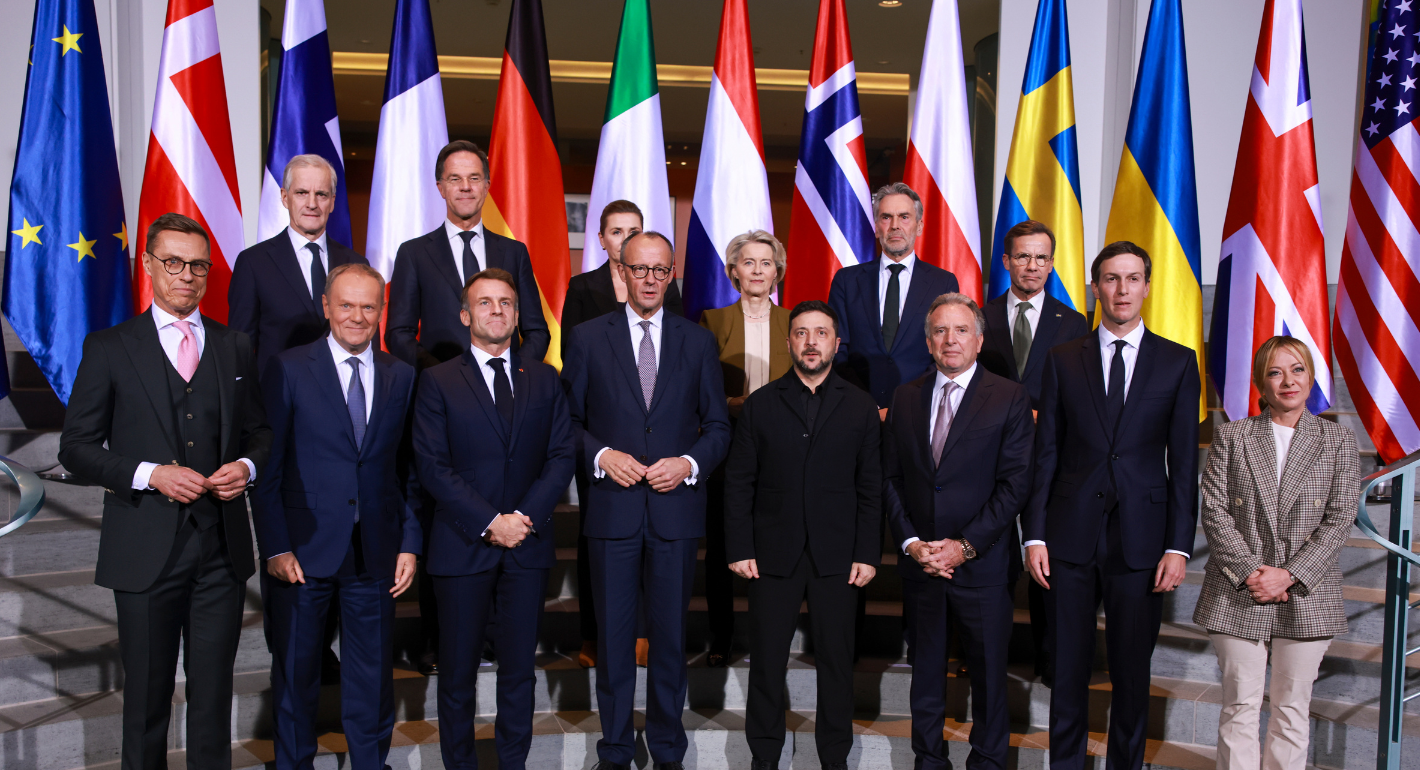
European NATO countries are wrestling with the possibility of U.S. disengagement from the alliance. With the continent’s security increasingly uncertain, governments must restore the credibility of their collective defense.


Hans-Dieter Lucas, Adam Thomson, Pierre Vimont
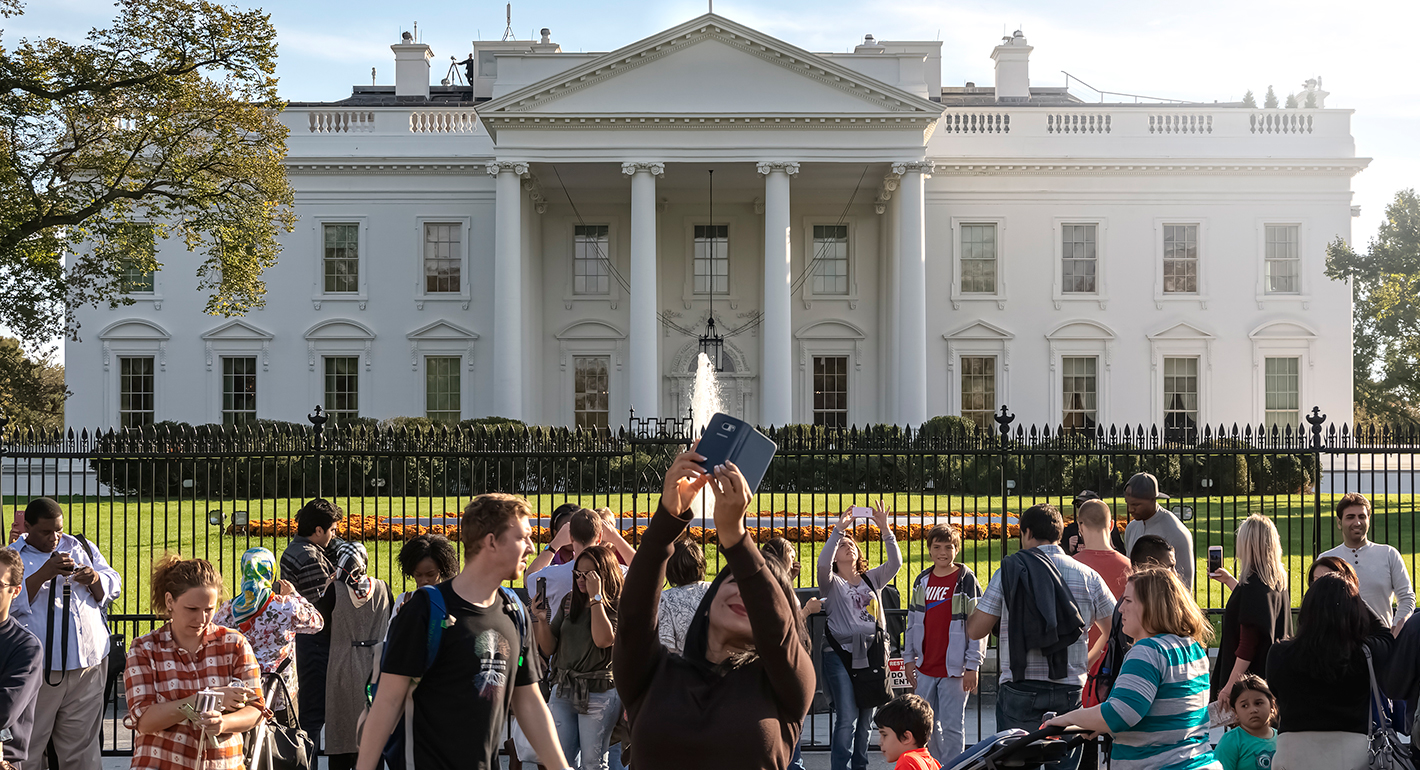
Soft power on its own is insufficient to meet U.S. national security needs, but hard power also has its limits. Soft power allows for more effective and efficient use of hard power than hard power alone, as it encourages cooperation and compliance which deters the need for hard power.

Sarah Yerkes