

Commentary
With the growth in points of friction between the great powers, organizations like the SCO will continue to play a role in the strategic adaptation of the smaller powers caught between them.
Temur Umarov
{
  "authors": [],
  "type": "pressRelease",
  "centerAffiliationAll": "dc",
  "centers": [
    "Carnegie Endowment for International Peace"
  ],
  "collections": [],
  "englishNewsletterAll": "asia",
  "nonEnglishNewsletterAll": "",
  "primaryCenter": "Carnegie Endowment for International Peace",
  "programAffiliation": "AP",
  "programs": [
    "Asia",
    "Sustainability, Climate, and Geopolitics"
  ],
  "projects": [],
  "regions": [
    "China",
    "North America"
  ],
  "topics": []
}
REQUIRED IMAGE
The Carnegie Corporation of New York invested $3 million in the Carnegie China Program in Washington and Beijing.
WASHINGTON and NEW YORK, Jan 9—Carnegie Corporation of New York, a grantmaking foundation, and the Carnegie Endowment for International Peace, building the first global think tank, today jointly announced a $3 million investment by the Corporation in the Carnegie China Program in Washington and Beijing.
"We are immensely grateful to the Carnegie Corporation of New York for its generous support of and investment in the Endowment’s China Program in Washington and Beijing, and particularly to its president, Vartan Gregorian, for his leadership. Coming on the eve of the first anniversary of the launch of our NEW VISION, this financial support is a tremendous further endorsement of a key component of the mission we are pursuing,” said Jessica T. Mathews, president of the Carnegie Endowment.
"If we are to move toward a more stable and prosperous world, it is imperative that the United States redefine the nature of its relationships with major and emerging powers,” said Vartan Gregorian, president of the Carnegie Corporation of New York. “We are particularly in need of innovative research to inform our near– and long-term policies toward China.”
Gregorian added that the deep pool of subject matter expertise cultivated by the Endowment in China and throughout the world will benefit the partners as they seek to better understand the impact of globalization on foreign, economic, and security policy making.
The Carnegie Endowment for International Peace was the first think tank headquartered in the United States to establish a joint presence in Beijing and Washington. Two core features distinguish the Endowment’s work in China:
Most recently, the Endowment began a multi-year project to move past the gridlock that has prevented meaningful action by the United States and China on climate change. In October 2007, the Program partnered with China’s Energy Research Institute on a Beijing workshop on “Energy Security and Climate: How Can the U.S. and China Cooperate and Lead?”
The Endowment has also held a series of conferences in Beijing that draw on its staff in Washington, Beirut, and Moscow, as well as Beijing. Together with CRF, it co-hosted meetings on “Rising India: Opportunities and Lessons for China,” “New Security Challenges in Northeast Asia,” “China’s Environmental Protection System,” and “Energy Cooperation between China, Russia, and Central Asia,” which included senior Russian researchers from the Carnegie Moscow Center and a team from Washington. A September 2007 conference explored the impacts of President Bush’s policies on world order.
Andrew Carnegie gave generously in support of peace, including his creation in 1910 of the Carnegie Endowment for International Peace “to hasten the abolition of international war” and his endowment in 1911 of Carnegie Corporation of New York to promote “the advancement and diffusion of knowledge and understanding.”
###

About Carnegie Corporation of New York:
Carnegie does not take institutional positions on public policy issues; the views represented herein are those of the author(s) and do not necessarily reflect the views of Carnegie, its staff, or its trustees.

With the growth in points of friction between the great powers, organizations like the SCO will continue to play a role in the strategic adaptation of the smaller powers caught between them.

Temur Umarov
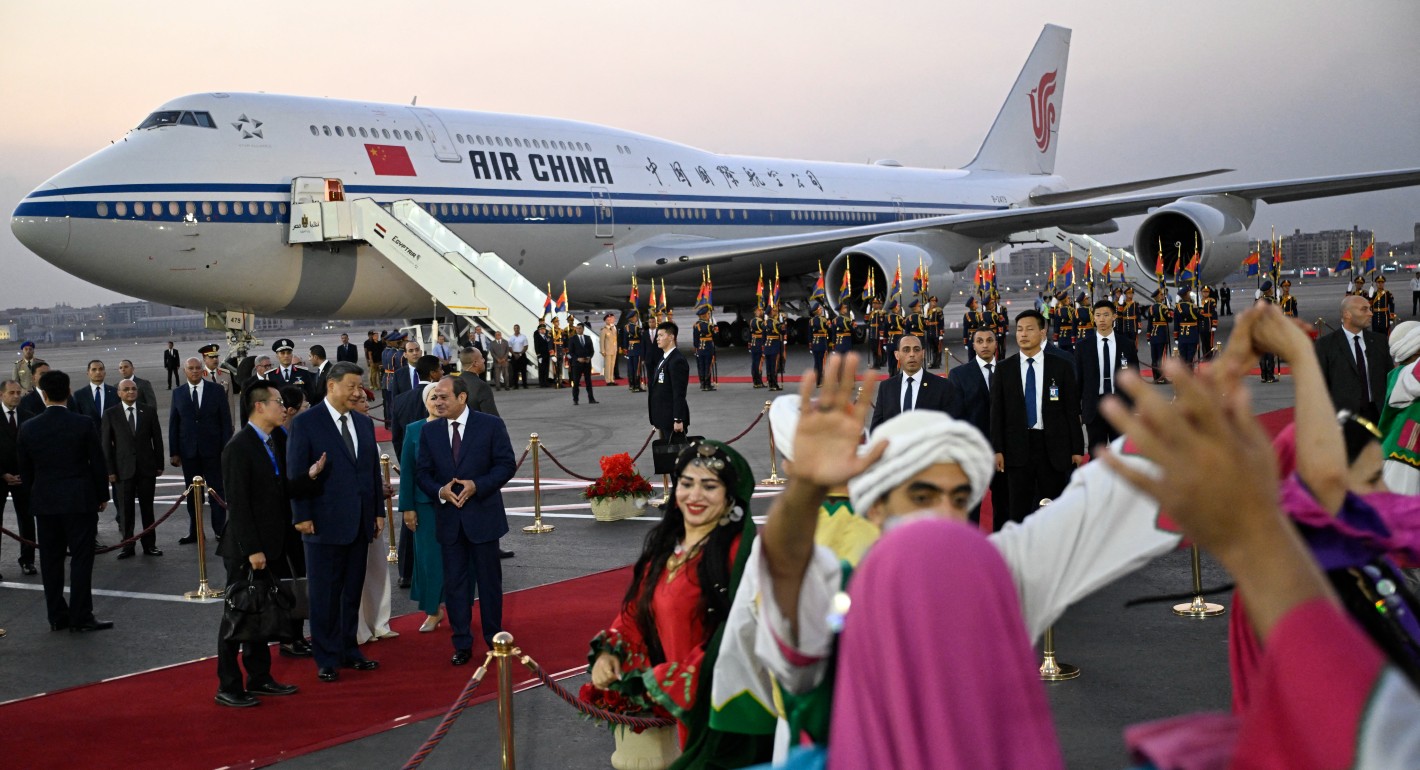
Amid celebrations of bilateral ties was a deeper focus on stability in the Middle East.

Amr Hamzawy

Xi, Putin, and other regional leaders are back-slapping in Bishkek, but the SCO has yet to answer the most serious questions about continental Asia's economic future.

Evan A. Feigenbaum

China’s banking crisis in the 2000s was resolved by transferring the costs to households through financial repression—a decision that recapitalized the banks while exacerbating the structural imbalances that continue to shape the Chinese economy today.

Michael Pettis

Chinese biotech companies have been on the receiving end of U.S. economic coercion. Yet their responses have differed significantly because firm and state interests are not uniformly aligned. For Washington, treating all Chinese tech firms the same, irrespective of their actual interests, risks pushing them farther into Beijing’s corner.

Xue Gong