

Commentary
Maria Lipman
{
  "authors": [
    "Maria Lipman"
  ],
  "type": "legacyinthemedia",
  "centerAffiliationAll": "",
  "centers": [
    "Carnegie Endowment for International Peace",
    "Carnegie Russia Eurasia Center"
  ],
  "collections": [],
  "englishNewsletterAll": "",
  "nonEnglishNewsletterAll": "",
  "primaryCenter": "Carnegie Russia Eurasia Center",
  "programAffiliation": "",
  "programs": [],
  "projects": [],
  "regions": [
    "Caucasus",
    "Russia",
    "Western Europe",
    "United Kingdom"
  ],
  "topics": [
    "Political Reform",
    "Democracy",
    "Economy",
    "Foreign Policy"
  ]
}
Source: Getty
The stepped-up harassment of the British Council in recent days signals a new low in Russia's post-Cold-War relations with the West and a further slide toward Soviet-style isolationism.
Source: Washington Post

Offices of the British Council, which promotes the English language and British culture around the world, were forced to close in St. Petersburg and Yekaterinburg last week. The organization withstood earlier pressures but gave in after Russian employees were contacted by the Federal Security Service (FSB), the former KGB. Agents intended to warn the Russians that they might fall victim to "provocations," the Russians say. They wanted to intimidate the employees into quitting, the British counter.
Russian authorities don't hide the political roots of this conflict. Foreign Minister Sergey Lavrov has linked it to the expulsion of four Russian diplomats from Britain last summer; that was London's response to Moscow's refusal to extradite Andrei Lugovoi, a former KGB officer whom British prosecutors seek to charge with the 2006 murder of Alexander Litvinenko. Unofficially, it has been suggested that the British Council is a front for British intelligence.
Relations between Russia and Britain have been strained since Litvinenko, a former security officer who had defected to Britain, was poisoned in London with a radioactive agent. Britain resents Moscow's flat refusal to extradite Lugovoi. A further insult to British justice came last month, when Lugovoi was made a member of the Russian parliament. Given the Kremlin's total control over political life, Lugovoi could not have been elected without Kremlin consent.
But relations were actually damaged earlier. Russia has long been frustrated by Britain's refusals to extradite businessman Boris Berezovsky and Chechen separatist Akhmed Zakaev, both deemed criminals here. British courts ruled against extradition because the charges were found to be politically motivated. Both men were granted political asylum.
In recent months, in the discourse of Russian officials and loyalists, Britain has challenged America's primacy as Russia's main adversary. The British ambassador was subjected to repeated harassment by the pro-Kremlin youth group Nashi. Last year, a prime-time TV documentary series depicted Britain as a perennially hostile nation invariably seeking to harm Russia (the World War II alliance was apparently dismissed). An earlier television "documentary" accused British diplomats of spying and associated them with Russian human rights organizations that had been awarded grants by the British government.
President Vladimir Putin is anxious to reassert Russia on the world scene after what is overwhelmingly regarded here as the humiliation of the early post-Communist years. But while some of the Kremlin's foreign policy moves are guided by national interests, tough measures and rhetoric are driven not infrequently by the desire to ensure that Russia isn't taken for granted. This short-term tactic of "missing no blows" lay at the core of recent standoffs with Georgia, Poland and Estonia. Such conflicts tarnish Russia's image, while the benefits of steady self-alienation from the West are hard to identify.
Putin's foreign policy may be aimed at capitalizing on divisions among Western countries. Thus many interpreted his belligerent speech in Munich last February as an attempt to drive a wedge between Europe and the United States. But it appears that there's more cohesion today among the Western countries vis-a-vis Russia. After the recent attacks, the European Union presidency said that "the E.U. deeply regrets . . . the harassment of British Council staff, as well as the administrative and other measures announced by the Russian authorities." France offered its own backing. Taking on Britain may have serious consequences for Russia, certainly more serious than does bullying Georgia.
Consider also the domestic perspective on this row. Angry assertions of Russia's global standing dovetail with Soviet-style isolationism, which breeds suspicion about Western values and influence. The Kremlin is increasingly wary of autonomous groups, especially those that receive Western financial backing. After Putin's notorious 2004 reference to such organizations -- "they don't bite the hand that feeds them" -- nongovernmental and human rights organizations receiving foreign grants have been consistently discredited. Harassment of such groups is growing. In Soviet times, anti-Western propaganda was an element of the totalitarian state, with its sealed borders and rigid ideology aimed at defeating capitalism. In today's Russia, a nation with free trade and free travel, where cable television and Internet access are unrestricted, such policies appear irrational and anachronistic.
Russia's business ties with Western countries are expanding. Relations with Britain, especially, extend beyond economic investments: London has become wealthy Russians' favorite choice for residences, high-quality education and enjoyable getaways. Last year, though, Britain suspended talks on facilitating the visa process, and Russians' entry to Britain may be further restricted.
British Prime Minister Gordon Brown has called the attacks "totally unacceptable" and noted that the only countries in which the British Council faced serious trouble were Burma and Iran. Yet Kremlin leaders apparently believe that making the world reckon with Russia is worth the harm such company does to the country's image.
Masha Lipman, editor of the Carnegie Moscow Center's Pro et Contra journal, writes a monthly column for The Post.
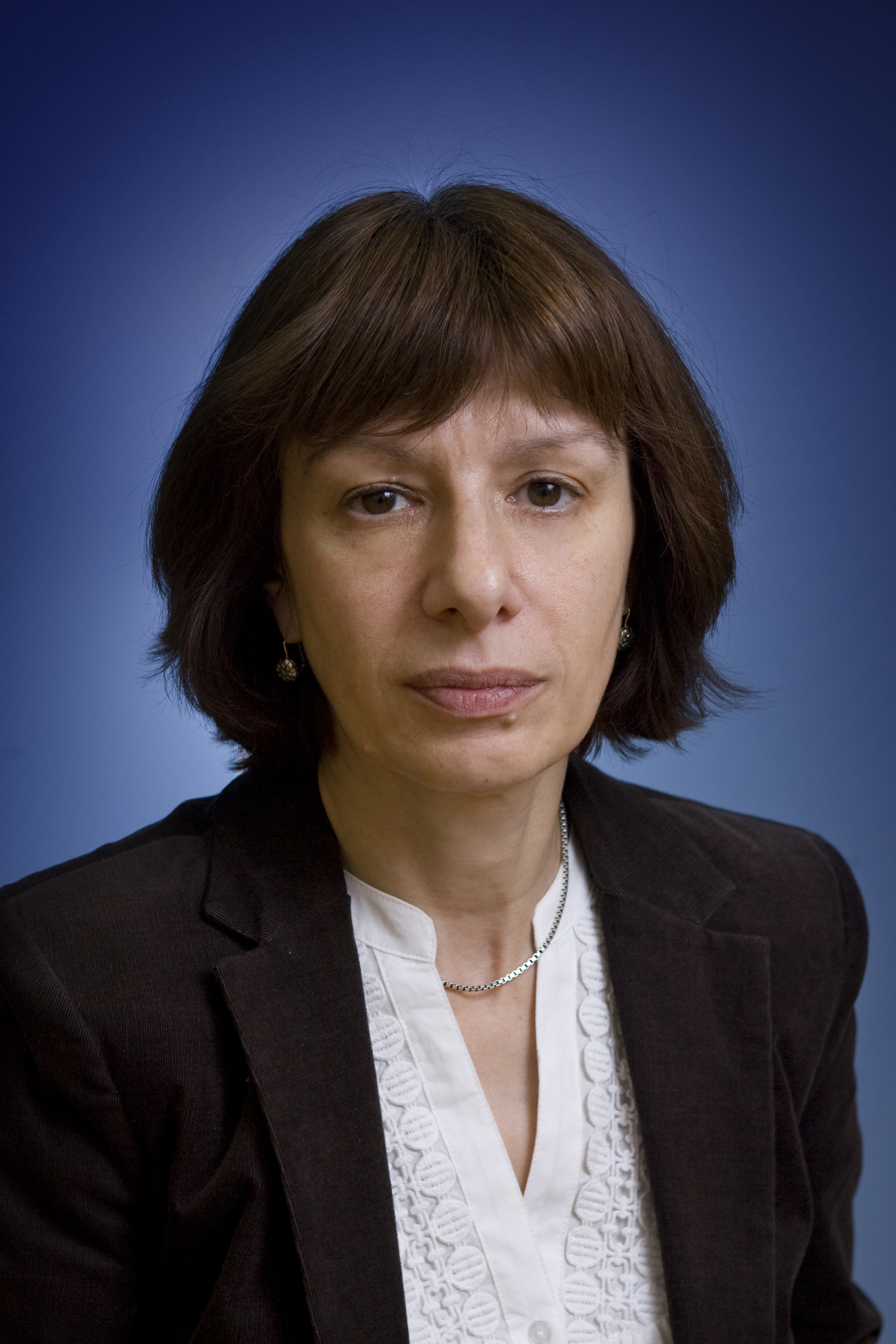
Former Scholar in Residence, Society and Regions Program, Editor in Chief, Pro et Contra, Moscow Center
Lipman was the editor in chief of the Pro et Contra journal, published by the Carnegie Moscow Center. She was also the expert of the Carnegie Moscow Center’s Society and Regions Program.
Recent Work
Maria Lipman
Maria Lipman
Carnegie does not take institutional positions on public policy issues; the views represented herein are those of the author(s) and do not necessarily reflect the views of Carnegie, its staff, or its trustees.
Domestic mobilization, personalized leadership, and nationalism have reshaped India’s global behavior.

Sandra Destradi
The recent record of citizen uprisings in autocracies spells caution for the hope that a new wave of Iranian protests may break the regime’s hold on power.


Thomas Carothers, McKenzie Carrier
European reactions to the war in Iran have lost sight of wider political dynamics. The EU must position itself for the next phase of the crisis without giving up on its principles.

Richard Youngs
For years, the United States anchored global cyber diplomacy. As Washington rethinks its leadership role, the launch of the UN’s Cyber Global Mechanism may test how allies adjust their engagement.
Patryk Pawlak, Chris Painter

Internet service providers can facilitate internet access but also draconian control.
Irene Poetranto