

Paper
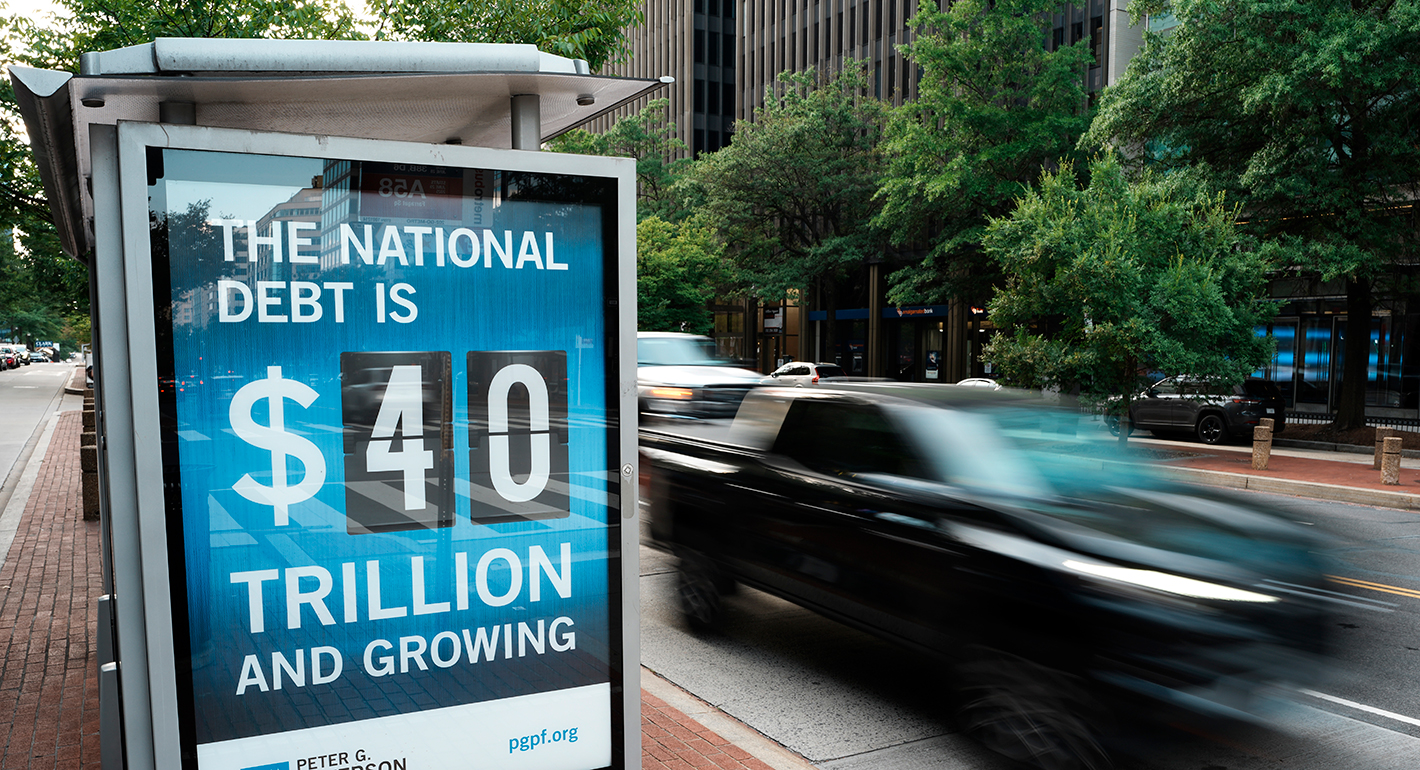
Policy proposals on sovereign debt must both match the scale of the challenge and be implementable within existing political constraints.
David McNair
{
  "authors": [],
  "type": "pressRelease",
  "centerAffiliationAll": "",
  "centers": [
    "Carnegie Endowment for International Peace"
  ],
  "collections": [],
  "englishNewsletterAll": "",
  "nonEnglishNewsletterAll": "",
  "primaryCenter": "Carnegie Endowment for International Peace",
  "programAffiliation": "",
  "programs": [],
  "projects": [],
  "regions": [
    "India"
  ],
  "topics": [
    "Economy",
    "Trade"
  ]
}
REQUIRED IMAGE
India would be six times better off under a multilateral trade agreement in the WTO’s Doha Round than from individual free trade agreements with the EU, United States, or China. However, by lifting agricultural tariffs under a Doha agreement, India could lose more than it gained if prices of key commodities such as rice and wheat continue to swing sharply as they have in the past.
WASHINGTON, Feb 5—India would be six times better off under a multilateral trade agreement in the WTO’s Doha Round than from individual free trade agreements with the EU, United States, or China, contends a new report from the Carnegie Endowment. However, by lifting agricultural tariffs under a Doha agreement, India could lose more than it gained if prices of key commodities such as rice and wheat continue to swing sharply as they have in the past.
In India’s Trade Policy Choices, Carnegie Senior Associate Sandra Polaski and co-authors A. Ganesh-Kumar and Manoj Panda of the Indira Gandhi Institute of Development Research, Scott McDonald of Oxford Brookes University, and Sherman Robinson of the Institute of Development Studies, University of Sussex, simulate the potential outcomes for India’s economy of a Doha agreement and potential free trade agreements with the EU, United States, and China.
Key Conclusions:
In announcing the report, Polaski said, “The results of the study indicate that continued trade liberalization, particularly at the multilateral level, can contribute to India’s growth and development.
“However it must be recognized that the potential gains are modest and the risks are not insignificant. The simulations of world agricultural price swings demonstrate that countries like India need to preserve their ability to use tariffs and safeguards to shield key farm crops or risk deeper poverty. Balancing the defensive interests of India’s poor households with the quest for improved efficiency and market opportunities will require careful trade negotiations.”
She added “It would be necessary for India and similarly situated countries to have the flexibility to respond to agricultural price shocks based on conditions at the time of the shock, rather than having rigid or arbitrary disciplines imposed in advance.”
She also suggested that the Indian government would likely find more success in creating jobs through stimulation of domestic demand rather than through export-led growth.
###

Policy proposals on sovereign debt must both match the scale of the challenge and be implementable within existing political constraints.
David McNair

For every ruble allocated to social policy, health, and education in 2027, double that amount is earmarked for the army, the police, and the security services.

Alexandra Prokopenko

The European Commissioner for Trade is headed to China. But after President Xi’s bridge-building visit to Washington, can a more isolated EU overcome Beijing’s stranglehold on critical raw materials? Who will blink first?

Rym Momtaz, ed.

Cargo traffic through Russia’s Northern Sea Route has increased because of the disruption caused by the conflict in the Middle East, the Ukraine war, and U.S.-China tensions.

Mikhail Korostikov

The domestic impacts of how long it is taking to end the war in Ukraine have pushed the French electorate to the political extremes and compromised the country’s diplomatic capacity.
Rym Momtaz