

In The Media
John Judis
{
  "authors": [
    "John Judis"
  ],
  "type": "legacyinthemedia",
  "centerAffiliationAll": "",
  "centers": [
    "Carnegie Endowment for International Peace"
  ],
  "collections": [],
  "englishNewsletterAll": "",
  "nonEnglishNewsletterAll": "",
  "primaryCenter": "Carnegie Endowment for International Peace",
  "programAffiliation": "",
  "programs": [],
  "projects": [],
  "regions": [
    "North America",
    "United States"
  ],
  "topics": [
    "Political Reform"
  ]
}
REQUIRED IMAGE
America has elected a president from a once-marginalized social group before. But the country has rejected such a candidate, too. Barack Obama represents a social group that was once on the margins of American politics, but now aspires to put one of its own in the highest office. This has happened once before in U.S. politics: when American Catholics saw one of their own nominated to be president.
Source: The New Republic
Now that he has clinched the Democratic nomination, pundits will mostly gauge Barack Obama's prospects in the general election by looking at states he can win or constituencies he can carry. But there is another dimension to his candidacy: He represents a social group that was once on the margins of American politics, but now aspires to put one of its own in the highest office. This has happened once before in U.S. politics: when American Catholics saw one of their own nominated to be president.
In 1928, Democrats nominated the Catholic Governor of New York, Al Smith, but he lost to Herbert Hoover. Then, in 1960, Massachusetts Senator John F. Kennedy became the first Catholic to be president. Kennedy's success removed a political stigma from Catholics, to the extent that it is no longer a serious question whether a Catholic can win the presidency, and a Catholic candidate like John Kerry is seen (except by his most fanatical co-religionists) as first and foremost an American politician rather than a representative of his faith.
The question of Obama's prospects can be framed in this manner: Is Obama, the first African American nominee of a major party, going to repeat Al Smith's sorry experience, or will he enjoy John Kennedy's success? The answer is by no means clear yet, but by looking at the historical parallels, one can begin to appreciate the enormous obstacles that Obama faces this November.
Catholics came into Thomas Jefferson's Democratic Party in 1800 in response to Federalist opposition to immigration and have remained there even since, although not in overwhelming numbers. By the 1920s, Catholics constituted about 15 percent of the electorate, and dominated the Democratic party in many Northern cities. Yet they had never nominated one of their own for president, and could boast of relatively few judicial appointments. As far as national politics were concerned, they were still outsiders.
Al Smith, the governor of the nation's most populous and powerful state, was the first Catholic to gain the nomination. He represented a rising Catholic, urban, and immigrant tide, which was moving the Democratic Party away from its rural, western, and evangelical Protestant base. Smith's 1928 campaign dramatically raised the party's totals in northern and Midwestern cities among Catholics as well as first- and second-generation Americans. These voters would stay with the party in 1932 and become central to Franklin D. Roosevelt's New Deal coalition.
Smith knew the disadvantages he faced as a Catholic. "I believe in the absolute separation of church and state," he declared. He chose an Arkansas pro-prohibition Protestant as his running mate. And he assiduously avoided any discussion of religion during the election, as did Hoover. But Protestant politicians and clerics threw every sign of his subordination to Rome back at him. New York City's funding of Catholic schools, which predated Smith, was attributed to him. By Election Day, few Americans were unaware that Smith possessed an autographed photo of the Pope.
In 1928, no Democrat could have defeated Hoover, but the extent of Smith's defeat--he got only 87 electoral votes and, outside the overwhelmingly Democratic deep south, only carried heavily Catholic Massachusetts and Rhode Island--was largely due to an anti-Catholic vote. Nebraska Senator George Norris declared, "the greatest element involved in the landslide was religion." Smith couldn't overcome the widespread prejudice against Catholics and Irish Catholics.
In 1960, John Kennedy succeeded where Smith had failed, winning an extremely narrow victory against Richard Nixon. Kennedy's success is often attributed to his political skill, and to the way he addressed the Catholic question. And that was certainly a factor. Unlike Smith, Kennedy successfully reaffirmed his independence from Catholic dictates. He won the nomination by showing that he could win overwhelmingly Protestant West Virginia against Hubert Humphrey. He chose a Protestant as a running mate and as the head of the Democratic National Committee.
But Kennedy also benefited from factors that were outside his control. Unlike Smith, he faced a favorable political climate for Democrats--the result of a flagging economy under Dwight Eisenhower and a Republican party already deeply divided between liberals and conservatives. Anti-Catholic and anti-Irish prejudice had diminished since 1928--largely due to the prolonged process of assimilation brought about by the restrictions on immigration after World War I and by the national unity forged during World War II.
But, as a Catholic, Kennedy still faced formidable obstacles. A 1958 Gallup Poll found that 25 percent of Americans said they wouldn't vote for a Catholic. And according to the Survey Research Center poll after the election, 40 percent of Democratic Protestants who regularly attended church voted against Kennedy. That's a huge number. Where Kennedy benefited was in the peculiar demography of the Catholic vote, of which he won about 80 percent.
Kennedy lost Protestant votes in Midwestern states like Indiana and in the prairie states. These, however, were states he wasn't going to win anyway. He also lost some southern Protestants, but historic ties to the Democratic Party, along with Lyndon Johnson's place on the ticket, were enough for him to carry much of the deep south and Texas. And the Catholic vote--now 25 percent nationally, and much more than that in the north--allowed him to carry the northeast and the populous Midwest. In other words, in the voting booth, he gained at least as much from being Catholic as he lost. And that was a key to his victory.
Obama, of course, has never wanted to run as an African American candidate, just as John Kennedy did not want to run as a Catholic candidate. But his candidacy--like Smith's or Kennedy's--represents nonetheless the fruition of a social group's clout within the Democratic Party. Blacks began entering the Democratic party during the New Deal, but even as late as 1960, Richard Nixon won a third of the black vote. After Democratic support for and Republican opposition to the civil rights acts of the 1960s, the overwhelming majority of African Americans became Democrats.
Obama's nomination was, of course, due partly to his support among young voters and college-educated white professionals, but he probably couldn't have won the nomination without the almost unanimous and enthusiastic support of black Democrats, particularly in the south. In Georgia, for instance, black voters made up 51 percent of the primary electorate (compared to 47 percent in 2004) and went 88 percent for Obama.
So, is Obama's fate likely to resemble Smith's or Kennedy's? In several important respects, his campaign is like Smith's rather than Kennedy's. Just as Smith eschewed any discussion of religion, Obama largely stayed away from talking about race until it was forced upon him by revelations about his former pastor, Reverend Jeremiah Wright. Kennedy took control of the issue of his Catholicism from the start; Obama let the issue of race confront him.
Smith won the Democratic nomination largely on the basis of urban and northern strength within the party and over the opposition of southern and western Protestants. Kennedy, by stressing the economy and his connections to the Democrats' New Deal past, won over Protestants in West Virginia and Wisconsin. His primary campaign laid the basis for his general election campaign.
Obama largely followed Smith's rather than Kennedy's precedent. He spoke primarily to the constituencies that initially favored him and was less successful winning over voters who might be reluctant to back a black president. He has yet to develop a message, and a style of campaigning, that will reach these voters, whose support he will need to defeat McCain in the fall. His primary strategy did not lay the basis for a general election strategy. He will virtually have to start over again this summer and at the convention in Denver.
Obama's enthusiastic support among blacks may also be of limited use to him in the fall. While Catholics made up 27 percent of the electorate in 2004, blacks made up only 11 percent, and Obama is likely to get the largest boost in southern states that he is not likely to win anyway. At the same time, he could suffer from a white backlash in the Midwestern swing states like Ohio that he has to win. The one swing state where black support could bring him victory is Virginia. So, while his situation is not as bad as Smith's, it is not as favorable as Kennedy's. In 1960, Nixon, who understood the math, reportedly discouraged Republicans from playing up Kennedy's Catholicism; in 2008, it's unlikely Republicans will hesitate to play the race card against Obama.
To be sure, there are favorable circumstances today that resemble those that helped bring Kennedy to victory in 1960. The Democratic Party is in a stronger position. Obama's Republican opponent won't be able to tout his relationship with a popular sitting president. The economy is probably in worse shape now than it was then. The country is fighting an unpopular war, one strongly identified with the GOP candidate. And Obama, like Kennedy, is an extraordinarily charismatic campaigner who has been able to attract young and unaffiliated voters.
In the end, though, Obama faces hurdles at least as great as those that Kennedy faced.Kennedy never fully overcame anti-Catholic prejudice during his campaign. It was only in the aftermath of his victory that the country fully accepted a Catholic politician as an ordinary American politician. In November, Obama may lose far more than he gains from the sheer fact of his being an African American. If, in October, the country is still discussing Obama's relationship to Reverend Wright and not the Republican record on the economy and foreign policy, he is likely to suffer defeat--not as decisively, certainly, as Al Smith did, but defeat nonetheless.

Former Visiting Scholar
As a visiting scholar at Carnegie, Judis wrote The Folly of Empire: What George W. Bush Could Learn from Theodore Roosevelt and Woodrow Wilson.
Recent Work
John Judis
John Judis
Carnegie does not take institutional positions on public policy issues; the views represented herein are those of the author(s) and do not necessarily reflect the views of Carnegie, its staff, or its trustees.

Autonomous AI agents are increasingly prevalent in cyberspace. The EU needs a real-time monitoring strategy, to invest in AI defenses, and to reduce its strategic dependence on U.S. frontier models.


Raluca Csernatoni, Patryk Pawlak
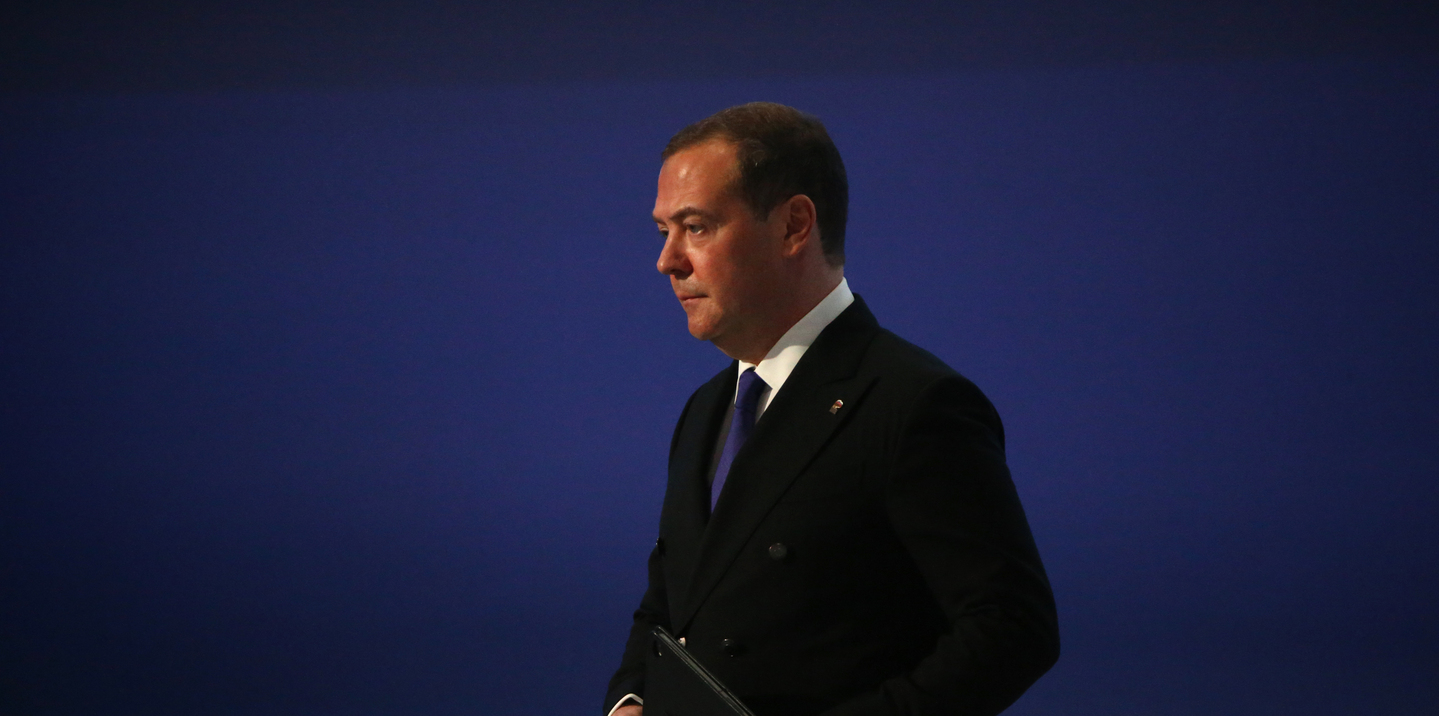
Medvedev’s defeat in the battle for the position of speaker appears to signal that the long process of his marginalization in Russian politics has passed the point of no return.

Andrey Pertsev

Syria's transition promised a fresh start. But are old habits of power making a comeback? This analysis looks at the warning signs and what it will take to build a more accountable state.

Sima Beitinjaneh

It seems likely that, no matter what, the power of the U.S. nuclear arsenal will face erosion, not least in the credibility of its commitments to defend allies and the political durability of those alliances.


James M. Acton, Ankit Panda
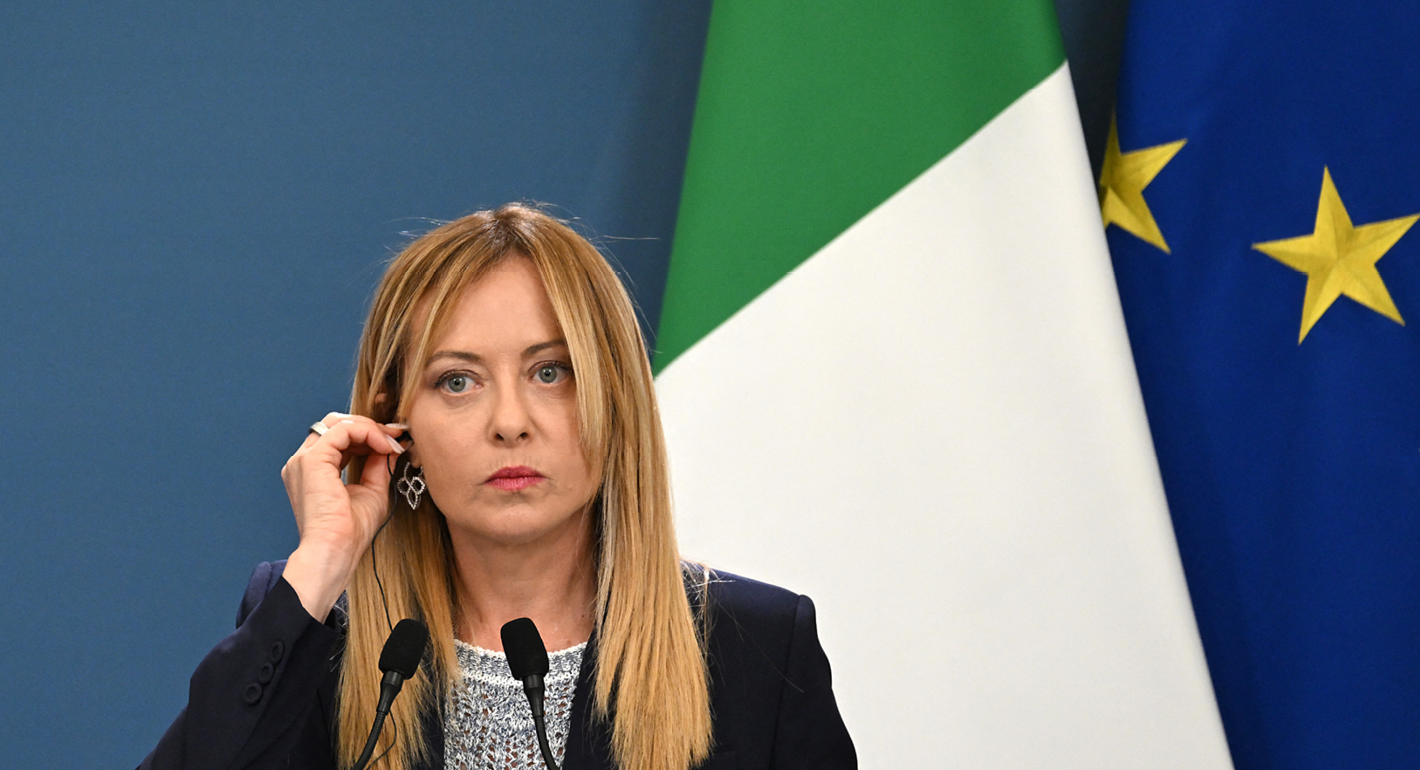
When Giorgia Meloni very publicly rebuked Donald Trump’s disparaging remarks about her, it surprised many who saw her as a European extension of Trumpism. Is the spat a sign of trouble in the radical right’s transatlantic axis?

Rym Momtaz, ed.