

Article
Marina Ottaway, Omar Hossino
{
  "authors": [
    "Marina Ottaway"
  ],
  "type": "legacyinthemedia",
  "centerAffiliationAll": "dc",
  "centers": [
    "Carnegie Endowment for International Peace"
  ],
  "collections": [],
  "englishNewsletterAll": "menaTransitions",
  "nonEnglishNewsletterAll": "",
  "primaryCenter": "Carnegie Endowment for International Peace",
  "programAffiliation": "MEP",
  "programs": [
    "Middle East"
  ],
  "projects": [],
  "regions": [
    "North America",
    "United States",
    "Middle East",
    "North Africa"
  ],
  "topics": [
    "Political Reform",
    "Democracy",
    "Security",
    "Foreign Policy"
  ]
}
Source: Getty
The Bush administration's Freedom Agenda - an undertaking rich in rhetoric and bombast and poor on substance - has been an unqualified disaster. It has not helped bring about change in the region, but it has undermined American credibility. Yet the next administration in the United States must not succumb to the temptation to simply dismiss the idea of democracy promotion in the Middle East.
Source: The Daily Star

Most important, the demand for democracy or at least for more openness and participation remains high in the region, even if it is ineffectual. It comes in part from liberal organizations and intellectuals who embrace the concept of liberal democracy. Theirs is not a powerful demand, because liberal organizations in the Middle East generally lack organized constituencies, hence are not significant political players. Demands for participation and democracy are also being set forth by Islamist political parties that have chosen to participate in the electoral political process of their countries, taking advantage of whatever opportunities exist to establish themselves as mainstream political actors.
Legal Islamic political parties now exist in Morocco, Algeria, Jordan and Yemen. In Bahrain and Kuwait, Islamic organizations operate as "political societies" because the law does not allow parties. In Egypt the Muslim Brotherhood, which is neither a legal association nor allowed to form a political party, nevertheless successfully participates in elections by fielding candidates as "independents." The demand for democracy by Islamist organizations is looked at with a lot of suspicion in both the West and the region. Yet the question always raised, "are these organizations truly committed to democracy?" could also be asked about all ruling parties and most secular ones.
Demands for reform, though not for democracy, are also coming from many incumbent governments or at least from reformers within the ruling establishment, worried that their countries' sclerotic political and administrative systems are no longer capable of handling the challenges of 21st-century governance in a global economy. The Gulf countries in particular are facing a growing disconnect between economies that are increasingly integrated globally and better educated populations exposed to the outside world thanks to a communications revolution on one side, and political systems that have undergone little modification in decades on the other. Personal efforts by even the most enlightened members of ruling families cannot close the gap forever. Arab countries need new institutions of governance and participation. Many leaders are quite aware of this yet are uncertain about what to do and fear losing control.
Under these conditions, the next US administration cannot simply go back to a policy of supporting friendly regimes no matter what their domestic policies are. But it will not be easy for a new administration to devise a new policy. A major obstacle is the loss of US credibility engendered by recent events. Arabs who want to see democratic change in their countries no longer believe that Washington is willing or able to help. Governments that, when the Freedom Agenda was first launched, worried about US pressure or the possibility of sanctions stopped taking US democracy promotion seriously when the Bush administration started courting them to join an anti-Iran alliance.
Europe also needs to continue its efforts to promote reform in the Middle East. The challenge for the European Union is not to restore its lost credibility, but to increase its effectiveness.
The first step in an attempt to restore an approach to democracy promotion that will not be immediately dismissed by reformers and not taken seriously by governments is for the US to set modest goals and pursue them consistently. Modesty of goals is the key to consistency: In a region where the US has major security and economic interests, democracy promotion cannot be the only determinant of policy and ambitious democracy goals cannot be met.
The second step, admittedly a difficult one, is to tailor goals to the conditions of individual countries. For example, the next step toward reform cannot be the same in a country like Egypt, where the institutional framework for democracy exists although the government is not allowing it to function, and the United Arab Emirates, where there is no institutional structure. In Egypt, the US needs to understand what steps would be relevant to make the institutions work: Putting in place an honest mechanism for registering parties would make much more sense than pushing to restore judicial supervision of elections, for example, because without party registration mechanisms elections will not be competitive. In the UAE, the challenge is to move from personal rule to institutions before anything else can happen.
The third step, intellectually easy but politically difficult, is for the US to recognize that it does not always know what the next step is in many countries. Thus it cannot prescribe or, worse, dictate. It can only work with democracy advocates but also with the more open-minded members of ruling establishments to devise and then support a process of change that is tailored to conditions.
The challenge for the EU is of a different nature. The EU has always followed a low-key approach to democracy promotion, focusing on dialogue as well as cultural and economic exchanges. As a result it has not suffered loss of credibility, but it has not had much influence either, as all 10-year evaluations of the Barcelona process show. The process has been slow, rigid and driven by bureaucratic rules rather than by opportunities.
The key to greater success for both the EU and the US may well be a middle way that combines the low-key, long-term European approach with the greater sense of political need and opportunities that drove the Bush administration.
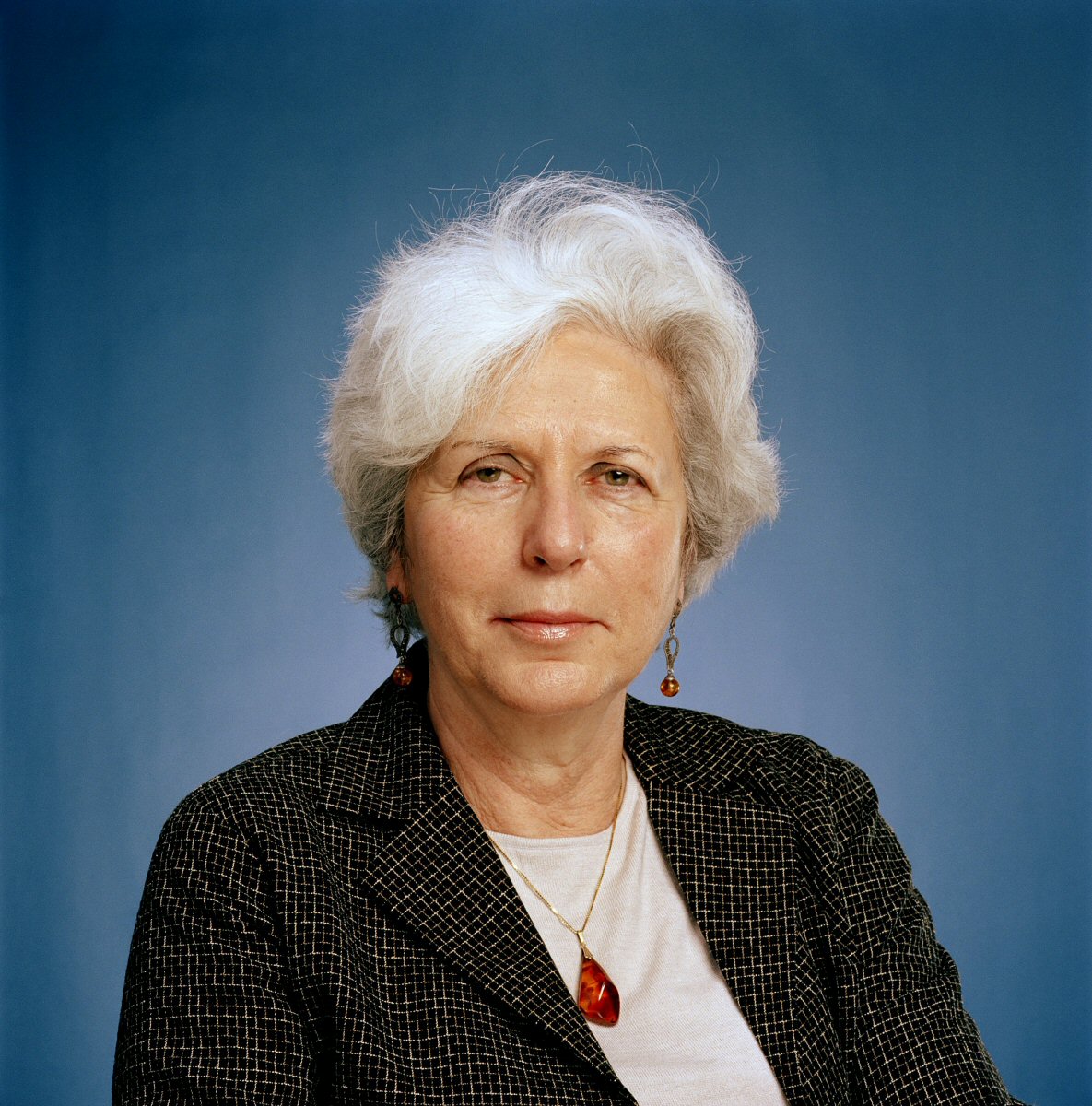
Former Senior Associate, Middle East Program
Before joining the Endowment, Ottaway carried out research in Africa and in the Middle East for many years and taught at the University of Addis Ababa, the University of Zambia, the American University in Cairo, and the University of the Witwatersrand in South Africa.
Recent Work
Marina Ottaway, Omar Hossino
Marina Ottaway
Carnegie does not take institutional positions on public policy issues; the views represented herein are those of the author(s) and do not necessarily reflect the views of Carnegie, its staff, or its trustees.

It should address the shortcomings of previous crisis communication efforts and adapt to the demands of frontier AI.

Lucy Luo

If the Russian-speaking community in Latvia cannot articulate their interests without being seen as disloyal, they could end up embracing a pro-Kremlin agenda.

Sergejs Potapkins

Washington’s decision to support some UN functions while letting others wither is pulling the organization apart at the seams.

Stewart Patrick, Theodore Zaritsky

While there are notable demographic, economic, and geographic divides over AI, there is also substantial alignment between Republicans and Democrats.


Ian Klaus, Mark Baldassare, Rachel George, …

Are Germany’s economic, industrial, and political struggles becoming a liability for the EU’s ability to rise to the geopolitical moment?

Rym Momtaz, ed.