

In The Media
David Rothkopf
{
  "authors": [
    "David Rothkopf"
  ],
  "type": "legacyinthemedia",
  "centerAffiliationAll": "",
  "centers": [
    "Carnegie Endowment for International Peace"
  ],
  "collections": [],
  "englishNewsletterAll": "",
  "nonEnglishNewsletterAll": "",
  "primaryCenter": "Carnegie Endowment for International Peace",
  "programAffiliation": "",
  "programs": [],
  "projects": [],
  "regions": [
    "North America",
    "United States"
  ],
  "topics": [
    "Political Reform",
    "Economy",
    "Trade"
  ]
}
Source: Getty
The G20 meeting scheduled for November 15 will begin to restructure the global economic order, presenting new challenges to the leaders of wealthy nations. The U.S. must support new global financial institutions and regulatory systems, and President-elect Obama will need to convince Americans that stronger multilateral mechanisms will actually help preserve our sovereignty and influence.
Source: Telegraph

It's a sad fate for a once cute little boy, but it is an instructive one if you want to understand some of the dilemmas likely to face the new administration as it grapples with the consequences of this weekend's economic summit in Washington.
France's President, Nicolas Sarkozy, who helped persuade President Bush to play host to the summit, comes to the meeting like many other leaders from Europe, Asia and elsewhere: with a sweeping vision of the work to be done. They want to do nothing less than remake the world, or at least to transform post-war international financial structures to reflect what they consider to be a new global financial order.
This could mean dramatically renovating - or even replacing - the World Bank and the IMF and creating new institutions such as a Global Monetary Authority: a central bank for the planet. It would also mean establishing a new set of international financial market standards and strengthening the co-ordination between government regulators and central bankers.
For any structural changes to be meaningful, however, a number of important philosophical and even cultural changes are required as well. One of the reasons that the IMF has fallen on to such hard times is that it was seen as forcing the developing world to accept an orthodox recipe for capitalism that was politically difficult to swallow. This view - "the Washington consensus" - was a tough sell even before Washington made itself anathema to the world with Mr Bush's foreign policy. It became harder still when America threw many of its basic precepts out the window in its response to the recent financial crisis.
The consensus will require a brand make-over, or countries will seek their support elsewhere - an option that is more possible when some of the biggest pools of capital are in China, the Gulf or other emerging countries.
This shift in the balance of soft power, the rise of a new set of economic players with deep pockets and agendas not in step with those of the West, demands another philosophical shift. The November 15 meeting - not of the G7, but of the G20 - recognises this, acknowledging that there is no managing the international economy without the big emerging markets - China, India, Brazil and others - at the table. This shift is a profound one, marking the beginning of the end of the G7 as the head table of the international economy.
New or improved financial structures, created in what some would call Bretton Woods II, after the July 1944 meeting that first created the frameworks for today's global financial system, can work only if the power shift from G7 to G20 is institutionalised within those organisations and within the thinking of their political elites.
Finally, of course, world leaders must acknowledge that much of what was once believed is not true. In the simpler world in which most current regulators and policy makers grew up, money was the prime repository of value in the global economy, the key tool for policy makers to work with. Today, with more than $500 trillion in derivative financial instruments estimated to be in circulation, it is these private-sector-created instruments and other securities - many of which are complex, risky, opaque to tracking and analysis - that are the new "money".
Self-regulating global markets now churn beyond the control of those we once depended on to ensure their smooth and fair operation. To restabilise the global financial system, we need both new tools and a new set of instructions for a global economy that has a lot of new and complicated working parts.
Which brings us back to Linus. To deal effectively with these issues will require not just creativity and vision, but also a willingness to create stronger international institutions. And the Obama team, no matter how capable, will be in a difficult place. Because while our party, the Democrats, loves multilateralism, there are some within it who can't stand globalisation.
While we love burden-sharing and alliances, a vocal subset of the party is very wary of the power of global institutions such as the WTO, just as those on the Right are afraid of "ceding sovereignty" to strong new international institutions, or control to international economic decision makers.
Yet voluntary co-operation among nations has proved insufficient to manage this system. Stronger medicine is needed. Those who would benefit from a reduction in the effects of upsets need to play by the same rules, set common standards and ensure market transparency. This means much stronger commitments from nations, whether through new or just transformed institutions. And that will be a tough sell for Obama, especially as these institutions will also have to accept a growing role for the emerging powers.
The trick will be for him to spell out that, when international institutions are too weak or they fail, the citizens of any nation have less influence over global affairs or none at all … and so it is only through effective and stronger multilateral mechanisms that we can actually preserve our sovereignty and influence.
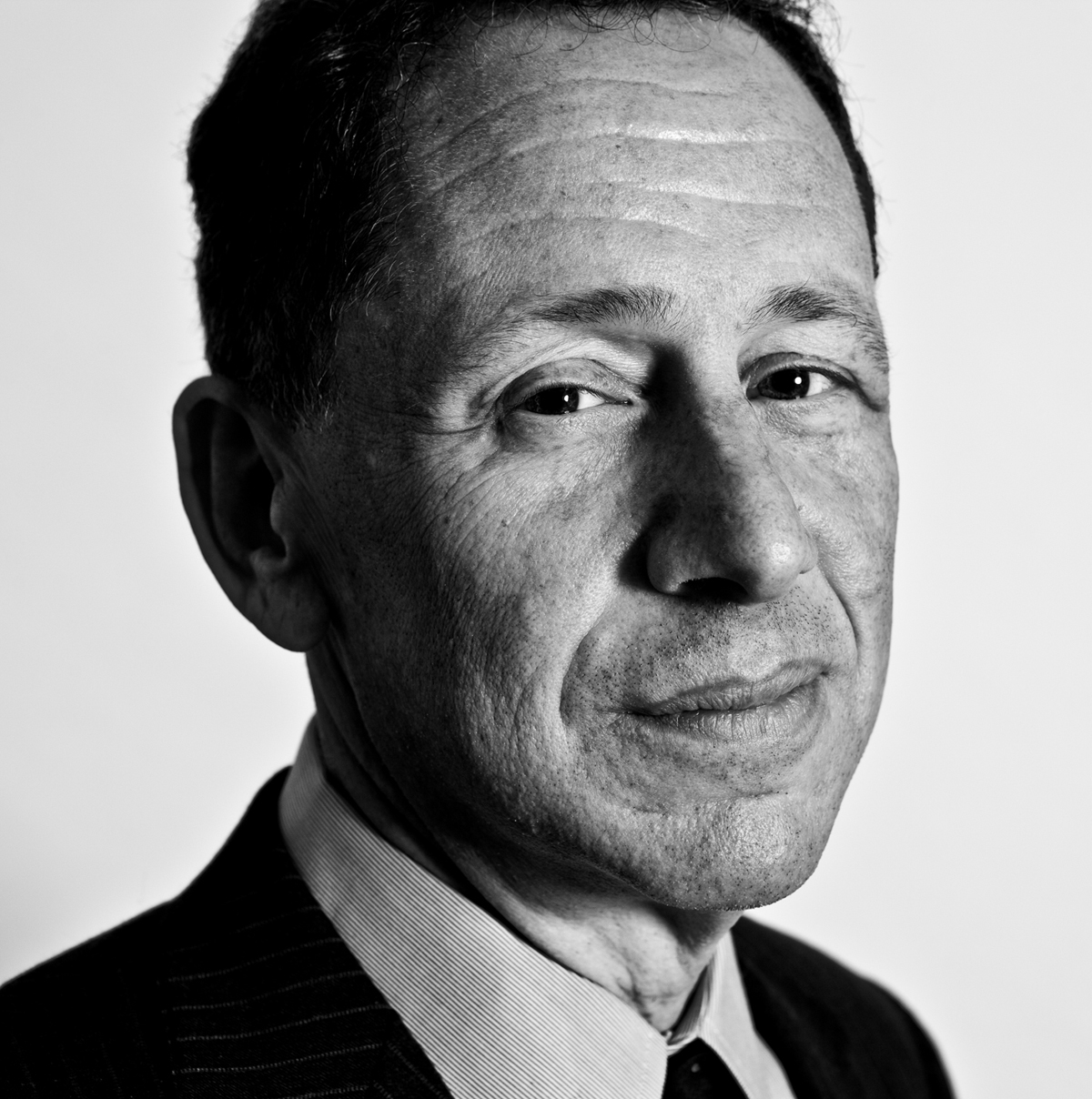
Former Visiting Scholar
David Rothkopf was a visiting scholar at the Carnegie Endowment as well as the former CEO and editor in chief of the FP Group.
Recent Work
David Rothkopf
David Rothkopf
Carnegie does not take institutional positions on public policy issues; the views represented herein are those of the author(s) and do not necessarily reflect the views of Carnegie, its staff, or its trustees.

Despite its flop at the box office, the film raises important questions for the climate community to answer.
Leonardo Martinez-Diaz

Russian strikes are weakening the economy sustaining Ukraine’s war effort. Closing the growing funding gap will require more European support and politically contentious reforms in Kyiv.

Balázs Jarábik

In an interview, Rozina Ali discusses her new book on the rise and manifestations of Islamophobia in the United States.

Michael Young

While the EU and European governments are embracing the much-lauded middle-power moment, this entails three difficult conundrums.

Richard Youngs

Ex-president Gurbanguly Berdimuhamedov remains interested in politics, but his son Serdar, Turkmenistan’s current president, is becoming increasingly independent and willing to break with his father’s legacy. If their covert rivalry goes too far, both risk losing power.

Galiya Ibragimova