

Paper
Adam Baczko, Gilles Dorronsoro, Arthur Quesnay
{
  "authors": [
    "Gilles Dorronsoro"
  ],
  "type": "legacyinthemedia",
  "centerAffiliationAll": "dc",
  "centers": [
    "Carnegie Endowment for International Peace"
  ],
  "collections": [],
  "englishNewsletterAll": "ctw",
  "nonEnglishNewsletterAll": "",
  "primaryCenter": "Carnegie Endowment for International Peace",
  "programAffiliation": "SAP",
  "programs": [
    "South Asia"
  ],
  "projects": [],
  "regions": [
    "North America",
    "United States",
    "South Asia",
    "Afghanistan"
  ],
  "topics": [
    "Security",
    "Military",
    "Foreign Policy"
  ]
}
Source: Getty
In the southern and eastern regions of Afghanistan, American troops could win every battle and still fail to hold the ground. But if the U.S. focuses in and around Kabul, it can provide security for the Afghan people, and win a peace it can pass on to them.
Source: U.S. News & World Report

Criminal activities have declined in Logar because the Taliban are actually in control of the population, and are building a parallel judiciary which is more efficient than the corrupt administration that is officially in charge. As in other provinces, a low level of violence often shows only that the insurgency is in power. The Taliban has no need to fight in these places because the Afghan government and international coalition forces don't even operate in them.
A better indicator of the real state of a region is the ability or inability to travel freely in it. Employees of the Afghan government limit their private travels to Logar, which widens the growing political gap between Kabul and the surrounding areas. The Taliban have been circulating in the villages of Logar for three years, speaking with the population, and capitalizing on resentment for the coalition and the government. So there is naturally a lapse between the Taliban's political infiltrations and its military activities. At best, the military map is yesterday's map: it indicates the expansion of the insurgency after the Taliban have already become entrenched in local communities.
U.S. strategic planners must recognize that the places where the Taliban are in control, but not fighting, are essential logistical bases for the insurgency. Logar enables insurgents to enter the country from Pakistan, and conduct intelligence and strike preparations against targets in Kabul.
The political map in Afghanistan indicates that the Taliban strategy is much better planned and more homogenous than is generally thought. The insurgents are more than local groups fighting for economic interests. They have strategic aims: to pressure Kabul and its surroundings, and perhaps bomb the capital.
This analysis suggests general guidance in deciding where the United States should send reinforcements. A major argument for sending more troops south and east has been the fact that most of the fighting happens there, in 10 percent of the districts (the military map). The presumptive U.S. strategy would be to secure these areas with added troops on the ground, to marginalize the Taliban progressively, and ideally to split the insurgency.
A more realistic political assessment shows that this strategy will suffer from two major flaws. First, since the social and political base of the Taliban is much larger than the fighting indicates, securing some districts might lead only to a shift of fighting to neighboring districts: a game of whack-a-mole. Since the coalition doesn't (and won't) have enough troops to secure large areas, the net result will not be positive. Like certain opium eradication programs in Afghanistan, which succeed at a local level but fail nationwide, it will just move the problem somewhere else.
Second, if U.S. reinforcements are sent south and east, the Taliban will be able to deepen their political penetration in the north and west, increasing pressure on the coalition, which cannot fight on all fronts. This introduces the risk of losing the strategic initiative to the Taliban or, more to the point, not regaining it from them.
As they decide where to concentrate their efforts in the next few years, American policymakers must think in political terms rather than strictly military ones. The political progress of the insurgency is just as important if not more so than the actual level of fighting in a province. As U.N. maps show, a large part of Afghanistan is increasingly off-limits to foreigners and Afghan government employees alike. This trend cannot simply be explained by banditry or local grievances. It reflects the spreading momentum of the insurgency, and the Taliban's steady approach to the capital.
For both the coalition and the insurgents, there is no greater political trophy than the capital. In spite of American hopes, the Afghan National Army is not yet able to secure Kabul, so President Obama and his team must commit to reversing the degradation of the situation there and in the surrounding provinces.
In the southern and eastern regions of Afghanistan, American troops could win every battle and still fail to hold the ground. But if the U.S. focuses in and around Kabul, it can provide security for the Afghan people, and win a peace it can pass on to them.
Gilles Dorronsoro is a visiting scholar at the Carnegie Endowment for International Peace.
This article originally appeared in U.S. News & World Report on February 20, 2009.
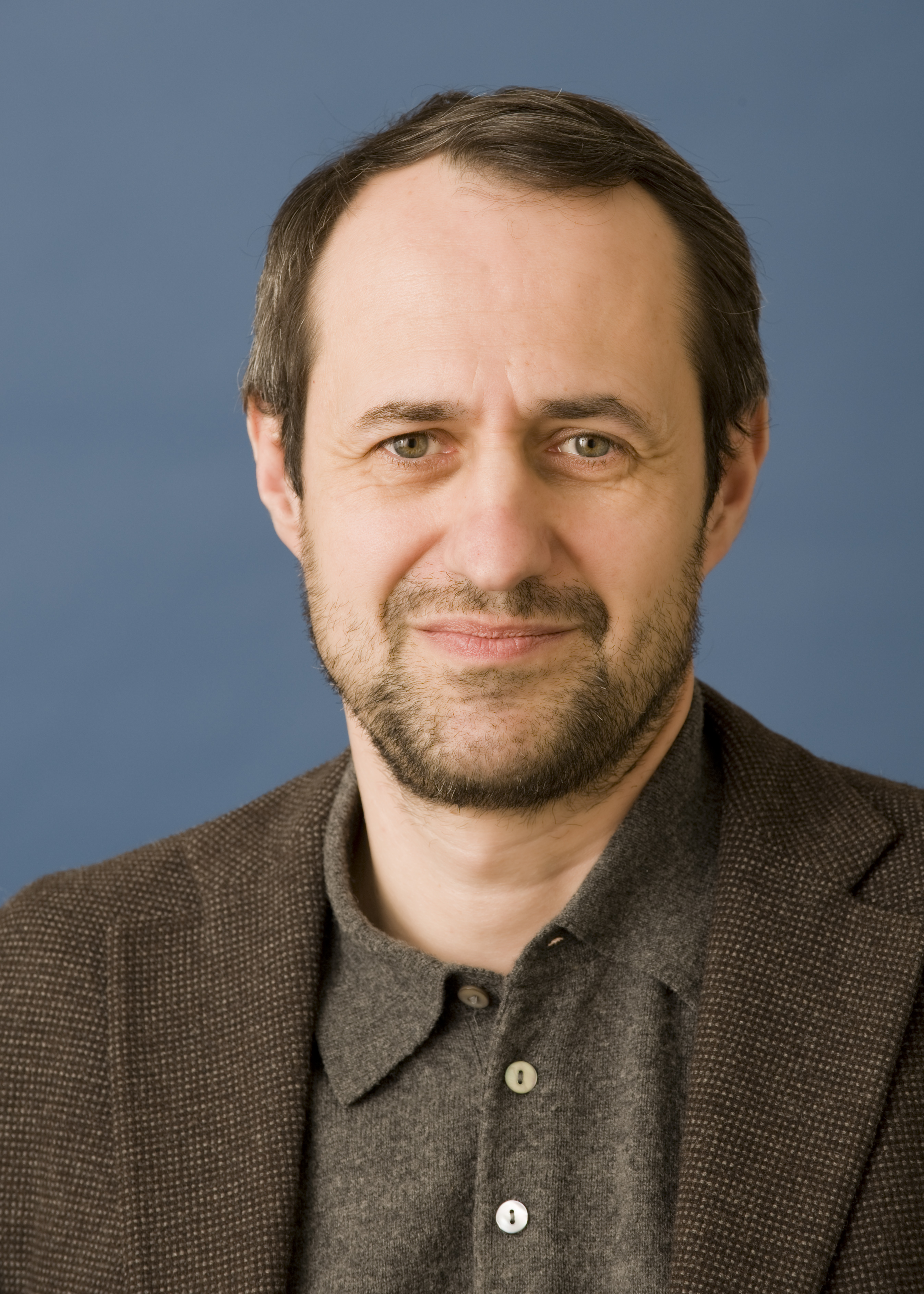
Former Nonresident Scholar, South Asia Program
Dorronsoro’s research focuses on security and political development in Afghanistan. He was a professor of political science at the Sorbonne in Paris and the Institute of Political Studies of Rennes.
Recent Work
Adam Baczko, Gilles Dorronsoro, Arthur Quesnay
Gilles Dorronsoro
Carnegie does not take institutional positions on public policy issues; the views represented herein are those of the author(s) and do not necessarily reflect the views of Carnegie, its staff, or its trustees.

The real test may come after the leaders leave the room.



Sheena Chestnut Greitens, Oriana Skylar Mastro, Yukon Huang, …

The Horn of Africa countries are among those facing a new security calculus.


Andrew Leber, Lesley Anne Warner

The European far right might fail to steer EU policy in the direction Russia wants, but they will create enough chaos inside Europe to benefit the Kremlin.

Dimitar Bechev

The new U.S.–Denmark–Greenland agreement will help Washington exert political, economic, and financial dominance under the guise of security. Yet, it acknowledged Copenhagen’s and Nuuk’s sovereignty on the island.

Marc Pierini

The nuclear relationship between China and the United States is increasingly shaped by widening perception gaps rather than deliberate strategic design.

Tong Zhao