

Commentary
Michael Pettis
{
  "authors": [
    "Michael Pettis"
  ],
  "type": "legacyinthemedia",
  "centerAffiliationAll": "dc",
  "centers": [
    "Carnegie Endowment for International Peace"
  ],
  "collections": [],
  "englishNewsletterAll": "asia",
  "nonEnglishNewsletterAll": "",
  "primaryCenter": "Carnegie Endowment for International Peace",
  "programAffiliation": "AP",
  "programs": [
    "Asia"
  ],
  "projects": [],
  "regions": [
    "East Asia",
    "China"
  ],
  "topics": [
    "Economy"
  ]
}
Source: Getty
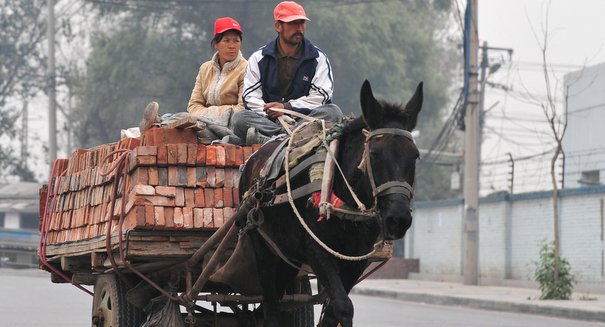
China’s transition from an economy fueled by exports to one that relies on domestic consumption will require a transformation of its most basic economic institutions and the creation of a much larger social safety net — a process that will take many years.
Source: Financial Times

If China can kick-start growth in consumption, they argue, it will relieve pressure on other countries reeling from a drop in US and global demand.
But these demands are unrealistic. Although it is clear that the development model that served the country for so long has outlived its usefulness, it is just as clear that the move towards a new, sustainable model will take great effort and many years.
Policymakers have known for nearly a decade that the country must make the transition, but engineering it is more easily said than done.
The old export model is so entrenched in the banking system and in the growth plans pursued by provincial and central governments and state-owned enterprises that, instead of an increasing reliance on domestic consumption to power growth, over the past five years, consumption has actually declined and the trade surplus risen.
This sort of transition never occurs as a rapid and orderly shift, in which manufacturers stop shipping goods overseas and begin distributing them domestically.
In China’s case, it will require a retooling of the financial system, the creation of a much larger service sector, the establishment of a robust and credible social safety net and – most importantly – the politically difficult elimination of centralised policies that encourage manufacturing and savings and suppress consumption.
But not only are these changes unlikely to be effective in creating domestic demand except in the long term, they may easily cause a rise in unemployment in the short term.
For example, the transition to a domestic-consumption-led economy normally occurs as exporters are forced into bankruptcy and their assets and workers are freed and gradually redeployed to serving the domestic market. This already seems to be happening.
Changing Chinese consumer attitudes towards saving will require not just the creation of a wide and strong social safety net, but also that households find the system credible. This will only come to pass over several years as they test the system.
Precedents confirm the slowness and difficulty of the process. It took the 1797 Panic, when deflation in England disrupted commercial and real estate markets in North America, and two decades of tough economic conditions for the US to manage its own transition from export-led growth to domestic-consumption-led growth in the early 19th century.
Nearly 200 years later, Japan suffered a terrible banking crisis and two tough decades as it struggled to reduce its dependence on exports.
While the global crisis has accelerated the need for China to make the transition, it has also made it risky for the government to force a massive increase in bank lending and fiscal spending to counteract the impact of declining global consumption.
Given the limitations of the country’s economic model and financial system, almost any serious fiscal push is likely to increase production capacity at least as much as permanent consumption. This means that, in the short term, China might become more dependent than ever on foreign demand, but it is not at all obvious that the demand will be there.
If fiscal expansion to replace foreign demand is forced at too quick a rate, there is a serious risk that, if the global economic contraction persists for two or three more years, the country will have more overcapacity and be in a weaker fiscal and financial position.
In the past 30 years, China has gone though three distinct stages of development.
The first, which occurred mostly in the first decade, involved unshackling social and economic structures. This permitted a burst of entrepreneurial activity and an explosion in productivity growth. The second stage, which occurred mainly in the 1990s, involved a turn towards large-scale fiscal expansion, mainly through the banking system.
The third stage occurred as the world underwent rapid monetary expansion and China invested in domestic manufacturing to supply the US’s debt-fuelled consumption.
The global crisis has finally killed off the third stage. We are now in a very different world, one in which China and other developing countries can no longer rely on a seemingly infinite capacity to consume on the part of US households.
This will lead to a long and difficult restructuring of the economy. The world needs this to occur as smoothly as possible, but domestic worries about the process will inevitably trump global concerns.

Nonresident Senior Fellow, Carnegie China
Michael Pettis is a nonresident senior fellow at the Carnegie Endowment for International Peace. An expert on China’s economy, Pettis is professor of finance at Peking University’s Guanghua School of Management, where he specializes in Chinese financial markets.
Recent Work
Michael Pettis
Michael Pettis
Despite public disputes over trade and immigration, the strategic partnership’s foundations remain sturdy.

Sameer Lalwani

With its public finances in shambles, the far right polling at 35 percent ahead of the 2027 presidential election, and a growing protest movement, is France’s crisis a threat to the EU’s geopolitical awakening?

Rym Momtaz, ed.

Russian strikes are weakening the economy sustaining Ukraine’s war effort. Closing the growing funding gap will require more European support and politically contentious reforms in Kyiv.

Balázs Jarábik

While the EU and European governments are embracing the much-lauded middle-power moment, this entails three difficult conundrums.

Richard Youngs

Europe is facing rising populism internally as well as external pressures from Russia, China, Turkey, and the United States.

Dimitar Bechev