• Research
  • Emissary
  • About
  • Experts
Carnegie Global logoCarnegie lettermark logo
DemocracyIran
  • Donate
{
  "authors": [],
  "type": "pressRelease",
  "centerAffiliationAll": "dc",
  "centers": [
    "Carnegie Endowment for International Peace"
  ],
  "collections": [],
  "englishNewsletterAll": "menaTransitions",
  "nonEnglishNewsletterAll": "",
  "primaryCenter": "Carnegie Endowment for International Peace",
  "programAffiliation": "MEP",
  "programs": [
    "Middle East"
  ],
  "projects": [],
  "regions": [
    "Middle East"
  ],
  "topics": [
    "Economy"
  ]
}
REQUIRED IMAGE

REQUIRED IMAGE

Press Release

Reformed Wealth Funds Could Help Economic Recovery

Sovereign wealth funds could contribute to global economic recovery by reinvigorating international investment, if they first responded to the reservations of recipient governments by increasing transparency and improving public image.

Link Copied
Published on Apr 10, 2009
Program mobile hero image

Program

Middle East

The Middle East Program in Washington combines in-depth regional knowledge with incisive comparative analysis to provide deeply informed recommendations. With expertise in the Gulf, North Africa, Iran, and Israel/Palestine, we examine crosscutting themes of political, economic, and social change in both English and Arabic.

Learn More

BEIRUT, Apr 3—Sovereign wealth funds (SWFs) could contribute to global economic recovery by reinvigorating international investment, if they first responded to the reservations of recipient governments by increasing transparency and improving their public image. Ahead of the April 5-6 meeting of the International Working Group of Sovereign Wealth Funds (IWG), Sven Behrendt offers a twelve-point blueprint for implementing and expanding upon the Santiago Principles.

The 12-point blueprint:

  1. Establish deadlines for implementing the Santiago Principles.
  2. Create a peer-review mechanism to monitor implementation of reforms.
  3. Publicly disclose any non-financial factors considered when making investments.
  4. Coordinate investments in projects that further the common good, like sustainable development.
  5. Engage recipient governments in a dialogue to address their misgivings about SWFs.
  6. Reach out to the public in recipient countries to avert a populist backlash against SWFs.
  7. Develop policy recommendations for the G20 as it seeks to stabilize world markets.
  8. Establish an advisory group of policymakers and investment professionals to provide insight into governance, investment strategies, risk management, and public relations.
  9. Increase public knowledge about SWFs through cooperation with researchers and analysts.
  10. Broaden IWG membership to include all government-owned investment funds.
  11. Clarify and publicize the IWG’s goals, strategies, and structure.
  12. Appoint a professional IWG secretariat to coordinate oversight and outreach.

Behrendt concludes:

“Given global market volatility, SWFs have been less active in past months. The public debate about their impact on the national interest of recipient economies has calmed down. However, the IWG should take a medium- to long-term perspective and proactively pursue its reform agenda to be prepared when the global economy picks up and SWFs seek global opportunities again.”

###


NOTES

  • Click here for a direct link to the PDF
  • Sven Behrendt is a visiting scholar at the Carnegie Middle East Center. He is an expert in global policy issues, international negotiations, corporate strategy, and diplomacy. Prior to his appointment at Carnegie, he served in various management positions at the World Economic Forum and the Bertelsmann Group on Policy Research. He is a regular commentator on television and in the press on corporate strategy and globalization.
  • The Carnegie Middle East Center based in Beirut, Lebanon, aims to better inform the process of political change in the Middle East.
  • The Carnegie Middle East Program provides analysis and recommendations in both English and Arabic that are deeply informed by knowledge and views from the region.
  • Carnegie's Arab Reform Bulletin has been transformed into a full-featured website that offers greatly enhanced search functionality, the option for readers to comment on articles, and frequent news updates.
  • Press Contact: Trent Perrotto, 202/939-2372, tperrotto@ceip.org
     
EconomyMiddle East

Carnegie does not take institutional positions on public policy issues; the views represented herein are those of the author(s) and do not necessarily reflect the views of Carnegie, its staff, or its trustees.
More Work from Carnegie Endowment for International Peace

  • Trump with arms out, surrounded by mics
    Commentary
    Emissary
    The Problem With the Idea That Netanyahu Made Trump Attack Iran

    Going to war was the U.S. president’s decision, for which he alone is responsible.

      Daniel C. Kurtzer, Aaron David Miller

  • Trump and Netanyahu speaking
    Commentary
    Emissary
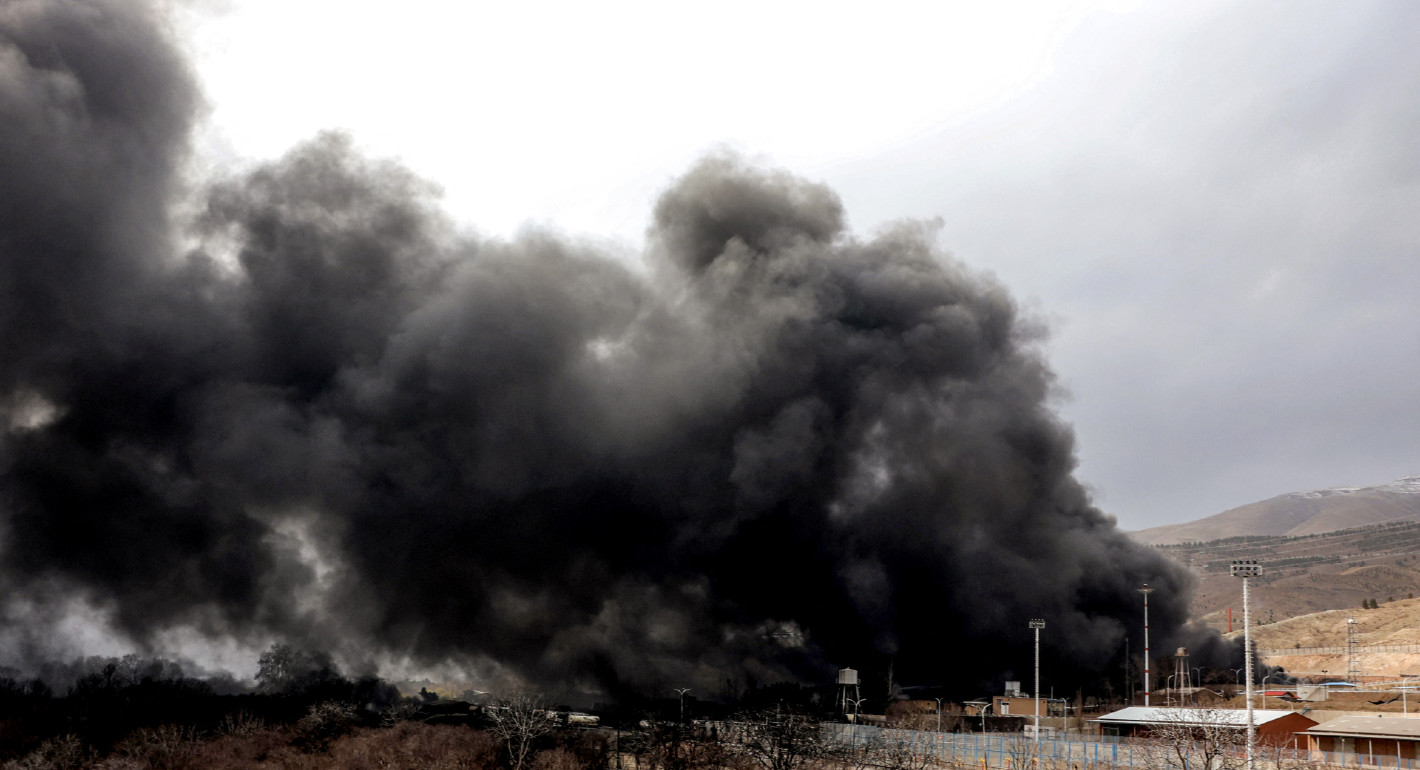
    The Diverging U.S. and Israeli Goals in Iran Are Making the Endgame Even Murkier

    The cracks between Trump and Netanyahu have become more pronounced, particularly over energy and leadership targets.

      • Eric Lob

      Eric Lob

  • Seoul traffic at night
    Commentary
    Emissary
    How the Hormuz Closure Is Testing the Korean President’s Progressive Agenda

    The crisis is not just a story of energy vulnerability. It’s also a complex, high-stakes political challenge.

      Darcie Draudt-Véjares

  • Commentary
    Strategic Europe
    Russia’s Imperial Retreat Is Europe’s Strategic Opportunity

    The war in Ukraine is costing Russia its leverage overseas. Across the South Caucasus and Middle East, this presents an opportunity for Europe to pick up the pieces and claim its own sphere of influence.

      William Dixon, Maksym Beznosiuk

  • Mourners hold up their phones showing images of Ali Khamenei during a memorial vigil after Iranian state media confirmed the death of Ayatollah Ali Khamenei on March 1, 2026 in Tehran, Iran.
    Article
    Iran Wields Wartime Internet Access as a Political Tool

    In an effort to disseminate its preferred message, the Iranian regime is offering a simple transaction: connectivity for amplification.

      Mahsa Alimardani

Get more news and analysis from
Carnegie Endowment for International Peace
Carnegie global logo, stacked
1779 Massachusetts Avenue NWWashington, DC, 20036-2103Phone: 202 483 7600Fax: 202 483 1840
  • Research
  • Emissary
  • About
  • Experts
  • Donate
  • Programs
  • Events
  • Blogs
  • Podcasts
  • Contact
  • Annual Reports
  • Careers
  • Privacy
  • For Media
  • Government Resources
Get more news and analysis from
Carnegie Endowment for International Peace
© 2026 Carnegie Endowment for International Peace. All rights reserved.