• Research
  • Emissary
  • About
  • Experts
Carnegie Global logoCarnegie lettermark logo
DemocracyIran
  • Donate
{
  "authors": [
    "Nikolay Petrov"
  ],
  "type": "legacyinthemedia",
  "centerAffiliationAll": "",
  "centers": [
    "Carnegie Endowment for International Peace",
    "Carnegie Russia Eurasia Center"
  ],
  "collections": [],
  "englishNewsletterAll": "",
  "nonEnglishNewsletterAll": "",
  "primaryCenter": "Carnegie Russia Eurasia Center",
  "programAffiliation": "",
  "programs": [],
  "projects": [],
  "regions": [
    "Caucasus",
    "Russia"
  ],
  "topics": [
    "Political Reform",
    "Economy"
  ]
}
Source: Getty

In The Media
Carnegie Russia Eurasia Center

For Whom the Kremlin Bell Tolls

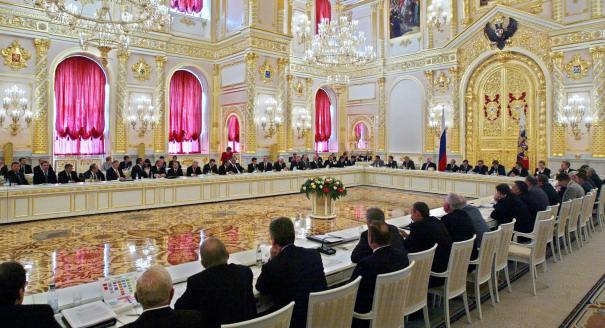
Newly-released survey results show that Russians are holding regional leaders, rather than the federal government, responsible for the economic crisis in their regions. But federal authorities won't be able to get away with this forever.

Link Copied
By Nikolay Petrov
Published on May 26, 2009

Source: The Moscow Times

For Whom the Kremlin Bell TollsThe Kremlin-connected Public Opinion Foundation regularly conducts polls in 60 regions across the country. Although the foundation does not usually divulge its findings to the public, it recently released the results of two surveys conducted in November and March. 

The latter survey reported that for the first time in six years, only 36 percent of those questioned held a favorable opinion of their regional leaders, while 37 percent held a negative opinion. Similarly, 38 percent of respondents nationwide felt that the government is doing a good job, and 36 percent thought just the opposite. Only in the three regions where the leaders enjoy broad popular support -- Tatarstan, Khanty-Mansiisk and Tomsk -- were more people satisfied than dissatisfied with the state of affairs. 
 
The survey revealed a direct correlation between a region's economic condition and the popularity of its leader, with the Voronezh region and its governor faring the worst and the republic of Tatarstan and its president at the top of the list. It turns out that people hold their regional leaders to be more directly responsible for the situation in the region then they do the federal government. 
 
Although respondents in some regions gave similar ratings to both their regional heads and the federal government -- with high marks given in Tatarstan and Khanty-Mansiisk and a more critical assessment in the Tver and Saratov regions -- the results in a number of other regions were mixed. For example, people questioned in the Udmurtia and Tambov regions gave a relatively positive appraisal of the federal government but a more negative evaluation of their regional leaders. 
 
The survey revealed that a number of major gubernatorial figures had suffered a serious blow to their authority, with popularity ratings falling by an average of 20 percent for Valentina Matviyenko of St. Petersburg, Valery Shantsev of Nizhny Novgorod, Eduard Rossel of Sverdlovsk, Alexander Tkachyov of Krasnodar and many others. 
 
It appears that the governors of the urbanized and industrialized regions that suffered the worst by the crisis fell furthest in their ratings. Among the few regional heads whose popularity actually increased, the most notable are the recently installed governors of Kirov, Orlov and Khakasia. But this is not so much a vote of confidence in their performance as it is hope that things might improve.
 
Respondents gave their lowest evaluations to governors Dmitry Zelenin of Tver, Alexander Mikhailov of Kursk, Pavel Ipatov of Saratov, Sergei Katanandov of Karelia and to the governors of Voronezh and Pskov.
 
Overall, the governors of the Urals and Siberia received above-average ratings, even though their regions did not escape the effects of the crisis, while the heads of the northwest and southern regions were seen as below average. 
 
It would be incorrect to interpret the survey results as necessarily a negative appraisal of any particular governor, although it seems that was precisely the intention of the Kremlin in releasing the data. First, the findings show an overall decrease in people's faith in the authorities and not in any particular public official. Second, governors are seen as Moscow strongholds or "ambassadors" appointed by the Kremlin. They are like a fence between the federal government and citizens, and this protects Prime Minister Vladimir Putin from negative fallout during the crisis. 
 
But even if the federal authorities manage to deflect some of the responsibility for the crisis onto regional leaders, they won't be able to get away with this forever.
 
This commentary first appeared in The Moscow Times

About the Author

Nikolay Petrov

Former Scholar-in-Residence, Society and Regions Program, Moscow Center

Nikolay Petrov was the chair of the Carnegie Moscow Center’s Society and Regions Program. Until 2006, he also worked at the Institute of Geography at the Russian Academy of Sciences, where he started to work in 1982.

    Recent Work

  • Commentary
    Moscow Elections: Winners and Losers

      Nikolay Petrov

  • Commentary
    September 8 Election As a New Phase of the Society and Authorities' Coevolution

      Nikolay Petrov

Nikolay Petrov
Former Scholar-in-Residence, Society and Regions Program, Moscow Center
Nikolay Petrov
Political ReformEconomyCaucasusRussia

Carnegie does not take institutional positions on public policy issues; the views represented herein are those of the author(s) and do not necessarily reflect the views of Carnegie, its staff, or its trustees.

More Work from Carnegie Endowment for International Peace

  • Commentary
    Carnegie Politika
    Russia and the West Want Different Things From Telegram’s Durov

    While France and Australia are seeking to establish the legal obligations of messaging apps like Telegram, Russia wants total subordination.

      Maria Kolomychenko
  • Commentary
    Carnegie Politika
    Russia’s Orthodox Church Rewrites Rules for Venerating Saints to Help the Kremlin

    The recent uncovering of Dmitry Donskoy’s relics in the Cathedral of the Archangel is yet another attempt by the Russian Orthodox Church to help the state solve its problems. However, parroting the state’s version of Russian history leaves the Church with no message except “patriotism.”
      Alexander Zanemonets

  • Commentary
    Carnegie Politika
    As It Turns 25, the Shanghai Cooperation Organization Reflects the New World Order

    With the growth in points of friction between the great powers, organizations like the SCO will continue to play a role in the strategic adaptation of the smaller powers caught between them.

      Temur Umarov
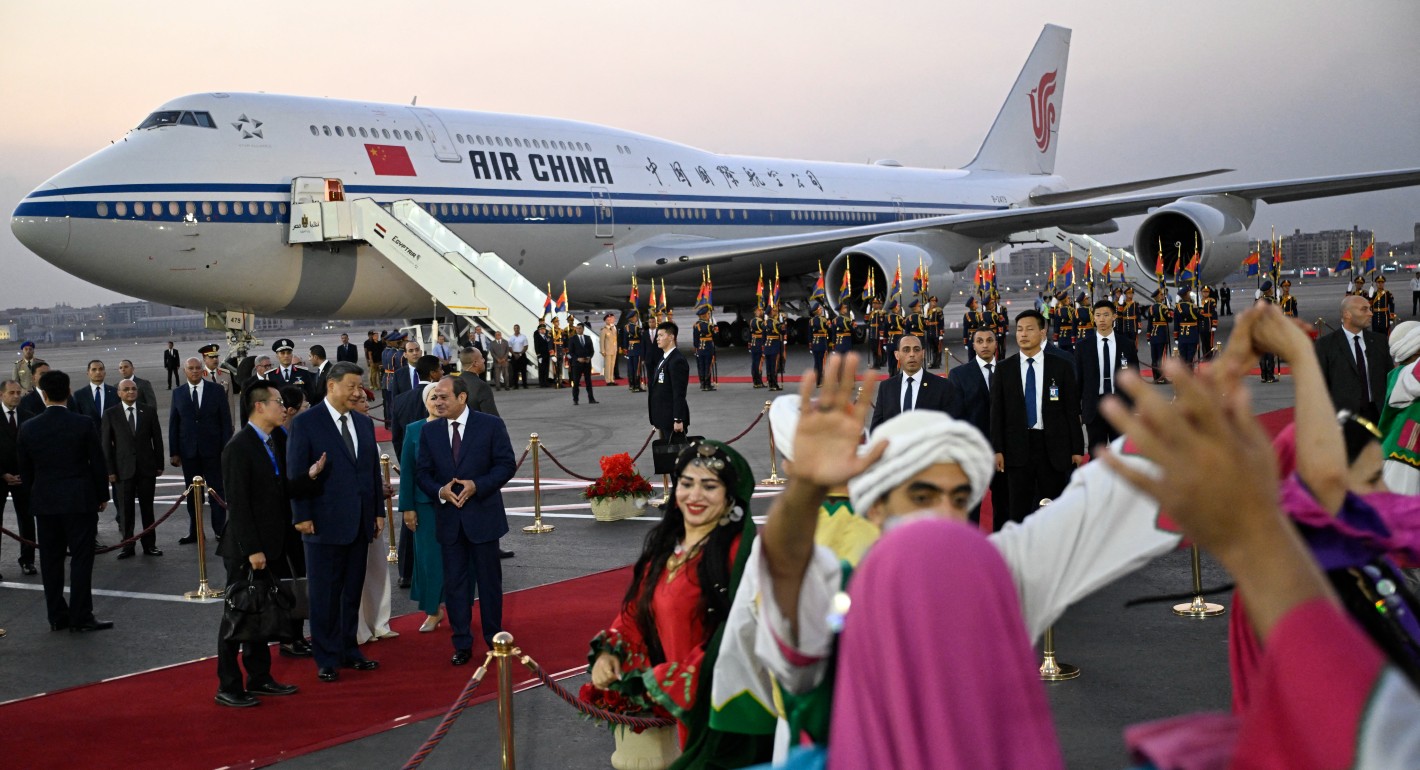
  • People dancing in the foreground, with a group of people in suites watching and an Air China plane in the background
    Commentary
    Emissary
    The Two Key Takeaways From Xi’s Egypt Visit

    Amid celebrations of bilateral ties was a deeper focus on stability in the Middle East.

      Amr Hamzawy

  • UAV Forpost of russian air force takes off at Kubinka air force base
    Article
    In Russia’s Long Drone Shadow

    Moscow is testing Europe’s defenses with drone incursions and could decide to use drones against the continent on a much larger scale once the war in Ukraine pauses. European countries will need Kyiv to help them prepare for such a possibility.
      • Pavlo Zvenyhorodskyi

      Pavlo Zvenyhorodskyi

Get more news and analysis from
Carnegie Endowment for International Peace
Carnegie global logo, stacked
1779 Massachusetts Avenue NWWashington, DC, 20036-2103Phone: 202 483 7600
  • Research
  • Emissary
  • About
  • Experts
  • Donate
  • Programs
  • Events
  • Blogs
  • Podcasts
  • Contact
  • Annual Reports
  • Careers
  • Privacy
  • For Media
  • Government Resources
Get more news and analysis from
Carnegie Endowment for International Peace
© 2026 Carnegie Endowment for International Peace. All rights reserved.