• Research
  • Emissary
  • About
  • Experts
Carnegie Global logoCarnegie lettermark logo
DemocracyIran
  • Donate
{
  "authors": [
    "Sharon Squassoni"
  ],
  "type": "other",
  "centerAffiliationAll": "dc",
  "centers": [
    "Carnegie Endowment for International Peace"
  ],
  "collections": [
    "U.S. Nuclear Policy"
  ],
  "englishNewsletterAll": "ctw",
  "nonEnglishNewsletterAll": "",
  "primaryCenter": "Carnegie Endowment for International Peace",
  "programAffiliation": "NPP",
  "programs": [
    "Nuclear Policy"
  ],
  "projects": [],
  "regions": [
    "North America",
    "United States",
    "East Asia",
    "China",
    "Caucasus",
    "Russia",
    "Western Europe",
    "United Kingdom",
    "France"
  ],
  "topics": [
    "Nuclear Policy",
    "Nuclear Energy"
  ]
}
Source: Getty

Other

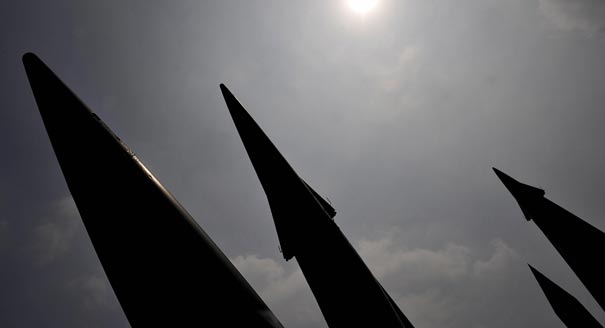
Grading Progress on 13 Steps Toward Nuclear Disarmament

All NPT states agreed in 2000 to lay out a practical path toward nuclear disarmament – the 13 Steps. While some steps toward disarmament have been taken, much more needs to be done.

Link Copied
By Sharon Squassoni
Published on May 8, 2009
Program mobile hero image

Program

Nuclear Policy

The Nuclear Policy Program aims to reduce the risk of nuclear war. Our experts diagnose acute risks stemming from technical and geopolitical developments, generate pragmatic solutions, and use our global network to advance risk-reduction policies. Our work covers deterrence, disarmament, arms control, nonproliferation, and nuclear energy.

Learn More

Source: Carnegie Endowment

Grading Progress on 13 Steps Toward Nuclear Disarms North Korea prepares for another nuclear test and Iran continues to install centrifuges to enrich uranium, the Nuclear Non-Proliferation Treaty (NPT) needs shoring up more than ever. Delegates are meeting in New York now to prepare for the next review of the landmark treaty in 2010. A topic that will certainly be on the agenda is the "13 Practical Steps" toward nuclear disarmament.

All NPT states agreed in 2000 to lay out a practical path toward nuclear disarmament—the 13 Steps. Are these still the right steps? How far have we come? Sharon Squassoni assesses the progress of the declared nuclear-weapon states (United States, Russia, China, France, and the United Kingdom) on the steps, and recommends measures to breathe new life into the 13 Steps or a similar package.

Recommendations:

  • The 13 Steps are still the currency of the nuclear bargain, but need updating. New approaches, like Japan's "11 Benchmarks for Global Nuclear Disarmament" deserve attention.
     
  • U.S. leadership is critical, but not enough. Other states, nuclear-weapon states and non-nuclear weapon states, must do their part.
     
  • Recent Russian initiatives are helpful, but nuclear weapons deserve less, rather than more emphasis in their security policies.
     
  • India, Israel, and Pakistan – all weapon states outside the NPT – must be included in the disarmament dialogue.

About the Author

Sharon Squassoni

Former Senior Associate, Nuclear Policy Program

Squassoni came to Carnegie from the Congressional Research Service. She also served for nine years in the executive branch. Her last position at the State Department was director of Policy Coordination in the Nonproliferation Bureau.

    Recent Work

  • Report
    Nuclear Energy: Rebirth or Resuscitation?

      Sharon Squassoni

  • Article
    Venezuela: A Nuclear Profile

      Nima Gerami, Sharon Squassoni

Sharon Squassoni
Former Senior Associate, Nuclear Policy Program
Sharon Squassoni
Nuclear PolicyNuclear EnergyNorth AmericaUnited StatesEast AsiaChinaCaucasusRussiaWestern EuropeUnited KingdomFrance

Carnegie does not take institutional positions on public policy issues; the views represented herein are those of the author(s) and do not necessarily reflect the views of Carnegie, its staff, or its trustees.

More Work from Carnegie Endowment for International Peace

  • Xi walking into a room with people standing and applauding around him
    Commentary
    Emissary
    The Xi Doctrine Zeros in on “High-Quality Development” for China’s Economic Future

    In the latest Five-Year Plan, the Chinese president cements the shift to an innovation-driven economy over a consumption-driven one.

      • Damien Ma

      Damien Ma

  • apan's 8,900-ton Maritime Self-Defense Force supply ship Oosumi leaves Muroran port escorted by the 4,550-ton destroyer Murasame bound for Kuwait February 20, 2004 in Muroran, Japan.
    Article
    Japan’s Security Policy Is Still Caught Between the Alliance and Domestic Reality

    Japan’s response to U.S. pressure over Hormuz highlights a broader dilemma: How to preserve the alliance while remaining bound by legal limits, public opinion, and an Asia-centered security agenda. Tokyo gained diplomatic space through an alliance-embracing strategy, but only under conditions that may not endure.

      • Ryo Sahashi

      Ryo Sahashi

  • Article
    Kenya’s Health Deal Is a Stress Test for the America First Global Health Strategy

    U.S. agreements must contend with national data protection laws to make durable foreign policy instruments.

      • A Black woman with long hair wears a black blazer

      Jane Munga, Rose Mosero

  • Commentary
    Diwan
    Trump’s Plan for Gaza Is Not Irrelevant. It’s Worse.

    The simple conclusion is that the scheme will bring neither peace nor prosperity, but will institutionalize devastation.

      Nathan J. Brown

  • Trump seated and gesturing while speaking
    Commentary
    Emissary
    The Iran War Is Making America Less Safe

    A conflict launched in the name of American security is producing the opposite effect.

      • Sarah Yerkes

      Sarah Yerkes

Get more news and analysis from
Carnegie Endowment for International Peace
Carnegie global logo, stacked
1779 Massachusetts Avenue NWWashington, DC, 20036-2103Phone: 202 483 7600Fax: 202 483 1840
  • Research
  • Emissary
  • About
  • Experts
  • Donate
  • Programs
  • Events
  • Blogs
  • Podcasts
  • Contact
  • Annual Reports
  • Careers
  • Privacy
  • For Media
  • Government Resources
Get more news and analysis from
Carnegie Endowment for International Peace
© 2026 Carnegie Endowment for International Peace. All rights reserved.