• Research
  • Emissary
  • About
  • Experts
Carnegie Global logoCarnegie lettermark logo
DemocracyIran
  • Donate
{
  "authors": [
    "Dmitri Trenin"
  ],
  "type": "legacyinthemedia",
  "centerAffiliationAll": "",
  "centers": [
    "Carnegie Endowment for International Peace",
    "Carnegie Russia Eurasia Center"
  ],
  "collections": [],
  "englishNewsletterAll": "",
  "nonEnglishNewsletterAll": "",
  "primaryCenter": "Carnegie Russia Eurasia Center",
  "programAffiliation": "",
  "programs": [],
  "projects": [],
  "regions": [
    "Caucasus",
    "Russia"
  ],
  "topics": [
    "Economy",
    "Climate Change"
  ]
}
Source: Getty

In The Media
Carnegie Russia Eurasia Center

The 2009 Time 100: Alexander Medvedev

Europe's security requires Russia's integration into a common compact with the countries of NATO and the European Union, as well as with newer states like Ukraine, Georgia and others. And a stable security arrangement needs to be flanked by an economic one encompassing the entire continent.

Link Copied
By Dmitri Trenin
Published on May 11, 2009

Source: Time

The 2009 Time 100: Alexander Medvedev
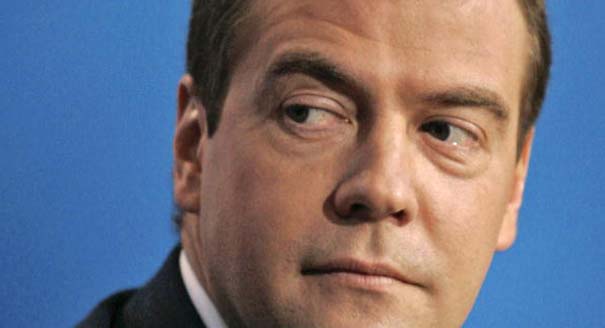
If Alexei Miller, Gazprom's CEO, is the company's public face and conduit to the Russian political leadership, Alexander Medvedev, head of Gazprom Export, is its link to the outside world. One-third of the gas consumed in Europe passes through Medvedev's hands, and 60% of Gazprom's total revenues come from exports.

Medvedev, 53, believes that Russia's business is predominantly business. Medvedev also believes in a bright future for natural gas and looks beyond the present crisis to the day when Gazprom's capitalization will shoot to a trillion dollars. Last summer it stood at a mere third of that amount.

Yet as the recurrent gas wars between Russia and Ukraine demonstrate, Europe's energy security is an area of high tension. After four decades of being Europe's main gas provider, Russia has seen its originally stellar reputation — it pumped away even as the Soviet Union was disintegrating — become severely damaged. Medvedev can give brilliant rejoinders to critics, but more and more people are talking about how to ensure Europe's energy security against the whims of Russia, its lead supplier.

Those thinking strategically about energy, however, need to think outside the box. Europe's security requires Russia's integration into a common compact with the countries of NATO and the European Union, as well as with newer states like Ukraine, Georgia and others. And a stable security arrangement needs to be flanked by an economic one encompassing the entire continent. After World War II, the nucleus of what later became the European Union was formed around the European Coal and Steel Community. With luck, a European Energy Community will be a similar catalyst for the E.U. and its post-Soviet neighbors, including Russia. Alexander Medvedev of Gazprom and President Dmitri Medvedev of the Kremlin have their work cut out for them.
 
This article originally appeared in Time

About the Author

Dmitri Trenin

Former Director, Carnegie Moscow Center

Trenin was director of the Carnegie Moscow Center from 2008 to early 2022.

    Recent Work

  • Commentary
    Mapping Russia’s New Approach to the Post-Soviet Space

      Dmitri Trenin

  • Commentary
    What a Week of Talks Between Russia and the West Revealed

      Dmitri Trenin

Dmitri Trenin
Former Director, Carnegie Moscow Center
EconomyClimate ChangeCaucasusRussia

Carnegie does not take institutional positions on public policy issues; the views represented herein are those of the author(s) and do not necessarily reflect the views of Carnegie, its staff, or its trustees.

More Work from Carnegie Endowment for International Peace

  • Commentary
    Carnegie Politika
    Why Did Messaging App Telegram Fall From Grace in Russia?

    The history of Telegram’s relations with the Russian state offers a salutary lesson for international platforms that believe they can reach a compromise with the Kremlin.

      Maria Kolomychenko

  • Commentary
    Strategic Europe
    Russia’s Imperial Retreat Is Europe’s Strategic Opportunity

    The war in Ukraine is costing Russia its leverage overseas. Across the South Caucasus and Middle East, this presents an opportunity for Europe to pick up the pieces and claim its own sphere of influence.

      William Dixon, Maksym Beznosiuk

  • Commentary
    Is the Radical-Right Threat Existential or Overstated?

    Amid increased polarization and the influence of disinformation, radical-right parties are once again gaining traction across Europe. With landmark elections on the horizon in several countries, are the EU’s geostrategic vision and fundamental values under existential threat?

      Catherine Fieschi, Cas Mudde

  • Commentary
    Carnegie Politika
    The Nuances of Oscar-Winning Film “Mr. Nobody Against Putin”

    It’s disingenuous to criticize a film for simplifying Russia’s complexities when Russia is waging a brutally simple war of aggression against its neighbor.

      Alexander Baunov

  • Paper
    Belligerent and Beleaguered: Russia After the War with Ukraine

    No matter how its war against Ukraine ends, Russia will emerge less secure, more aggrieved, and posing a greater threat to Europe than it did when it started this war.

      • Eugene Rumer

      Eugene Rumer

Get more news and analysis from
Carnegie Endowment for International Peace
Carnegie global logo, stacked
1779 Massachusetts Avenue NWWashington, DC, 20036-2103Phone: 202 483 7600Fax: 202 483 1840
  • Research
  • Emissary
  • About
  • Experts
  • Donate
  • Programs
  • Events
  • Blogs
  • Podcasts
  • Contact
  • Annual Reports
  • Careers
  • Privacy
  • For Media
  • Government Resources
Get more news and analysis from
Carnegie Endowment for International Peace
© 2026 Carnegie Endowment for International Peace. All rights reserved.