

Commentary
Nikolay Petrov
{
  "authors": [
    "Nikolay Petrov"
  ],
  "type": "legacyinthemedia",
  "centerAffiliationAll": "",
  "centers": [
    "Carnegie Endowment for International Peace",
    "Carnegie Russia Eurasia Center"
  ],
  "collections": [],
  "englishNewsletterAll": "",
  "nonEnglishNewsletterAll": "",
  "primaryCenter": "Carnegie Russia Eurasia Center",
  "programAffiliation": "",
  "programs": [],
  "projects": [],
  "regions": [
    "Caucasus",
    "Russia"
  ],
  "topics": [
    "Political Reform",
    "Democracy"
  ]
}
Source: Getty
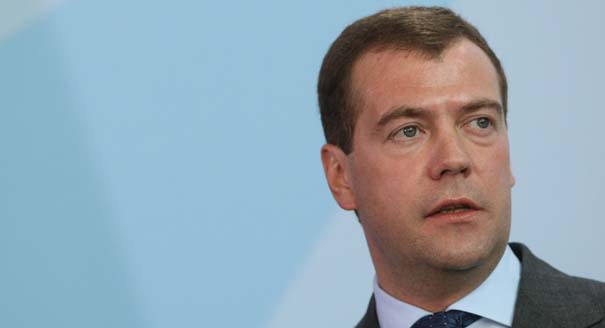
Under Russian President Medvedev, the Kremlin’s efforts to develop and execute concrete solutions to Russia’s many challenges have been replaced by a constant stream of polemical sound bites and vague slogans.
Source: The Moscow Times

This deluge of polemical sound bites has underscored the fact that Medvedev has not offered concrete solutions for the most difficult challenges facing Russia today. Instead, he only offers vague slogans while proposing overly ambitious projects in areas that would ordinarily fall under the authority of Prime Minister Vladimir Putin.
The country’s numerous political analysts compete with one another to come up with accurate interpretations of what this or that statement by the president and prime minister means for Russian and world politics. A perfect example is the Valdai Club, designed to give our top leaders the opportunity to make seemingly meaningful — but in reality very empty — statements for consumption by the international community.
I don’t want to become just one more observer giving his opinion of Medvedev’s curious statement that the system of appointing governors is democratic, that it is appropriate for Russia and that it will remain in place for the next 100 years. Instead, I will risk making a diagnosis of the country’s political system.
I think these signs indicate that the Kremlin is both nervous and uncertain. The Kremlin realizes that it must finally do something to correct the situation but is unable and unwilling to do so. This realization is a break from its former state of self-complacency.
Two factors are compounding the problem — the desire of the authorities to preserve their high popularity ratings at any cost, and the paralysis of government officials who cannot take action without approval from the top.
When Putin moved from the Kremlin to the White House, he took all of the authority with him. The result is that while something is being accomplished in the economic sphere, the political work of the Kremlin has ground to a halt.
Medvedev has said the country is so burdened by bureaucracy that nobody lifts a finger until he gives the order to act. But at the same time, he draws the surprising conclusion that the political system is functioning well.
The hyperactivity on the analyst front is nothing but a meaningless jumble of empty political signals, proposals and conjecture issuing from the ever-shifting political landscape. It represents a crippled system in which idle boyars and economically crippled, servile oligarchs kowtow to their powerless and passive king.
This is Russia’s latest risky experiment: the attempt to carry out Medvedev’s transition from a relatively unknown political figure to the country’s chief executive. Were it not for the crisis, the experiment might even be amusing. Under the current circumstances, however, it is a disaster waiting to happen.
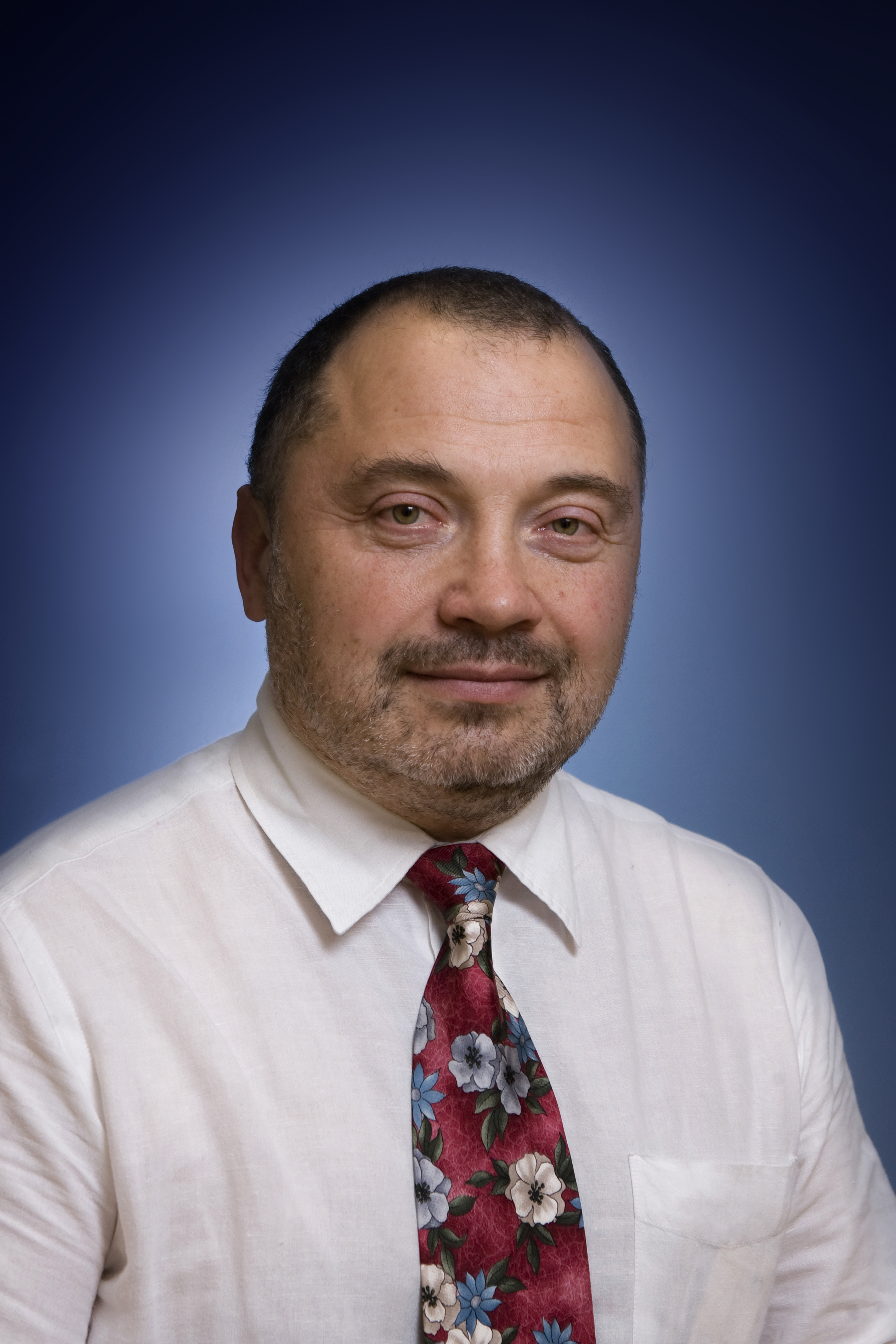
Former Scholar-in-Residence, Society and Regions Program, Moscow Center
Nikolay Petrov was the chair of the Carnegie Moscow Center’s Society and Regions Program. Until 2006, he also worked at the Institute of Geography at the Russian Academy of Sciences, where he started to work in 1982.
Recent Work
Nikolay Petrov
Nikolay Petrov
Carnegie does not take institutional positions on public policy issues; the views represented herein are those of the author(s) and do not necessarily reflect the views of Carnegie, its staff, or its trustees.
Despite myriad challenges and occasional stumbles, the new Hungarian government is moving ahead with energy and conviction to uproot years of illiberalism and corruption and rebuild Hungarian democracy.

Thomas Carothers

European Commission President Ursula von der Leyen is about to give her annual address on the state of the EU. Here’s what she won’t—but should—say.

Rym Momtaz

Depleted financial reserves and a shrinking tax base mean it is no longer possible to simultaneously deliver high defense spending, price stability, and economic growth.

Alexandra Prokopenko

Radical-right parties are expected to do well in upcoming elections in four of the EU's biggest member states. If successful, they could prevent the union from addressing key challenges ahead.

Stefan Lehne
Blurring the line between humans and animals is a long-standing tradition in social utopian prose. In his latest novel, Leonid Bershidsky reminds us that in social experiments, people are often treated no differently than animals.

Alexander Baunov