

Commentary
Michael Pettis
{
  "authors": [
    "Michael Pettis"
  ],
  "type": "legacyinthemedia",
  "centerAffiliationAll": "dc",
  "centers": [
    "Carnegie Endowment for International Peace",
    "Carnegie China"
  ],
  "collections": [],
  "englishNewsletterAll": "asia",
  "nonEnglishNewsletterAll": "",
  "primaryCenter": "Carnegie China",
  "programAffiliation": "AP",
  "programs": [
    "Asia"
  ],
  "projects": [],
  "regions": [
    "East Asia",
    "China"
  ],
  "topics": [
    "Economy"
  ]
}
Source: Getty
China’s present model of economic development forces households to subsidize large amounts of often inefficient investment. If Beijing sticks to this policy, domestic consumption will continue to stagnate and constrain overall growth.
Source: New York Times

Is China, 30 years after its opening to the West, becoming a consumer society? What policies might help in that transformation, and what are the consequences for other nations?
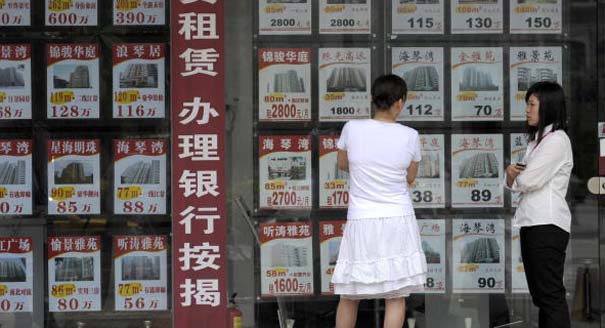
PETTIS: The Chinese are already eager consumers, eager to buy many of the same things that Western consumers buy — with an especial fondness for overpriced brand labels. Any visit to the throngs of wistful window-shoppers in Beijing’s Wanfujing or Shanghai’s Nanjinglu, the country’s premier shopping streets, will make this very obvious. So why are the Chinese consuming at what may well be the lowest rate as a share of G.D.P. ever recorded?
Consumption growth in any country is necessarily limited by the growth in household income and wealth, neither of which has grown nearly as rapidly in China as the country’s economy. China’s development model is a steroid-fueled version of the classic export-led model common to many high-saving Asian countries. This model involves systematically subsidizing production and investment, often leading to very inefficient investment.
Of course subsidies must be paid for, and in China households pay for them in the form of taxes and low wage growth, among other factors. Increasing the growth rate of the economy through investment subsidies paid for by households reduces the share of consumption in the overall economy.
Since the contraction of the U.S. trade deficit almost certainly means that in the medium term China’s growth will be limited by its domestic consumption growth, Beijing has embarked, almost desperately, on a number of policies to goose domestic consumption.
Will these policies work? Perhaps in very specific cases they will cause consumption to increase, but in general Chinese consumption is unlikely to accelerate unless the government reverses policies that forced households to subsidize inefficient producers. But reversing those policies would almost certainly cause unemployment to rise in the short term.
So Beijing is doing the opposite. To prevent rising unemployment caused by the collapse in exports, Beijing has increased the subsidies and support for domestic manufacturing while sharply increasing China’s already-record-breaking levels of investment. It is almost certain that much of the new investment will generate low or even negative returns.
This will not help rebalance the economy. As long as Chinese households must subsidize large amounts of inefficient investment, it will be hard for consumption to take off.

Nonresident Senior Fellow, Carnegie China
Michael Pettis is a nonresident senior fellow at the Carnegie Endowment for International Peace. An expert on China’s economy, Pettis is professor of finance at Peking University’s Guanghua School of Management, where he specializes in Chinese financial markets.
Recent Work
Michael Pettis
Michael Pettis

For every ruble allocated to social policy, health, and education in 2027, double that amount is earmarked for the army, the police, and the security services.

Alexandra Prokopenko

The acknowledgment has sparked fears of a new arms race with China and Russia.

Chris O’Meara

The European Commissioner for Trade is headed to China. But after President Xi’s bridge-building visit to Washington, can a more isolated EU overcome Beijing’s stranglehold on critical raw materials? Who will blink first?

Rym Momtaz, ed.
The summit may be remembered as a fatal blunder, when Washington, Beijing, and the AI industry collectively chose ceremony over action.

Jeffrey Prescott

The domestic impacts of how long it is taking to end the war in Ukraine have pushed the French electorate to the political extremes and compromised the country’s diplomatic capacity.
Rym Momtaz