• Research
  • Emissary
  • About
  • Experts
Carnegie Global logoCarnegie lettermark logo
DemocracyIran
  • Donate
{
  "authors": [
    "Henri J. Barkey",
    "Morton Abramowitz"
  ],
  "type": "legacyinthemedia",
  "centerAffiliationAll": "dc",
  "centers": [
    "Carnegie Endowment for International Peace"
  ],
  "collections": [],
  "englishNewsletterAll": "menaTransitions",
  "nonEnglishNewsletterAll": "",
  "primaryCenter": "Carnegie Endowment for International Peace",
  "programAffiliation": "MEP",
  "programs": [
    "Middle East"
  ],
  "projects": [],
  "regions": [
    "Middle East",
    "Türkiye"
  ],
  "topics": [
    "Political Reform"
  ]
}
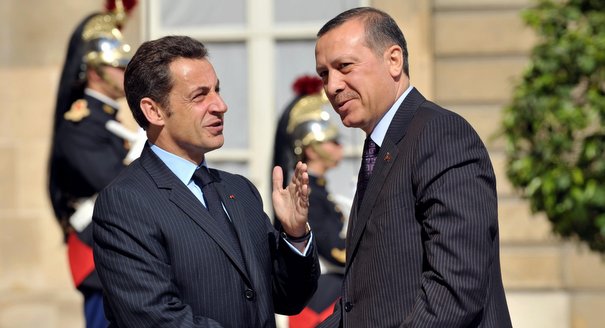
Source: Getty

In The Media

Turkey's Transformers

Turkey aspires to be a global power, but it has yet to become as great a regional power as its government declares it to be. Can the ruling party achieve its goals, or will it be held back by its Islamist past and the conservative inclinations of its core constituents?

Link Copied
By Henri J. Barkey and Morton Abramowitz
Published on Oct 23, 2009
Program mobile hero image

Program

Middle East

The Middle East Program in Washington combines in-depth regional knowledge with incisive comparative analysis to provide deeply informed recommendations. With expertise in the Gulf, North Africa, Iran, and Israel/Palestine, we examine crosscutting themes of political, economic, and social change in both English and Arabic.

Learn More

Source: Foreign Affairs

Turkey's TransformersIn recent years, Turkey has earned kudos from the international community for its economic dynamism, its energetic and confident diplomacy, and its attempts to confront some of its deepest foreign policy problems, such as in northern Iraq and Cyprus. Secretary of State Hillary Clinton has said that Turkey is one of seven rising powers with which the United States will actively collaborate to resolve global problems. But Turkey has not yet become the global, or even regional, player that its government declares it to be. These days, as always, daunting domestic issues are bedeviling Turkey's progress. Increasingly polarized views about the leadership of the ruling Justice and Development Party (known as the AKP) have undermined the government's ability to spearhead profound political change. Even some of the AKP's traditional supporters have begun to question whether the party will follow through on its goals, including that of getting Turkey to join the European Union.

There are two camps. The first, and largest, group, which includes center-right politicians, liberals, and the religious, fully supports the AKP. It sees the party as fighting the dead hand of the past to free Turkish politics from subjugation by the military and the judiciary. To most AKP supporters, the party is genuinely committed to instituting a much greater measure of democracy and tackling Turkey's most difficult issue: recognizing the democratic rights of its large Kurdish population. According to them, the party is serious about meeting the difficult requirements for EU accession and about launching fresh and constructive diplomatic initiatives in the Middle East, Central Asia, and the Caucasus. And they interpret the widespread claims that the AKP wants to establish a religious state as both fanciful and retrograde.

About the Authors

Henri J. Barkey

Former Visiting Scholar, Middle East Program

Barkey served as a member of the U.S. State Department Policy Planning Staff, working primarily on issues related to the Middle East, the Eastern Mediterranean, and intelligence from 1998 to 2000.

Morton Abramowitz

Authors

Henri J. Barkey
Former Visiting Scholar, Middle East Program
Henri J. Barkey
Morton Abramowitz
Political ReformMiddle EastTürkiye

Carnegie does not take institutional positions on public policy issues; the views represented herein are those of the author(s) and do not necessarily reflect the views of Carnegie, its staff, or its trustees.
More Work from Carnegie Endowment for International Peace

  • Trump and Netanyahu speaking
    Commentary
    Emissary
    The Diverging U.S. and Israeli Goals in Iran Are Making the Endgame Even Murkier

    The cracks between Trump and Netanyahu have become more pronounced, particularly over energy and leadership targets.

      • Eric Lob

      Eric Lob

  • Seoul traffic at night
    Commentary
    Emissary
    How the Hormuz Closure Is Testing the Korean President’s Progressive Agenda

    The crisis is not just a story of energy vulnerability. It’s also a complex, high-stakes political challenge.

      Darcie Draudt-Véjares

  • Commentary
    Strategic Europe
    Russia’s Imperial Retreat Is Europe’s Strategic Opportunity

    The war in Ukraine is costing Russia its leverage overseas. Across the South Caucasus and Middle East, this presents an opportunity for Europe to pick up the pieces and claim its own sphere of influence.

      William Dixon, Maksym Beznosiuk

  • Commentary
    Carnegie Politika
    Tokayev’s New Constitution Is a Bet on Stability—At Freedom’s Expense

    Kazakhstan’s new constitution is an embodiment of the ruling elite’s fears and a self-serving attempt to preserve the status quo while they still can.

      Serik Beysembaev

  • Mourners hold up their phones showing images of Ali Khamenei during a memorial vigil after Iranian state media confirmed the death of Ayatollah Ali Khamenei on March 1, 2026 in Tehran, Iran.
    Article
    Iran Wields Wartime Internet Access as a Political Tool

    In an effort to disseminate its preferred message, the Iranian regime is offering a simple transaction: connectivity for amplification.

      Mahsa Alimardani

Get more news and analysis from
Carnegie Endowment for International Peace
Carnegie global logo, stacked
1779 Massachusetts Avenue NWWashington, DC, 20036-2103Phone: 202 483 7600Fax: 202 483 1840
  • Research
  • Emissary
  • About
  • Experts
  • Donate
  • Programs
  • Events
  • Blogs
  • Podcasts
  • Contact
  • Annual Reports
  • Careers
  • Privacy
  • For Media
  • Government Resources
Get more news and analysis from
Carnegie Endowment for International Peace
© 2026 Carnegie Endowment for International Peace. All rights reserved.