

In The Media
David Rothkopf
{
  "authors": [
    "David Rothkopf"
  ],
  "type": "legacyinthemedia",
  "centerAffiliationAll": "",
  "centers": [
    "Carnegie Endowment for International Peace"
  ],
  "collections": [],
  "englishNewsletterAll": "",
  "nonEnglishNewsletterAll": "",
  "primaryCenter": "Carnegie Endowment for International Peace",
  "programAffiliation": "",
  "programs": [],
  "projects": [],
  "regions": [],
  "topics": [
    "Economy",
    "Trade"
  ]
}
Source: Getty
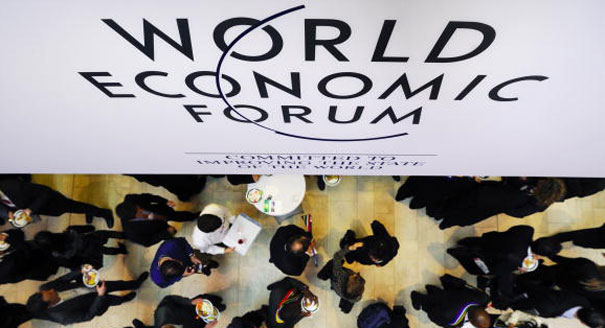
The annual World Economic Forum meeting at Davos is not about deal-making. It is about networking and status-seeking behavior among people with a common background, and the emerging world, women, and the poor are hugely under-represented.
Source: The Washington Post

And if you think Davos is about anything other than status-seeking-behavior, then you have read too many of the press releases of the overly-earnest Swiss gnomes who put the meeting together. They describe themselves as being "committed to improving the state of the world." They do have a variety of bloviatapaloozas during the course of the event at which the improvement of the globe is debated. But, of course, most of the people there share a common background -- the emerging world, women and poor people are hugely under-represented. So you have to conclude that what they really mean is that they are committed to improving the state of those aspects of the world that are important to CEOs and politicians and the journalists who share the appetizers with them at the receptions in the Belvedere Hotel -- where the real work gets done in the small Alpine village that for a few days each year is the center of the trans-Atlantic establishment.
But watch the people at Davos and you see what's really up. It's not deal-making. That almost never happens there. It's networking, which is the professional way of saying: connecting with the kids who have it going on. The appeal, however, of the entire endeavor is fading for several reasons, all associated with the inadequacy of Davos as a networking forum. First, it's pretty uncool to hop on the corporate jet just to schmooze on a piste. Second, the cool kids of the 21st Century -- such as the Chinese -- are in short-supply (although the organizers are working like crazy to fix that). Finally, the event has grown so big, even the cool kids can't find each other in the mix. As Steve Case, founder of AOL, once told me while standing at the bar in the middle of the hubbub of the main conference center: "You always feel like you are in the wrong place in Davos, like there is some better meeting going on somewhere in one of the hotels that you really ought to be at. Like the real Davos is happening in secret somewhere."
Now doesn't that pretty much capture the way you felt in high school? Or is it just me? (I realize in retrospect that the haircut wasn't such a great idea.)
Former Visiting Scholar
David Rothkopf was a visiting scholar at the Carnegie Endowment as well as the former CEO and editor in chief of the FP Group.
Recent Work
David Rothkopf
David Rothkopf

For every ruble allocated to social policy, health, and education in 2027, double that amount is earmarked for the army, the police, and the security services.

Alexandra Prokopenko

The European Commissioner for Trade is headed to China. But after President Xi’s bridge-building visit to Washington, can a more isolated EU overcome Beijing’s stranglehold on critical raw materials? Who will blink first?

Rym Momtaz, ed.

Cargo traffic through Russia’s Northern Sea Route has increased because of the disruption caused by the conflict in the Middle East, the Ukraine war, and U.S.-China tensions.

Mikhail Korostikov

The domestic impacts of how long it is taking to end the war in Ukraine have pushed the French electorate to the political extremes and compromised the country’s diplomatic capacity.
Rym Momtaz

The Plaza Accord was not an externally imposed punishment of Japan but part of a broader restructuring that Japanese economists and policymakers themselves recognized was necessary. Its effects were undermined, however, when Tokyo responded to the resulting slowdown with policies that exacerbated investment, credit expansion, and the very imbalances the adjustment was intended to resolve.

Michael Pettis