

Commentary
Nikolay Petrov
{
  "authors": [
    "Nikolay Petrov"
  ],
  "type": "legacyinthemedia",
  "centerAffiliationAll": "",
  "centers": [
    "Carnegie Endowment for International Peace",
    "Carnegie Russia Eurasia Center"
  ],
  "collections": [],
  "englishNewsletterAll": "",
  "nonEnglishNewsletterAll": "",
  "primaryCenter": "Carnegie Russia Eurasia Center",
  "programAffiliation": "",
  "programs": [],
  "projects": [],
  "regions": [
    "Caucasus",
    "Russia"
  ],
  "topics": [
    "Political Reform"
  ]
}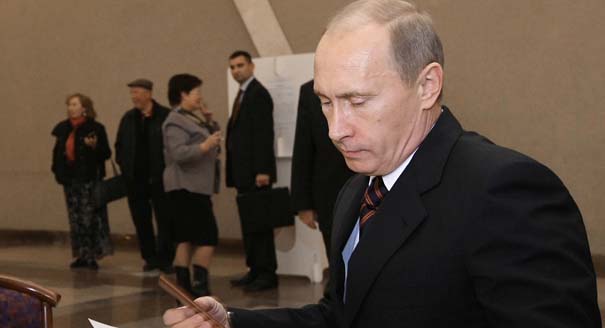
Source: Getty
The recent State Council meeting on the subject of modernizing Russia's political system reflected the growing political cracks in the foundation of Prime Minister Vladimir Putin’s vertical power structure.
Source: The Moscow Times

President Dmitry Medvedev, Putin and the leaders of seven political parties served as the main voices in this political chorus. As usual, Liberal Democratic Party leader Vladimir Zhirinovsky played the part that he is so gifted at: court jester.
“If some people consider themselves to be the ruling party,” Zhirinovsky said, “they should listen to criticism. You are up there on Mount Olympus with all the power, you have orchestras playing, you’ve got everything just the way you want it. But you should know that the people don’t love you. Learn this lesson once and for all: The authorities are never loved anywhere, especially not in Russia. People everywhere eventually grow tired of the authorities. To prevent that from happening, you need to bring in new faces, shuffle jobs around.”
It is interesting that almost every speaker referred to the Soviet Union — and always in a negative sense. Yabloko chief Sergei Mitrokhin said today’s political system is largely a simulation of the Soviet system, and its main defect is monopolization in the executive branch, the dominance of a single political party and the emergence of a dominant class of bureaucrats. Communist Party leader Gennady Zyuganov — who has always expressed his deep nostalgia for his party’s predecessor, the Communist Party of the Soviet Union, said, “The CPSU was smarter, stronger and more competent than United Russia, but it could not survive by flying on only one wing, lacking a normal dialogue in a system where everybody carried out the orders of a single person without thinking.”
If the State Council meeting was an attempt by Putin, Medvedev and United Russia to exonerate themselves for the widespread violations during the October elections, it came off quite clumsy. Everything that Medvedev, Putin and State Duma Speaker Boris Gryzlov said can be boiled down to one conclusion: There is no conclusive evidence that the October elections were fraudulent, and the opposition’s criticism of the elections is a provocation, an attempt to shake up the country’s political stability. In other words, the Kremlin has dug in its heels and has taken a position of complete denial. Thus, it is clear that the authorities have no real desire to modernize the country, and this is becoming a larger and larger bone of contention with the opposition.
Is Russia entering the initial stages of a 21st-century version of perestroika? If so, the biggest question is who will emerge as the modern-day Mikhail Gorbachev who will have to try to reform and modernize the country under the watchful, stern gaze of the country’s contemporary Yury Andropov?
Former Scholar-in-Residence, Society and Regions Program, Moscow Center
Nikolay Petrov was the chair of the Carnegie Moscow Center’s Society and Regions Program. Until 2006, he also worked at the Institute of Geography at the Russian Academy of Sciences, where he started to work in 1982.
Recent Work
Nikolay Petrov
Nikolay Petrov
Carnegie does not take institutional positions on public policy issues; the views represented herein are those of the author(s) and do not necessarily reflect the views of Carnegie, its staff, or its trustees.

When faced with fuel shortages in the past, Central Asian governments could always count on additional supplies from Moscow. That safety net no longer exists.

Galiya Ibragimova
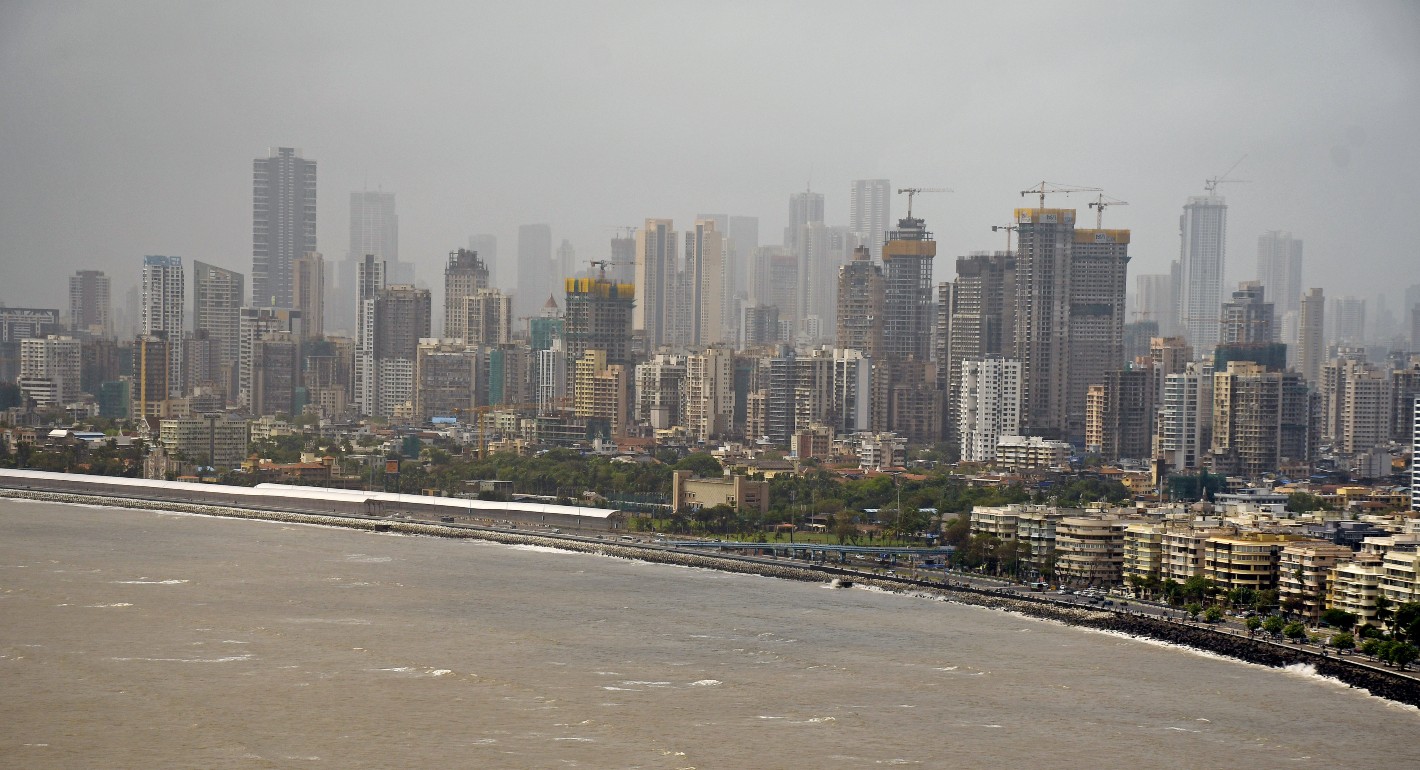
As India undergoes a demographic transition, its cities will be its economic powerhouse—but only if it accurately captures city growth and empowers cities to support their citizens.
Apoorva Jadhav

As we close out another season of Strategic Europe, it is worth taking stock of the deep shifts underway.

Rym Momtaz
Reading the purported correspondence of celebrity Ksenia Sobchak sheds light on her role within the system, and how journalism and politics function in Putin’s Russia.
Vladislav Gorin
Even if the terms of a ceasefire or peace settlement are satisfactory to most Ukrainians, the country’s democracy will face its fair share of challenges.
Petro Burkovskyi, Olexiy Haran