

Commentary
Trump has promised Belarus a massive potash deal. But Minsk is seeking something greater: restored Western transit and greater room for maneuver from Russia.
Balázs Jarábik
{
  "authors": [
    "George Perkovich",
    "Deepti Choubey"
  ],
  "type": "legacyinthemedia",
  "centerAffiliationAll": "dc",
  "centers": [
    "Carnegie Endowment for International Peace",
    "Carnegie Russia Eurasia Center"
  ],
  "collections": [
    "U.S. Nuclear Policy"
  ],
  "englishNewsletterAll": "ctw",
  "nonEnglishNewsletterAll": "",
  "primaryCenter": "Carnegie Endowment for International Peace",
  "programAffiliation": "NPP",
  "programs": [
    "Nuclear Policy"
  ],
  "projects": [],
  "regions": [
    "North America",
    "United States"
  ],
  "topics": [
    "Nuclear Policy",
    "Nuclear Energy"
  ]
}
Source: Getty
More than ever, preventing nuclear weapons proliferation requires cooperation among the United States, Russia, and China, plus emerging powers. To achieve this cooperation, measures must be crafted to uphold the bargain between disarmament and nonproliferation.
Source: eJournal USA

The Nuclear Non-Proliferation Treaty (NPT) of 1968 established such a regime, but today’s challenges threaten its stability and effectiveness. Only measures to reinforce the relationship between verifiable disarmament by the existing nuclear powers and nonproliferation by non-nuclear states can strengthen cooperation and make us all more secure.
The United States alone could not stop the spread of nuclear weapons. Once the Soviet Union acquired the bomb in 1949 and others prepared to follow, nonproliferation became feasible only through cooperation. This was not simple. Not only would geopolitical adversaries have to agree, but states that possessed nuclear weapons would need to find common ground with the vast majority of nations that did not.
The former group could not be forced to give up their weapons just as the latter could not be forced to give up the right to build their own. Only a regime of mutually agreed-upon nonproliferation rules could do that. These rules had to satisfy the core interests of the “have-not” states while tolerating, at least temporarily, the possession of nuclear weapons by the states that already had them.
After a series of false starts, the United States and the Soviet Union joined the multilateral negotiation that produced a draft of what became the NPT. The two superpowers shared an interest in preventing others from acquiring nuclear weapons. Each also served as protective patron for many non-nuclear nations. These states could eschew building their own nuclear weapons if they were certain “their” superpower would protect them from a threat by the other.
NPT Bargain
The NPT entered into force March 5, 1970. It comprises a set of bargains. The nuclear weapon states agree to work in good faith toward nuclear disarmament, to transfer neither nuclear weapons nor the wherewithal to make them to non-nuclear weapon states, and to recognize the “inalienable right” of non-nuclear weapon states to access nuclear energy for peaceful uses. In return, non-nuclear weapon states promise not to acquire nuclear weapons.
Under the NPT, disarmament and nonproliferation should be mutually reinforcing. As more states adhere to the NPT, each nation should gain confidence that its neighbor or adversary is not developing nuclear weapons and so be more secure in its decision not to proliferate. Existing nuclear states similarly should feel able gradually to reduce their stockpiles with an eye toward full nuclear disarmament.
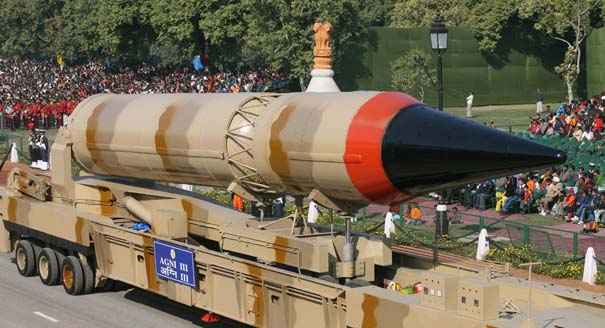
This nonproliferation regime has been remarkably successful, if imperfect. The NPT is among the most universal of treaties: All nations except India, Israel, and Pakistan have joined. North Korea joined but subsequently withdrew and has tested a nuclear device, becoming the only state to develop nuclear weapons despite its NPT obligation not to do so.
Many states have abandoned or reversed clandestine efforts to acquire nuclear weapons. Iraq was pursuing such a program at the time of the 1990-1991 Gulf War. Fearing isolation and outside coercion, Libya ended its effort in 2003 and instead sought international cooperation. Taiwan and South Korea stopped nuclear weapons work under secret pressure from the United States and after extracting reaffirmation of U.S. guarantees of their security. Belarus, Kazakhstan, and Ukraine agreed to join the NPT in the early 1990s as the United States and Russia reduced their nuclear arsenals and cultivated a climate hospitable for nuclear disarmament. Argentina and Brazil shut down their nascent nuclear weapons programs, and South Africa relinquished a secret nuclear weapons stockpile — largely for domestic reasons — but no doubt post-Cold War nuclear arms reductions created norms that pulled them in that direction.
Since 2001, the nonproliferation regime has adapted to address the previously unimaginable threat of nuclear terrorism. Initiatives to keep nuclear fuel and technology away from terrorists include:
• Bilateral cooperation between the United States and Russia;
• Multilateral commitments from the Group of Eight major industrialized countries;
• A nuclear terrorism convention;
• The Proliferation Security Initiative;
• The Global Initiative to Combat Nuclear Terrorism;
• U.N. Security Council Resolution 1540, requiring all U.N. members to take and enforce measures against the proliferation of weapons of mass destruction, their means of delivery, and related materials.
Risks Remain
Despite these successes, real risks remain. One is that the mutually reinforcing relationship between disarmament and nonproliferation may be weakening. If Iran ignores a U.N. Security Council prohibition against acquiring nuclear weapons capabilities, and if North Korea maintains its nuclear weapons, further proliferation among their neighbors becomes more likely as confidence in the nonproliferation regime weakens.
Skeptics in nuclear-armed nations, including the United States, argue that neither nuclear arms reductions nor measures like the global ban on all nuclear tests — the Comprehensive Test Ban Treaty (CTBT) — will discourage rule-violators like Iran from seeking nuclear weapons. Nor, these critics argue, will they persuade leading non-nuclear weapon states such as Brazil and South Africa to cooperate in enforcing nonproliferation rules. History suggests this view is too cynical.
Means exist to buttress confidence. If all states will agree to accept what is called the Additional Protocol to the NPT, the International Atomic Energy Agency (IAEA) would have the means to undertake more effective inspections to ensure that nuclear materials and facilities are not being diverted from peaceful purposes. This would be especially important in Iran. Through the IAEA, states also could negotiate new rules to prevent the further spread of those uranium enrichment and plutonium-reprocessing capabilities that heighten proliferation risks. But key non-nuclear weapon states such as Brazil, South Africa, and Egypt now block efforts to make the Additional Protocol universal and to shift from national to international mechanisms for supplying nuclear fuel, in part because they do not believe the established nuclear powers are doing enough to make the nuclear order more equitable.
Past successes demonstrate how to meet these challenges. Great power cooperation lies behind those successes. If today’s major global powers disagree on how to address changing technology and new threats, proliferation becomes more likely.
The Iranian crisis shows most vividly that cooperation among the United States, Russia, and China is required to mobilize the U.N. Security Council’s legitimate enforcement authority. The Russians and Chinese are more reluctant than the Americans to pursue sanctions and other coercive tactics against noncompliant states. Among their reasons is a sense that the United States seeks military superiority over them. By addressing these concerns, the U.S.-Russian nuclear arms reduction process and strategic dialogue can augment cooperation and build consensus for a stronger stand against suspected proliferators. The United States and China are beginning a similar process that could lead to cooperation in preventing nuclear competition and instability in Asia.
Similarly, cooperation among the United States, Russia, and China will be necessary to bring the CTBT into force and to negotiate a ban on further production of fissile materials for nuclear weapons.
Disarmament, Nonproliferation
The relationship between disarmament and nonproliferation remains crucial. If existing nuclear weapon states do not reduce their arsenals, key non-nuclear weapon states will likely resist stronger nonproliferation rules. If these weapons remain the currency of great power, emerging powers such as Brazil, Egypt, South Africa, and Iran might oppose further limits on acquiring them. Even if the security advantages of nuclear proliferation are debatable (Is a nuclear power more secure if its neighbors feel threatened and themselves build nuclear arsenals?), considerations of perceived justice and national pride may prove politically more compelling.
Multilateral nuclear arsenal reductions may require first ending both nuclear tests and all production of fissile material for weapons. Treaties achieving these objectives may be the most feasible ways to bring India, Pakistan, and Israel into the disarmament process, and therefore closer to the nonproliferation regime.
Tension over the trade-offs among nonproliferation, disarmament, and of a third factor — nuclear energy trade — impedes progress on the specific steps that would advance each objective, leaving the world less secure and prosperous than it could otherwise be. No longer can one or two superpowers impose rules. The number of states that must now cooperate — a number that only begins with the United States, Russia, and China — means that a satisfactory outcome cannot be grounded in double standards. As long as a small number of states have advantages that they would deny others, the others will resist.
President Obama has recognized this problem and concluded that the most effective way to deter nuclear weapons use is to stop proliferation and that the only sustainable way to prevent proliferation is to motivate all states to live without nuclear weapons, however long it takes to achieve this ultimate goal. As the president put it in his April 2009 speech in Prague: “Some argue that the spread of these weapons cannot be stopped, cannot be checked — that we are destined to live in a world where more nations and more people possess the ultimate tools of destruction. Such fatalism is a deadly adversary, for if we believe that the spread of nuclear weapons is inevitable, then in some way we are admitting to ourselves that the use of nuclear weapons is inevitable.”
To prevent this terror, Obama expressed “America’s commitment to seek the peace and security of a world without nuclear weapons.”

Japan Chair for a World Without Nuclear Weapons, Senior Fellow
George Perkovich is the Japan Chair for a World Without Nuclear Weapons and a senior fellow in the Carnegie Endowment for International Peace’s Nuclear Policy Program. He works primarily on nuclear deterrence, nonproliferation, and disarmament issues.

Former Deputy Director, Nuclear Policy Program
Choubey was previously the director of the Peace and Security Initiative for the Ploughshares Fund. She also worked for Ambassador Nancy Soderberg in the New York office of the International Crisis Group.
Carnegie does not take institutional positions on public policy issues; the views represented herein are those of the author(s) and do not necessarily reflect the views of Carnegie, its staff, or its trustees.

Trump has promised Belarus a massive potash deal. But Minsk is seeking something greater: restored Western transit and greater room for maneuver from Russia.

Balázs Jarábik

The real test may come after the leaders leave the room.



Sheena Chestnut Greitens, Oriana Skylar Mastro, Yukon Huang, …

The new U.S.–Denmark–Greenland agreement will help Washington exert political, economic, and financial dominance under the guise of security. Yet, it acknowledged Copenhagen’s and Nuuk’s sovereignty on the island.

Marc Pierini

The nuclear relationship between China and the United States is increasingly shaped by widening perception gaps rather than deliberate strategic design.

Tong Zhao
Washington needs to recognize that influence in the Western Hemisphere comes from presence, delivery, and reliability. It also must recognize that while the United States remains the key external actor, it no longer operates in a permissive environment and cannot presume deference from regional players who have other options, namely China.
Juan S. Gonzalez