Source: PBS NewsHour
MARGARET WARNER: Turkey's top civilian and military leaders came together today in a rare meeting aimed at defusing tensions over an alleged coup plot.
The smiles for the cameras belied the high stakes for all three men, Prime Minister Recep Tayyip Erdogan, President Abdullah Gul, and the military chief, General Ilker Basbug.
The three-hour meeting came on the heels of Monday's stunning arrest and detention of more than 50 current and former senior officers. By mid-week, 20, including eight retired admirals and generals, had been formally charged with plotting to topple Erdogan's Islamic-leaning government.
But, today, a judge in Istanbul released two of the most prominent suspects, the former chiefs of the navy and the air force.
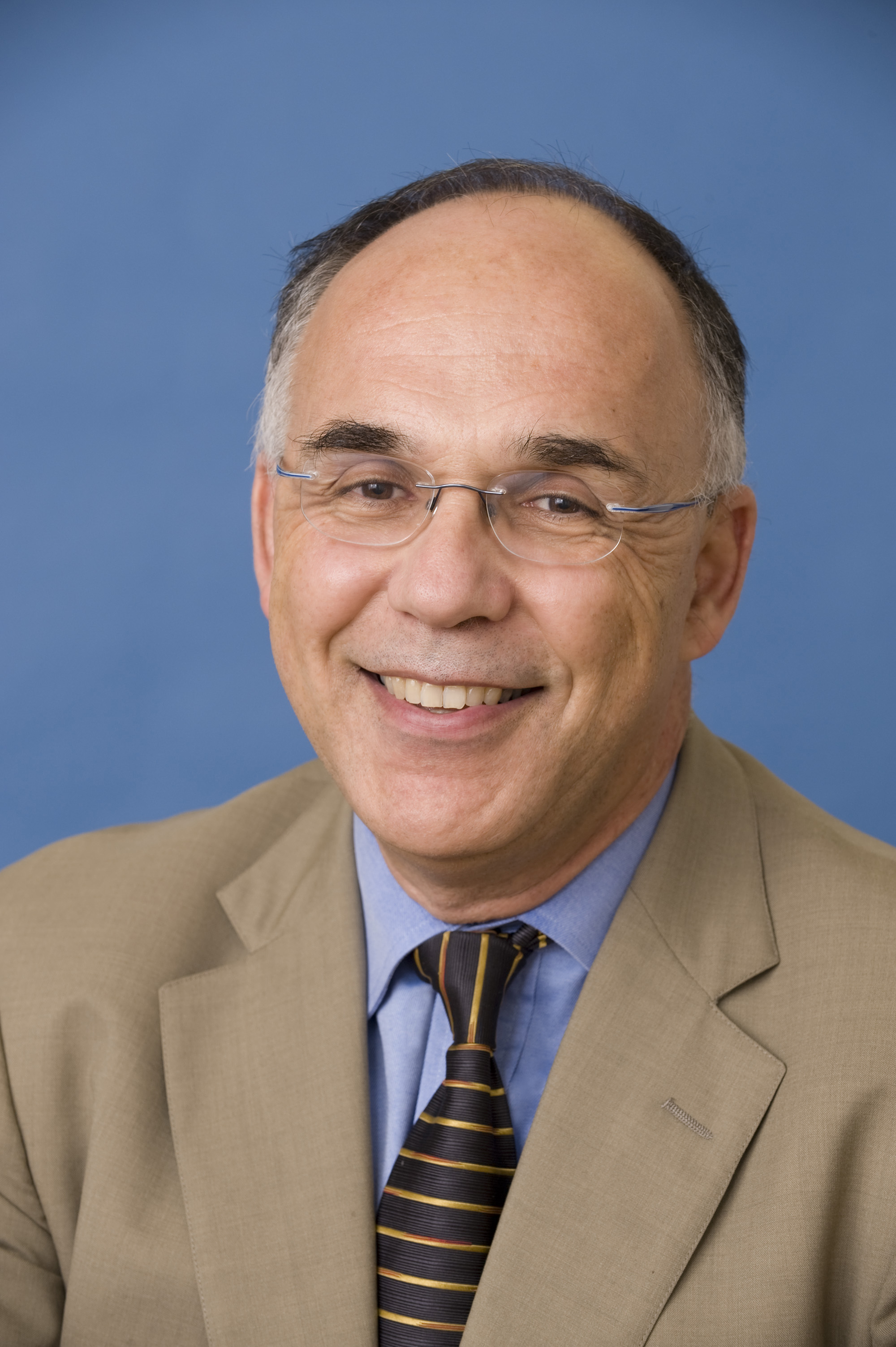
Still, says Henri Barkey of the Carnegie Endowment For International Peace, these arrests have dealt a body blow to Turkey's historically powerful military.
HENRI BARKEY, Carnegie Endowment For International Peace: This is a very big deal, because this is about the role of the military in Turkish society. The Turkish military has had always an inordinate amount of influence in Turkish politics.
MARGARET WARNER: Zeyno Baran, director of the Center for Eurasian Policy at the Hudson Institute, agrees this is a watershed for the country's military and possibly for Turkey itself.
ZEYNO BARAN, director, Center for Eurasian Policy at the Hudson Institute: These arrests are unprecedented because they include that -- three of the top generals in Turkey. So it leads to concern now whether we are starting to see another round of tension between the military and the government, possibly. So, nobody wants another crisis, because it affects economic stability, political stability. But it's too early to tell.
MARGARET WARNER: Prosecutors allege the plot, dubbed Operation Sledgehammer, was hatched in March of 2003. They say it included plans to bomb mosques and other civilian targets and to provoke a new crisis with Greece -- the goal, to sow enough instability that it would justify a military coup.
In the end, no attacks ever occurred, but prosecutors have not said why they think the plot fell apart. There's a history here. Turkey's military has overthrown three governments in coups in the last 50 years. And it forced the country's first Islamist-led administration from power in 1997.
So far, the Turkish military has strongly denied there was such a plot this time, though they haven't denied that they have engaged in scenario planning of various kinds.
Henri Barkey says there's little doubt a conspiracy existed, at least at some levels.
HENRI BARKEY: They never succeeded in doing it, but they planned it. They organized for it. And just because they didn't execute them doesn't mean they didn't break the law. And this is what this is all about.
ZEYNO BARAN: What we do know is that, when it came to the top leadership, it was stopped. Whatever attempt there may have been there, it was routine military's internal planning, but because of the mood and the tension already in the country that was really under way, it risks now becoming a major crisis again.
MARGARET WARNER: After today's meeting, General Basbug and the president and prime minister sought to reassure the country.
Their joint statement said, in part, "The public must be assured that matters will be handled in line with the law and everyone should act responsibly not to damage institutions."
Tensions have been building between the military and the government ever since Prime Minister Erdogan's Islamic-leaning AKP party was elected in 2002, a year before the alleged plot. In his first term, he proclaimed a conservative, but secular agenda, building on his country's strategic location as the bridge between Europe and Asia. He also pushed for Turkey's entry into the European Union.
But, in the years since, the AKP party's Islamic roots have begun to show in the foreign policy of NATO's only Muslim member. Erdogan has strengthened ties with the Muslim world, meeting with leaders from Iran, Iraq, Syria, Pakistan, and Afghanistan, while Turkey's historically friendly relations with Israel have cooled.
At home, the government has been accused of trying to impose an Islamic social agenda. It attempted to lift a decades-old ban on wearing Muslim head scarves at secular universities, but was overruled by the courts. Other steps included trying to limit alcohol sales, to Islamicize public school textbooks, and to make adultery a crime.
All this alarmed the country's powerful secular elite. The nation's 70 million people are overwhelmingly Muslim, but, in 1923, out of the ruins of the Ottoman Empire, Mustafa Kemal Ataturk created a rigorously secular state. Strict limits were imposed on religious dress, education, and practices. In the decades since then, the Turkish military has seen itself as guardian of the country's stability and its secularism.
Barkey says the military's fears of what Erdogan's government will do to Turkey's secular identity are overblown.
HENRI BARKEY: This government is very attuned to its core pious conservative constituency. It thinks very much in Islamist terms.
But it cannot -- and I don't think it really wants to -- Islamicize Turkish society. Even if it wanted to, it can't. Turkey is much too large, much too diverse.
MARGARET WARNER: But Baran says there are suspicions of a political motive for the arrests, namely, to silence a major secular force in the country.
ZEYNO BARAN: There have been concerns by the military and -- and the establishment that there's what's called creeping Islamization in the country for several years now, since the Erdogan government came into office. And reducing the military's powers and -- and really discrediting them could be one of the attempts at really undermining the main defender of secularism.
MARGARET WARNER: How the nation handles this crisis and its unresolved civilian-military tensions will go a long way in determining the durability of Turkey's democracy.