• Research
  • Emissary
  • About
  • Experts
Carnegie Global logoCarnegie lettermark logo
DemocracyIran
  • Donate
{
  "authors": [
    "Henri J. Barkey"
  ],
  "type": "legacyinthemedia",
  "centerAffiliationAll": "dc",
  "centers": [
    "Carnegie Endowment for International Peace",
    "Carnegie Europe"
  ],
  "collections": [
    "Turkey’s Transformation"
  ],
  "englishNewsletterAll": "menaTransitions",
  "nonEnglishNewsletterAll": "",
  "primaryCenter": "Carnegie Endowment for International Peace",
  "programAffiliation": "MEP",
  "programs": [
    "Middle East"
  ],
  "projects": [],
  "regions": [
    "Middle East",
    "Türkiye",
    "Europe"
  ],
  "topics": [
    "Political Reform"
  ]
}
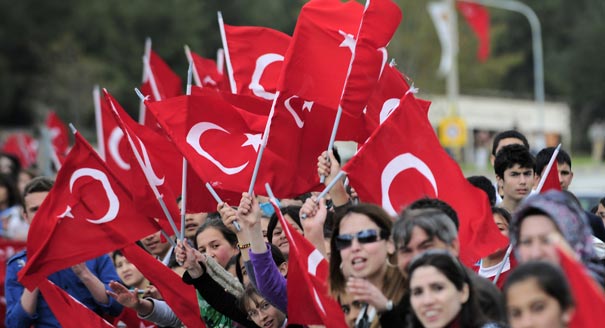
Source: Getty

In The Media

Turkey: Regime in Crisis

Turkey's constitution, imposed by the military in 1982, must be redrafted if the country is to move towards a more responsive political system and avoid repeating the cycle of paralysis followed by heavy-handed military and judicial intervention.

Link Copied
By Henri J. Barkey
Published on Mar 3, 2010
Program mobile hero image

Program

Middle East

The Middle East Program in Washington combines in-depth regional knowledge with incisive comparative analysis to provide deeply informed recommendations. With expertise in the Gulf, North Africa, Iran, and Israel/Palestine, we examine crosscutting themes of political, economic, and social change in both English and Arabic.

Learn More

Source: National Interest

Turkey: Regime in CrisisThe Turkish military, unaccountable to any political authority and long accustomed to operating with impunity, has suddenly come under scrutiny with the revelation that several of its officers have plotted to overthrow the country’s constitutional order. The arrests last week of forty-nine high-ranking former Turkish military officers, including former service chiefs of the navy and air force, as well as a deputy chief of staff, heralds the latest and perhaps final stage in a confrontation between Turkey’s powerful military establishment and society. The roundup, carried out by the judiciary with an unclear degree of involvement by Prime Minister Recep Tayyip Erdogan, will humiliate the military.

Although the two service chiefs and the deputy chief of staff were released, the sight of so many high-ranking officers being hauled in front of judges is unprecedented. It is too early to tell whether these arrests will solidify the attitudes of hard-line officers who are itching to topple the government, or whether the era of coups and other forms of unconstitutional attempts at overthrowing the system is over. All signs do point to the latter; and, in any case, there is still a significant threshold to cross—the expected change in military command in August.

What is clear, however, is that unless Turkey manages to devise a new constitution to replace the one imposed by the military in 1982, it will face increasing instability and likely become prone to erratic foreign-policy behavior.

This crisis is the culmination of profound shifts in Turkish society. The emergence of a conservative and pious business elite, made possible by the economic reforms of the 1980s, lay the groundwork for Erdogan’s Islam-influenced Justice and Development Party (AKP), which rose to power in 2002. For secularist elites, who are wedded to a doctrinaire vision of the Turkish state that does not acknowledge society’s deep religious roots—or the existence of the Kurds, for that matter—AKP’s commanding majority has been viewed with alarm, if not panic.
 
On one side are the AKP and its allies: some liberal intellectual elites, the conservative business elites and the religious orders. On the other are the forces of the secular state apparatus, composed primarily of the army, the bureaucracy, an important segment of the press establishment, academics, old-line political parties, and of course the judiciary.
 
Caught between and running scared are the old Western-oriented business elites, represented by TUSIAD, the Turkish Industrialists and Businessmen Association, and some intellectual elites who are not aligned with the AKP. These intellectuals sympathize with the party’s broad goals, but not with its leadership or its Islamist origins.
 
The military and judiciary have taken it upon themselves to protect Turkish “democracy” by any means. Four times since 1960, the military has intervened to overthrow governments, and the judiciary routinely bans political parties and politicians of which it does not approve.
 
What is new, however, is the Turks’ increasing resistance to military and judiciary conceptions of politics. The resistance comes from a more diverse population, a strengthening civil society and other forces, the most important of which is Taraf, a small daily newspaper. Taraf’s willingness to publish damaging stories about the armed forces, something mainstream newspapers have always shied away from, has energized individuals in various state offices to leak damaging information.
 
This is hardly a struggle between angels and demons, but the primary culprit is the military establishment, which has missed the signs of change. Its actions have backfired and further damaged its reputation. The most egregious case of army interference in domestic politics occurred on April 27, 2007, when its chief of staff issued a clumsily written statement on the Turkish Armed Forces website warning against the selection of Abdullah Gül as president of the republic. The army’s opposition derived primarily if not exclusively from the fact that Gül’s wife wore a turban—an unacceptable wardrobe choice, since he would be occupying the position once held by Atatürk, the founder of the secular Turkish republic, in whose name the military acts.
 
This forced the AKP to call for elections, which it won with an overwhelming mandate, but after which it has not succeeded in enacting reforms. This is in part because the secular state establishment sought revenge by trying to ban the AKP altogether, an attempt that almost succeeded. The AKP has yet to grow into a classical liberal party that embraces openness, freedom of thought and the rule of law. Instead, it has replicated all the ills of Turkish parties past, including one-man domination, the use of government power to squelch the opposition, and the lack of a comprehensive vision that transcends the immediate concerns of its own pious core constituency.
 
As a result, a new Turkish constitution remains both a distant dream and an absolute necessity. Turkey needs to overhaul its archaic political institutions that have prevented the evolution of dynamic and responsive politics. The resulting paralysis has always been an invitation to greater military involvement.
 
For the United States, Turkey’s traditional ally, this is a most unappealing scenario. The White House does not want to see Turkey wallow in crises, nor will it countenance a coup by any means. The former might simply be written in the stars—but Washington can be crystal clear that it will not accept the latter.

About the Author

Henri J. Barkey

Former Visiting Scholar, Middle East Program

Barkey served as a member of the U.S. State Department Policy Planning Staff, working primarily on issues related to the Middle East, the Eastern Mediterranean, and intelligence from 1998 to 2000.

    Recent Work

  • Article
    Winners and Losers in Turkey’s Election

      Henri J. Barkey

  • Article
    The Road to Turkey’s June Elections: Crises, Strategies, and Outcomes

      Henri J. Barkey

Henri J. Barkey
Former Visiting Scholar, Middle East Program
Henri J. Barkey
Political ReformMiddle EastTürkiyeEurope

Carnegie does not take institutional positions on public policy issues; the views represented herein are those of the author(s) and do not necessarily reflect the views of Carnegie, its staff, or its trustees.

More Work from Carnegie Endowment for International Peace

  • US President Donald Trump presides over the inaugural meeting of the âBoard of Peace,❠a newly established body focused on efforts for Gaza, at the US Institute of Peace in Washington, DC, United States, on February 19, 2026.
    Article
    The Board of Peace and Funding for Gaza Reconstruction: On Whose Account?

    Stakeholders must demand major restructuring of the Board of Peace and robust oversight and transparency before engaging with it. Until then, rights-respecting existing platforms and mechanisms for multilateral peacemaking should be supported.

      Zaha Hassan, Charles H. Johnson

  • Commentary
    Strategic Europe
    Taking the Pulse: Is France’s New Nuclear Doctrine Ambitious Enough?

    French President Emmanuel Macron has unveiled his country’s new nuclear doctrine. Are the changes he has made enough to reassure France’s European partners in the current geopolitical context?

      • Rym Momtaz

      Rym Momtaz, ed.

  • Commentary
    The Iran War’s Dangerous Fallout for Europe

    The drone strike on the British air base in Akrotiri brings Europe’s proximity to the conflict in Iran into sharp relief. In the fog of war, old tensions in the Eastern Mediterranean risk being reignited, and regional stakeholders must avoid escalation.

      Marc Pierini

  • Commentary
    Strategic Europe
    The EU Needs a Third Way in Iran

    European reactions to the war in Iran have lost sight of wider political dynamics. The EU must position itself for the next phase of the crisis without giving up on its principles.

      Richard Youngs

  • Trump United Nations multilateralism institutions 2236462680
    Article
    Resetting Cyber Relations with the United States

    For years, the United States anchored global cyber diplomacy. As Washington rethinks its leadership role, the launch of the UN’s Cyber Global Mechanism may test how allies adjust their engagement.

      • Christopher Painter

      Patryk Pawlak, Chris Painter

Get more news and analysis from
Carnegie Endowment for International Peace
Carnegie global logo, stacked
1779 Massachusetts Avenue NWWashington, DC, 20036-2103Phone: 202 483 7600Fax: 202 483 1840
  • Research
  • Emissary
  • About
  • Experts
  • Donate
  • Programs
  • Events
  • Blogs
  • Podcasts
  • Contact
  • Annual Reports
  • Careers
  • Privacy
  • For Media
  • Government Resources
Get more news and analysis from
Carnegie Endowment for International Peace
© 2026 Carnegie Endowment for International Peace. All rights reserved.