
• Research
  • Emissary
  • About
  • Experts
Carnegie Global logoCarnegie lettermark logo
Democracy
  • Donate
{
  "authors": [
    "Uri Dadush",
    "Bennett Stancil"
  ],
  "type": "other",
  "centerAffiliationAll": "",
  "centers": [
    "Carnegie Endowment for International Peace"
  ],
  "collections": [],
  "englishNewsletterAll": "",
  "nonEnglishNewsletterAll": "",
  "primaryCenter": "Carnegie Endowment for International Peace",
  "programAffiliation": "",
  "programs": [],
  "projects": [],
  "regions": [
    "North America"
  ],
  "topics": [
    "Economy",
    "Trade"
  ]
}
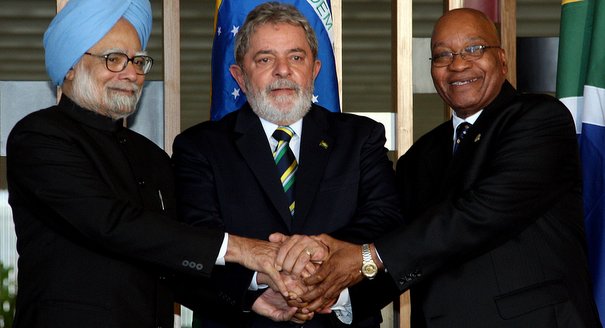
Source: Getty

Other

The World Order in 2050

The world’s economic balance of power is shifting, as emerging countries rapidly overtake traditional Western powers as the predominant world economies. The recent global recession has only accelerated this trend.

Link Copied
By Uri Dadush and Bennett Stancil
Published on Apr 21, 2010

The rise of China, India, and other emerging markets has been anticipated for years by numerous economists, and the recent global recession has only accelerated this trend. New projections for economic growth through 2050 offer insight into the implications of this changing economic landscape.

Key Conclusions

  • The world’s economic balance of power is shifting rapidly. China remains on a path to overtake the United States as the world’s largest economic power within a generation, and India will join both as a global leader by mid-century.

  • Traditional Western powers will remain the wealthiest nations in terms of per capita income, but will be overtaken as the predominant world economies by much poorer countries. Given the sheer magnitude of the challenge of lower-wage competition, protectionist pressures in advanced economies may escalate.

  • The global economic transformation will shift international relations in unpredictable ways. To retain their historic influence, European nations will be pressed to conduct foreign policy jointly—an objective implied by their recently ratified constitution—and will need to reach out to emerging powers. Japan and Russia will seek new frameworks of alliances. The largest emerging nations may come to see each other as rivals.

  • Absolute poverty will be confined to small pockets in sub-Saharan Africa and India, though relative poverty will persist, and may even become more acute. Carbon emissions are also on a path toward climate catastrophe, and by mid-century may constitute a serious risk to the global growth forecast.

  • International organizations such as the IMF will be compelled to reform their governance structures to become more representative of the new economic landscape. Those that fail to do so will become marginalized.

Authors

Uri Dadush
Former Senior Associate, International Economics Program
Uri Dadush
Bennett Stancil
Former Research Assistant, International Economics Program
EconomyTradeNorth America

Carnegie does not take institutional positions on public policy issues; the views represented herein are those of the author(s) and do not necessarily reflect the views of Carnegie, its staff, or its trustees.
More Work from Carnegie Endowment for International Peace

  • Commentary
    Strategic Europe
    How Europe Can Survive the AI Labor Transition

    Integrating AI into the workplace will increase job insecurity, fundamentally reshaping labor markets. To anticipate and manage this transition, the EU must build public trust, provide training infrastructures, and establish social protections.

      Amanda Coakley

  • BAGHDAD, IRAQ - OCTOBER 30: Turkish Trade Minister Omer Bolat (2nd L) and Iraqi Trade Minister Etir Davud Selman al-Greyri (3rd R) sign the JETCO 2nd Term Protocol and the Memorandum of Understanding on Cooperation in the Field of Exhibition Services during The 2nd Session Meeting of the Joint Economic and Trade Committee (JETCO), held to develop commercial and economic relations between Turkiye and Iraq in Iraq's Baghdad on October 30, 2025.
    Article
    The Evolving Middle Eastern Regional Order: Türkiye-Iraq Relations in Context

    In this moment of geopolitical fluidity, Türkiye and Iraq have been drawn to each other. Economic and security agreements can help solidify the relationship.

      • Meliha Altunışık

      Derya Göçer, Meliha Altunışık

  • Commentary
    Strategic Europe
    Can Europe Still Matter in Syria?

    Europe’s interests in Syria extend beyond migration management, yet the EU trails behind other players in the country’s post-Assad reconstruction. To boost its influence in Damascus, the union must upgrade its commitment to ensuring regional stability.

      Bianka Speidl, Hanga Horváth-Sántha

  • Commentary
    Carnegie Politika
    Does Russia Have Enough Soldiers to Keep Waging War Against Ukraine?

    The Russian army is not currently struggling to recruit new contract soldiers, though the number of people willing to go to war for money is dwindling.

      Dmitry Kuznets

  • Commentary
    Strategic Europe
    Taking the Pulse: Can the EU Attract Foreign Investment and Reduce Dependencies?

    EU member states clash over how to boost the union’s competitiveness: Some want to favor European industries in public procurement, while others worry this could deter foreign investment. So, can the EU simultaneously attract global capital and reduce dependencies?

      • Rym Momtaz

      Rym Momtaz, ed.

Get more news and analysis from
Carnegie Endowment for International Peace
Carnegie global logo, stacked
1779 Massachusetts Avenue NWWashington, DC, 20036-2103Phone: 202 483 7600Fax: 202 483 1840
  • Research
  • Emissary
  • About
  • Experts
  • Donate
  • Programs
  • Events
  • Blogs
  • Podcasts
  • Contact
  • Annual Reports
  • Careers
  • Privacy
  • For Media
  • Government Resources
Get more news and analysis from
Carnegie Endowment for International Peace
© 2026 Carnegie Endowment for International Peace. All rights reserved.








