

Paper
David Burwell
{
  "authors": [
    "David Burwell"
  ],
  "type": "questionAnswer",
  "centerAffiliationAll": "dc",
  "centers": [
    "Carnegie Endowment for International Peace"
  ],
  "collections": [],
  "englishNewsletterAll": "ctw",
  "nonEnglishNewsletterAll": "",
  "primaryCenter": "Carnegie Endowment for International Peace",
  "programAffiliation": "SCP",
  "programs": [
    "Sustainability, Climate, and Geopolitics"
  ],
  "projects": [],
  "regions": [
    "North America",
    "United States"
  ],
  "topics": [
    "Climate Change"
  ]
}
Source: Getty
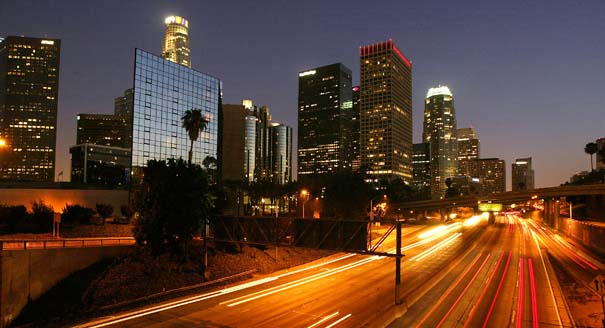
Road transportation is the greatest contributor to global warming for the next 50 years. U.S. policy makers must take steps to reduce emissions, promote green growth, and mitigate transportation’s harmful effects on the climate.
Road transportation is the greatest contributor to global warming for the next 50 years according to a recent study by NASA’s Goddard Institute for Space Studies. By analyzing the climate impact of each sector of the economy, the study determined that motor vehicles emit significant levels of pollutants that warm the atmosphere with few counteracting pollutants that create a cooling effect.
In a video Q&A, David Burwell suggests steps U.S. policy makers can take to reduce emissions, promote green growth, and mitigate transportation’s harmful effects on climate. “We have to look at how much we drive and take actions to reduce the total demand for transportation—particularly driving,” says Burwell. By moving forward with a transportation bill that invests in a green transportation system, “the United States could show other countries—particularly China, India, and other emerging economies—that it is serious about reducing its transportation carbon and this would contribute to the likelihood of a global climate agreement.”
This study has a sector-based approach and looked at the drivers of global warming, which allows policy makers to focus more specifically on those sectors.
It’s important because the study paints a bulls-eye on the way the United States does transportation. We have to control transportation emissions and we’re trying to do that. We have CAFE standards, we have support for new technologies (electric vehicles), and we’re looking at low carbon fuels.
But this finding says that we have to look at how much we drive and take actions to reduce the total demand for transportation—particularly driving.
The practical steps for policy makers are first, to focus directly on the need to drive everywhere. That means making fewer trips and it means encouraging telecommuting and other ways that we can drive less to get services and access friends.
Second, shorter trips. We need to support better connection between land use planning and transportation—people call this smart growth—so that trip lengths can be reduced.
Third, we need to give the public more choices. As origins and destinations come together, you can have more choices. Public transportation makes sense, buses make sense, bike paths make sense, walking make sense. These are all interconnected.
Public policy and legislators need to focus on giving the public more options in the way they travel.
There are actually several opportunities to address transportation and global warming in legislation presently before Congress. There is an interesting opportunity because we are considering both energy and climate legislation as well as transportation legislation.
There is an opportunity to generate enormous amounts of revenue for energy and climate legislation through either a carbon fee or cap and trade provisions. We also have a transportation bill that is broke—we are funding about $20 billion per year of the transportation program out of the general fund.
So, if we could move some of the money generated by the energy and climate bill to green transport—which also reduces carbon—and fund the transportation program, you get a deficit reduction bill, you get a funded transportation bill, you get an oil independence bill, you get an energy independence bill, and you get a climate protection bill. It’s like eating your Wheaties in the morning. It contributes good things to everybody to link these two bills.
Ordinary people—that’s all of us—are going to have to pay more for transportation and we might as well pay it through transportation carbon reduction. That means some sort of carbon fee or gas tax—and that’s a problem in the short term. We’ve increased the gas tax three times in the last 35 years and it’s always been a fight. It’s been increased on the arguments of deficit reduction and investments in better transportation systems.
The public, if they think they’re getting something for their money, will pay for a better outcome, a better community, and a better transportation system. It is true that the public resists increases in gas taxes. The reason why is that they don’t think they are getting a return on their investment. But the irony is that even though gas taxes are low compared to other countries in the world, our total household costs of transportation are high. The average amount of household budgets spent on transportation in the United States is about 19 percent, which is higher than our healthcare costs, which are around 16 percent.
The reason is that there are so few transportation choices. We have to drive everywhere to do anything and so for every licensed driver there has to be another car. If we had more choices, we would not need to invest in so many vehicles. If we had transit, biking, walking, and people didn't live so far from their jobs, household expenses would go down as gas taxes go up as we invest in a green transport system.
The United States consumes 25 percent of the world’s petroleum and that’s primarily because of the way we travel. Seventy percent of oil consumption in the United States is transportation and that is because we’re spread out, we drive everywhere, and we have over 700 cars per 1,000 people in order to support our driving habits.
The rest of the world is much less dependent on cars and much more efficient consumers of petroleum. If we don’t adopt measures that reduce our need to travel—for our own benefit—we can’t expect the rest of the world not to behave in the same way.
By addressing the way we travel, by helping ourselves, by giving ourselves more transportation choices, by connecting transportation to land use development, we are not only helping ourselves, but we are providing a model for the rest of the world of how they can develop in a way that is sustainable, low carbon, and provides more choices for everybody.
If the United States passed a climate bill that priced transportation carbon and linked it to a transportation bill that would reinvest the revenues into a green transportation system, the United States would be on track to meet its stated obligation of a 17 to 20 percent absolute decrease in greenhouse gas emissions by 2020.
That would give comfort to other countries—particularly China, India, and other emerging economies—that the United States is serious about reducing its transportation carbon and it would contribute to the likelihood of a global climate agreement.
Former Nonresident Senior Fellow, Energy and Climate Program
Burwell focused on the intersection between energy, transportation, and climate issues, as well as policies and practice reforms to reduce global dependence on fossil fuels.
Recent Work
David Burwell
David Burwell
Carnegie does not take institutional positions on public policy issues; the views represented herein are those of the author(s) and do not necessarily reflect the views of Carnegie, its staff, or its trustees.
The acknowledgment has sparked fears of a new arms race with China and Russia.

Chris O’Meara
Smaller powers cannot go it alone, but Canadian history shows that integration with the United States will not always be benign.
Paul Samson

The summit may be remembered as a fatal blunder, when Washington, Beijing, and the AI industry collectively chose ceremony over action.

Jeffrey Prescott

European NATO countries are wrestling with the possibility of U.S. disengagement from the alliance. With the continent’s security increasingly uncertain, governments must restore the credibility of their collective defense.



Hans-Dieter Lucas, Adam Thomson, Pierre Vimont
Soft power on its own is insufficient to meet U.S. national security needs, but hard power also has its limits. Soft power allows for more effective and efficient use of hard power than hard power alone, as it encourages cooperation and compliance which deters the need for hard power.

Sarah Yerkes