• Research
  • Emissary
  • About
  • Experts
Carnegie Global logoCarnegie lettermark logo
DemocracyIran
  • Donate
{
  "authors": [
    "Henri J. Barkey"
  ],
  "type": "legacyinthemedia",
  "centerAffiliationAll": "dc",
  "centers": [
    "Carnegie Endowment for International Peace"
  ],
  "collections": [],
  "englishNewsletterAll": "menaTransitions",
  "nonEnglishNewsletterAll": "",
  "primaryCenter": "Carnegie Endowment for International Peace",
  "programAffiliation": "MEP",
  "programs": [
    "Middle East"
  ],
  "projects": [],
  "regions": [
    "Middle East",
    "Israel",
    "Türkiye",
    "Palestine"
  ],
  "topics": [
    "Security"
  ]
}
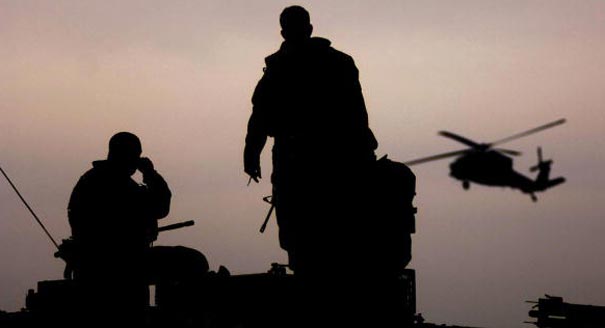
Source: Getty

In The Media

No Benefit of the Doubt for Israel?

The only good thing that can come out of this tragedy is that the Israeli public will hold the government accountable for poor decision-making and incompetent execution that has handed Hamas and its allies the victory of their lifetime.

Link Copied
By Henri J. Barkey
Published on Jun 1, 2010
Program mobile hero image

Program

Middle East

The Middle East Program in Washington combines in-depth regional knowledge with incisive comparative analysis to provide deeply informed recommendations. With expertise in the Gulf, North Africa, Iran, and Israel/Palestine, we examine crosscutting themes of political, economic, and social change in both English and Arabic.

Learn More

Source: Politico

No Benefit of the Doubt for Israel?The real problem that this situation has made clear is that Israel has become insensitive to its own predicament. Even if Israel had every right to board the ship and detain its occupants, Israel should have expected that boarding the ship would result in such a confrontation and the resulting international backlash. It was obvious from the outset that the organizers of the flotilla were only interested in a physical clash with the Israelis and that aid supplies were just the excuse. Quite a bit was known about the primary organizer, a Turkish Islamist charity with deep ties to Hamas and other groups whose rhetoric was quite inflammatory. 

The decision process in this case is eerily reminiscent of group think, the inability to consider alternative explanations and courses of action. Seven cabinet members, without the participation of the whole cabinet, apparently met twice and made the decision. In light of Israel’s international isolation and its delicate relations with the United States, did anyone consider the ramifications of their decision? Moreover, Israel’s actions have diverted the attention of the UN Security Council right at the time they were to take up Iran’s nuclear program - Israel’s paramount concern.
 
Clearly, the current Israeli government lives in a cocoon. The only good thing that can come out of this tragedy is that the Israeli public will hold the government accountable for poor decision-making and incompetent execution that has handed Hamas and its allies the victory of their lifetime.

About the Author

Henri J. Barkey

Former Visiting Scholar, Middle East Program

Barkey served as a member of the U.S. State Department Policy Planning Staff, working primarily on issues related to the Middle East, the Eastern Mediterranean, and intelligence from 1998 to 2000.

    Recent Work

  • Article
    Winners and Losers in Turkey’s Election

      Henri J. Barkey

  • Article
    The Road to Turkey’s June Elections: Crises, Strategies, and Outcomes

      Henri J. Barkey

Henri J. Barkey
Former Visiting Scholar, Middle East Program
Henri J. Barkey
SecurityMiddle EastIsraelTürkiyePalestine

Carnegie does not take institutional positions on public policy issues; the views represented herein are those of the author(s) and do not necessarily reflect the views of Carnegie, its staff, or its trustees.

More Work from Carnegie Endowment for International Peace

  • Commentary
    Diwan
    Israel’s Forever Wars

    The country’s strategy is no longer focused on deterrence and diplomacy, it’s about dominance and degradation.

      Nathan J. Brown

  • Commentary
    Diwan
    An Extension Under Fire

    The decision of Lebanon’s parliament may look exceptional, but in reality it is not.

      Issam Kayssi

  • Commentary
    Diwan
    Shockwaves Across the Gulf

    The countries in the region are managing the fallout from Iranian strikes in a paradoxical way.

      • Angie Omar

      Angie Omar

  • Commentary
    Strategic Europe
    Taking the Pulse: Is France’s New Nuclear Doctrine Ambitious Enough?

    French President Emmanuel Macron has unveiled his country’s new nuclear doctrine. Are the changes he has made enough to reassure France’s European partners in the current geopolitical context?

      • Rym Momtaz

      Rym Momtaz, ed.

  • Commentary
    The Iran War’s Dangerous Fallout for Europe

    The drone strike on the British air base in Akrotiri brings Europe’s proximity to the conflict in Iran into sharp relief. In the fog of war, old tensions in the Eastern Mediterranean risk being reignited, and regional stakeholders must avoid escalation.

      Marc Pierini

Get more news and analysis from
Carnegie Endowment for International Peace
Carnegie global logo, stacked
1779 Massachusetts Avenue NWWashington, DC, 20036-2103Phone: 202 483 7600Fax: 202 483 1840
  • Research
  • Emissary
  • About
  • Experts
  • Donate
  • Programs
  • Events
  • Blogs
  • Podcasts
  • Contact
  • Annual Reports
  • Careers
  • Privacy
  • For Media
  • Government Resources
Get more news and analysis from
Carnegie Endowment for International Peace
© 2026 Carnegie Endowment for International Peace. All rights reserved.