In spite of recent tensions, the United States and Turkey still share important common interests. However, Turkey is a growing power and there are significant areas where Turkey’s perspective and interests differ from those of the United States.
The Turkish-American SplitAcrimony permeates American-Turkish relations. Harsh words have been exchanged at high levels over Gaza and Iran. The American right-wing has virtually declared Turkey beyond the pale and appears to long for the Turkish military to take over. Turkey’s nationalistic media talk about the country’s noble role in the flotilla crisis, and the words of senior leaders border on the conspiratorial. Many wonder whether our interests are now so different that they preclude close collaboration.
This is not a new phenomenon. Turkey has always been a prickly ally, not one that simply saluted. During the Cold War the Turks closed U.S. bases and kicked out the Peace Corps after we imposed an arms embargo in response to their invasion of northern Cyprus. As for our secular Turkish military friends, they barely supported the United States in the first Gulf War and undermined it in the run up to the second; and refuse to send combat troops to Afghanistan.
Besotted by the language of strategic partnership it invented for Ankara’s benefit, the United States has been slow in recognizing how Turkey’s perspective and interests have changed. Whatever America’s importance to Turkey, the dependency of the past is over. Russia is no longer an enemy but a valued economic partner. Turkey’s EU membership is distant and Ankara’s interest in the body is diminishing. AKP rule produced sizeable economic growth for much of this decade and Turkish economic activity is now global. Ankara is on the move and feeling it.
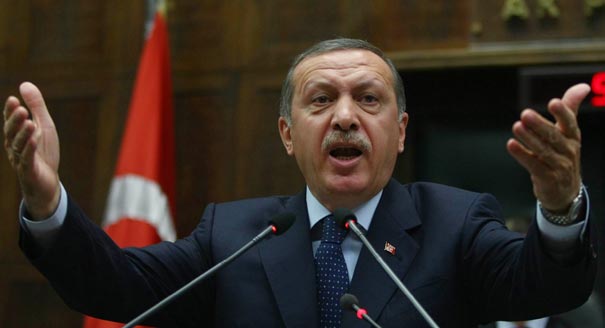
Change would have happened under any circumstances, but the foreign-policy activism of Prime Minister Recep Tayyip Erdogan and Foreign Minister Ahmet Davutoglu hastened it. They moved on all fronts, but most importantly strengthened Turkey’s involvement in the Middle East, where they think the United States is vulnerable and wrong. Conflict with America has slowly developed, particularly over Iran and Israel. Erdogan can hardly contain his ambition to make Turkey a dominant regional actor and a global player.
Profound domestic political considerations also drive Erdogan’s Middle East policies. His forays in the region have been winners in domestic politics. The flotilla, which Turkey supported, tacitly and quite likely directly, has permitted him to ride a wave of nationalist indignation and self-righteousness, which he expects to help spur his party to victory in elections in 2011.
Turkish relations with Israel were elite driven, mostly by the military. They never had much public support. The AKP government’s relations with Israel began to worsen with Ankara’s invitation to the leader of Hamas’s military wing and really took off with the Gaza war of 2008–2009. Turkey appropriated the traditional Arab cause, Palestine, away from Arab leaders. Erdogan opposes the blockade and wants Hamas to participate in any negotiations, a position opposed by Washington, which insists on Hamas abandoning violence. The irony is that while Erdogan stresses Hamas’s right to participate in negotiations, he refuses to engage Turkey’s legal Kurdish party.
The killings of Turkish citizens in the flotilla have understandably produced widespread public anger. Turkish leaders have threatened to totally disengage from Israel unless it makes appropriate apologies and indemnities, and agrees to an international inquiry. The fallout from incident is not over. In his zeal to become the preeminent player in the Middle East, Erdogan may think he can ultimately force the United States to choose between Turkey and Israel; Turkey, after all, is bigger and more powerful. This will not happen. However, Turkey has had some success in moving the debate on Gaza.
Turkey has also parted company with the United States over Iran. While actively opposing additional sanctions, it has muddied the waters by making Israeli nuclear weapons—and not Pakistani or Indian ones—the issue instead of Iranian violations of the Non-Proliferation Treaty, to which it is a signatory. Ankara has legitimate reasons to oppose sanctions but refuses to comprehend the strategic importance Iran represents for the Obama administration. America spurned Turkey’s recent deal with Iran and Brazil as inadequate. NATO-member Ankara further alienated Washington by voting against sanctions instead of simply abstaining.
The United States and Turkey still share important common interests and importantly work closely together in Iraq, Afghanistan and NATO, and on energy-related issues. The United States still wants Turkey ensconced in the EU. But the question increasingly is how Washington responds to a self-confident Turkey whose interests conflict with ours on major issues. It is complicated by the AKP leadership’s Islamic bent and differential morality, which ignores mass atrocities committed by Islamic nations—and even embraces those states.
Turkey is a growing power and possesses assets we do not have. Where we can get their help we should elicit it. Where we differ we can acknowledge their interests. Retaliation is no answer to differences over key issues. The U.S. government does not and should not question whether Turkey is part of the West. Any Turkish government will pursue its own interests as it defines them at any point in time.
However, we should by no means jump through hoops for Ankara or incur costs we do not have to. Turkey cannot simply be surprised when we criticize its behavior. For many years, we treated the Turks with kid gloves and carried their water in Europe on issues ranging from European accession to muzzling the PKK—and demanded little in return, such as domestic reforms. Israel made a bad mistake and it deserves rigorous examination. Turkey’s parliament should also make a serious and credible inquiry into the role of the Turkish government in the whole episode, but we shouldn’t hold our breath.
Lastly, we should remember that Turkey is an electoral democracy. Governments now come and go. There is a national election next year.
Barkey served as a member of the U.S. State Department Policy Planning Staff, working primarily on issues related to the Middle East, the Eastern Mediterranean, and intelligence from 1998 to 2000.
Carnegie does not take institutional positions on public policy issues; the views represented herein are those of the author(s) and do not necessarily reflect the views of Carnegie, its staff, or its trustees.
More Work from Carnegie Endowment for International Peace
The EU can impose sanctions but struggles to enforce them without the United States. With Washington increasingly disinterested in backing European interests, the bloc must now fend for itself.
Global and rising powers will need to engage with Africa’s priorities and agency in order to secure the continent’s increasingly attractive partnerships.
Japan’s long-term security policy is driven by concerns about China, and there is little appetite for (or interest in) pursuing a confrontation with Moscow.