

Paper
Pekka Sutela
{
  "authors": [
    "Pekka Sutela"
  ],
  "type": "other",
  "centerAffiliationAll": "dc",
  "centers": [
    "Carnegie Endowment for International Peace",
    "Carnegie Russia Eurasia Center"
  ],
  "collections": [],
  "englishNewsletterAll": "ctw",
  "nonEnglishNewsletterAll": "",
  "primaryCenter": "Carnegie Endowment for International Peace",
  "programAffiliation": "russia",
  "programs": [
    "Russia and Eurasia"
  ],
  "projects": [],
  "regions": [
    "Caucasus",
    "Russia",
    "North America"
  ],
  "topics": [
    "Economy"
  ]
}
Source: Getty
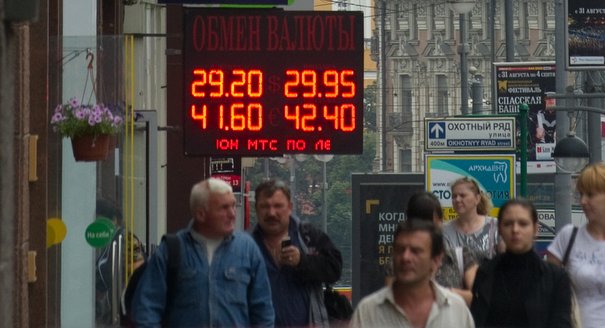
While Russia’s short-term economy will largely depend on oil prices and the country’s demographic challenges, its medium-to-long-term outlook will be influenced by the lessons that leaders take from the crisis, which will affect Russia’s economic structure and policies for many years to come.
While the timing and extent of the global financial crisis surprised many countries, Russia was generally prepared. Its macroeconomic management of the recession rightly earned accolades from several international organizations.
But Moscow’s industrial and social policy responses were not as praiseworthy, representing yet another victory of political tactics over economic strategy. Although Russia’s leaders saw the crisis as vindicating their past policies—including the reform strategies they devised from 2006–2008—most of the structural issues in Russia’s economy remain, with solutions likely delayed for several years. Russia’s fiscal decline— from an average of 7 percent annual growth before the crisis to a loss of 7.9 percent GDP in 2009—is the highest figure among G20 countries.
Russia’s economy in the near term will largely depend on oil prices and how Moscow handles the country’s demographic challenges. But the economy’s medium-to-long-term outlook will be influenced by the lessons that leaders take from the crisis, which will affect Russia’s economic structure and policies for many years to come.
Former Nonresident Senior Associate, Russia and Eurasia Program
Sutela was a nonresident senior associate in the Carnegie Endowment’s Russia and Eurasia Program, where his research focuses on the economies of Eurasia, especially Russia.
Recent Work
Pekka Sutela
Pekka Sutela
Carnegie does not take institutional positions on public policy issues; the views represented herein are those of the author(s) and do not necessarily reflect the views of Carnegie, its staff, or its trustees.

For every ruble allocated to social policy, health, and education in 2027, double that amount is earmarked for the army, the police, and the security services.

Alexandra Prokopenko

The acknowledgment has sparked fears of a new arms race with China and Russia.

Chris O’Meara

The European Commissioner for Trade is headed to China. But after President Xi’s bridge-building visit to Washington, can a more isolated EU overcome Beijing’s stranglehold on critical raw materials? Who will blink first?

Rym Momtaz, ed.

Cargo traffic through Russia’s Northern Sea Route has increased because of the disruption caused by the conflict in the Middle East, the Ukraine war, and U.S.-China tensions.

Mikhail Korostikov
An analysis of traffic accident data suggests that Ukrainian drone attacks caused a material but not disastrous fall in Russian gasoline consumption over the summer.

Sergey Vakulenko