

Paper
David Burwell
{
  "authors": [
    "David Burwell"
  ],
  "type": "legacyinthemedia",
  "centerAffiliationAll": "dc",
  "centers": [
    "Carnegie Endowment for International Peace"
  ],
  "collections": [],
  "englishNewsletterAll": "ctw",
  "nonEnglishNewsletterAll": "",
  "primaryCenter": "Carnegie Endowment for International Peace",
  "programAffiliation": "SCP",
  "programs": [
    "Sustainability, Climate, and Geopolitics"
  ],
  "projects": [],
  "regions": [
    "North America",
    "United States"
  ],
  "topics": [
    "Climate Change"
  ]
}
Source: Getty
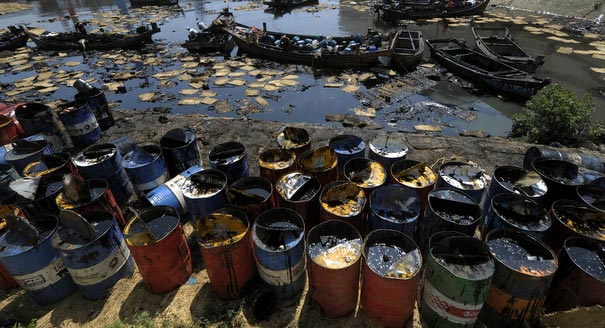
Removing oil and gas subsidies would increase energy security with little impact on consumer prices.
Source: POLITICO

The Obama administration has proposed removing oil and gas tax preferences and canceling now obsolete royalty waivers. These actions, plus the cancellation of other general tax havens (for example, offshore registration), would generate at least $8-12 billion annually in new revenues. That money could be used to underwrite the development - through tax preferences that incentives private R&D of new energy sources - of a more diverse energy supply chain. This would accelerate U.S. progress toward its key goal - becoming more energy resilient and shock resistant.
According to the U.S. Treasury Department, doing away with these subsidies would reduce world oil supply by less than a tenth of a percent, have no impact on the price of gasoline, and would reduce domestic production, if at all, by less than a half of a percent.
Increased energy choices and increased security at the same cost to consumers. It’s a start.
Former Nonresident Senior Fellow, Energy and Climate Program
Burwell focused on the intersection between energy, transportation, and climate issues, as well as policies and practice reforms to reduce global dependence on fossil fuels.
Recent Work
David Burwell
David Burwell
Carnegie does not take institutional positions on public policy issues; the views represented herein are those of the author(s) and do not necessarily reflect the views of Carnegie, its staff, or its trustees.

It should address the shortcomings of previous crisis communication efforts and adapt to the demands of frontier AI.

Lucy Luo

Washington’s decision to support some UN functions while letting others wither is pulling the organization apart at the seams.

Stewart Patrick, Theodore Zaritsky

While there are notable demographic, economic, and geographic divides over AI, there is also substantial alignment between Republicans and Democrats.



Ian Klaus, Mark Baldassare, Rachel George, …

AI capabilities are moving fast. Most institutions—including governments—can’t keep up.


Anton Leicht, Scott Singer

The Bureau of Industry and Security needs to adjust its focus and practices to maintain its position as the U.S. government’s primary champion of international technological competition.

Geoffrey Irving