

Article
Thomas de Waal
{
  "authors": [
    "Thomas de Waal"
  ],
  "type": "legacyinthemedia",
  "centerAffiliationAll": "dc",
  "centers": [
    "Carnegie Endowment for International Peace",
    "Carnegie Europe",
    "Carnegie Russia Eurasia Center"
  ],
  "collections": [],
  "englishNewsletterAll": "ctw",
  "nonEnglishNewsletterAll": "",
  "primaryCenter": "Carnegie Europe",
  "programAffiliation": "russia",
  "programs": [
    "Russia and Eurasia"
  ],
  "projects": [],
  "regions": [
    "Caucasus",
    "Russia",
    "Georgia"
  ],
  "topics": [
    "Foreign Policy"
  ]
}
Source: Getty
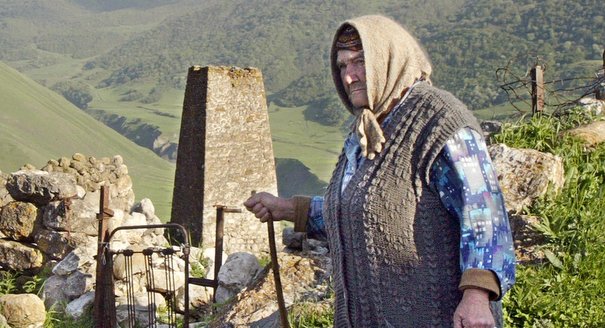
The Pacific island microstates of Nauru and Tuvalu have found an incentive to take sides in the efforts of Caucasian breakaway territories like South Ossetia and Abkhazia to gain international recognition of their sovereignty.
Source: The National Interest

But it is UN General Assembly month, everyone who is not a permanent member of the Security Council is equal and a vote is a vote. Which is why the Georgia-Russia conflict has now opened up a new warm front in the Pacific.
Strangely enough, I know a little about Nauru, population 14,000, area eight square miles (or about one eighth of the District of Columbia), because the first head of state I ever interviewed was its president. His was the smallest state in the world and I was a very junior reporter with the BBC, so we were a good match. It was 1992 and I was compiling a report on a controversial shipment of plutonium that Japan was sending home by sea. Nauru had risked the wrath of the Japanese by saying it would not allow the ship to pass through its territorial waters. I telephoned half way across the world to be told that President Bernard Dowiyogo was actually in Kensington, London, that week and would be happy to give me an interview.
Nauru slipped from my consciousness until the day in 2009 when it suddenly and to much hilarity became the fourth country to recognize Abkhazia and South Ossetia as independent states. It was all of course about money. Back in 1992 I hadn’t realized that poor courageous Nauru was also virtually bankrupt. It used to have spectacularly large deposits of phosphate, formed by centuries of bird droppings. Mining by British, German and Australian companies briefly gave Nauru the largest income per capita in the world in the 1960s, but then the phosphate began to run out, the landscape was devastated and the revenues were mismanaged. From the 1990s the microstate dabbled in offshore banking, was accused of being a haven for money laundering and for several years provided a home to a group of Afghan refugees whom Australia was prepared to pay not to keep.
All these ventures ran out of steam, until the government hit on a more durable revenue-earning scheme: converting UN membership into cash. Which is why Nauru has the distinction of being the only country in the world to have recognized as independent Kosovo, Abkhazia and South Ossetia—no hang-ups here about Europe’s post–Cold War borders. It also managed to recognize, de-recognize and then re-recognize the Taiwanese government, causing Beijing twice to sever diplomatic relations. I can only guess how much Nauru earned from these nifty about-turns, but we do know that, after recognizing Abkhazia and South Ossetia, the Russians donated nine million dollars to refurbish the island’s port.
Washington plays this game too, having had Nauru bulk up the No vote on the UN’s recurring resolutions on “Peaceful settlement of the question of Palestine” in which the United States tends to look rather lonely. In 2009 164 countries voted in favor of the latest such resolution; of the seven countries who voted against, four, alongside the United States, Israel and Australia, were Pacific microstates, Nauru among them.
Now Georgia has found a way to strike back, via Tuvalu, the closest Pacific state to Nauru. On September 11, it was reported that the government in Tbilisi is “providing financial aid to the permanent mission of Tuvalu to the United Nations.” Later it was confirmed that Georgia had paid for a medical shipment to Tuvalu worth “about $12,000,” or roughly one dollar for each of the island’s inhabitants.
And, hey presto, Tuvalu was one of fifty countries (along, incidentally, with the Marshall Islands and Micronesia) which voted in favor of the recent Georgian-sponsored United Nations General Assembly reaffirming the right of return of all refugees to Abkhazia and South Ossetia. Naturally Nauru (and the Solomon Islands) were among seventeen nations voting against.
Fortunately, there are no signs of a new Caucasian war breaking out on the equator. Pacific geography means that although Nauru and Tuvalu are formally neighbors, they are actually eight hundred miles apart—and besides the South Ossetians have no warships. But both Georgia and Russia should be careful. Paying obeisance to Pacific microstates with the population of a U.S. suburb will only encourage little territories in both the North and South Caucasus—South Ossetia, North Ossetia, Ingushetia, the list continues—to ask the question, “If they can be UN members, why can’t we?”

Senior Fellow, Carnegie Europe
Thomas de Waal is a senior fellow at Carnegie Europe, specializing in Eastern Europe and the Caucasus.
Recent Work
Thomas de Waal
Thomas de Waal
Carnegie does not take institutional positions on public policy issues; the views represented herein are those of the author(s) and do not necessarily reflect the views of Carnegie, its staff, or its trustees.

The books, podcasts, and films that explain the world it made.

Andrew Leber

Blurring the line between humans and animals is a long-standing tradition in social utopian prose. In his latest novel, Leonid Bershidsky reminds us that in social experiments, people are often treated no differently than animals.

Alexander Baunov

U.S. trading partners in Asia are closely watching the dispute for signs of how it may affect their own interests.

Barbara Weisel

The aftermath of the Ceuta crisis shows Europe has drawn the wrong lessons. Rather than doubling down on failed migration policies, the EU needs to address the underlying roots of such episodes.

Richard Youngs
By abandoning past U.S. pro-democracy policies and adopting several lines of pro-autocratic action, the Trump administration has fundamentally repositioned the United States vis-à-vis democracy in the world.

Thomas Carothers