

Commentary
Dmitri Trenin
{
  "authors": [
    "Dmitri Trenin"
  ],
  "type": "legacyinthemedia",
  "centerAffiliationAll": "",
  "centers": [
    "Carnegie Endowment for International Peace",
    "Carnegie Russia Eurasia Center"
  ],
  "collections": [],
  "englishNewsletterAll": "",
  "nonEnglishNewsletterAll": "",
  "primaryCenter": "Carnegie Russia Eurasia Center",
  "programAffiliation": "",
  "programs": [],
  "projects": [
    "U.S.-Russia Bilateral Presidential Commission"
  ],
  "regions": [
    "North America",
    "United States",
    "Caucasus",
    "Russia",
    "Western Europe"
  ],
  "topics": [
    "Foreign Policy",
    "Nuclear Policy",
    "Security",
    "Military"
  ]
}
Source: Getty
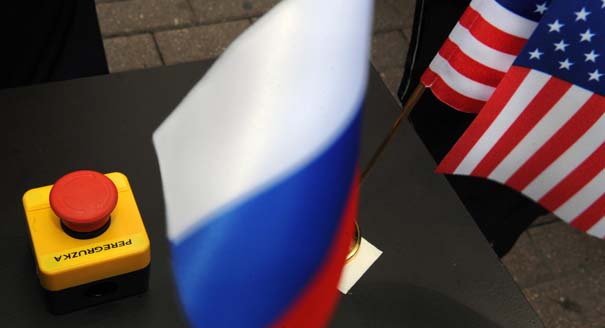
The ratification of the New START Treaty by the U.S. Senate speaks to the stability of the Russian-American “reset.” But the next challenge for Russia and the United States—missile defense—will be much more difficult.
Source: InoSMI

Ratification has many meanings. First, it speaks to the stability of the Russian-American “reset.” If the U.S. Senate had refused to ratify the treaty or delayed its consideration for an indefinite period of time, it would have seriously limited the possibilities for Russian-U.S. relations and would have strengthened the position of skeptics in both countries.
Second, President Obama and his administration—Vice President Biden, Secretary of State Clinton, Secretary of Defense Gates, and others—have demonstrated qualities of both sturdy political fighters and masters of parliamentary compromise. Obama has shown that he can hold his own. His political stock, which collapsed after the November midterm elections, is rising again. The president’s staff has shown that it has not lost heart after the defeat of the party and is still working persistently and effectively.
Third, the Republican’s united front, as they look ahead to the 2012 election to allow Obama “not an ounce of achievement” in foreign policy has not materialized. Instead of a uniform and uncompromising position, the Republicans, in the absence of a clear leader, emerged with individual agendas. Senator Richard Lugar remained faithful to the principles of strengthening U.S. national security through nuclear arms control, Senator Lamar Alexander was satisfied with the promise to allocate $85 billion to further improve the reliability of nuclear warheads, and many Republicans were impressed by Obama’s willingness—going against the core of the Democratic Party—to extend tax benefits for the wealthiest citizens.
And thus Russian-American relations have not stumbled. Their milestone has been reached, but there is a new challenge up ahead: the problem of missile defense, much more complicated and controversial than the issue of reductions under New START. Unlike New START, Moscow and Washington have yet to make fundamental political decisions on missile defense. The nature of military-political relations between Russia, the United States, and NATO for the foreseeable future depends on these decisions. Cooperation on missile defense opens up prospects for transformation of Russian-Western strategic relations in the direction of their demilitarization; the failure to realize the idea of cooperation would mean preservation—albeit in weakened form—of Cold War relations.
This possibility has actually been voiced by President Medvedev himself in his annual address to the Federal Assembly of the Russian Federation, and Prime Minister Putin has authoritatively confirmed it. The stakes are indeed very high. At the NATO-Russia summit in Lisbon, Medvedev proposed to Russia’s NATO partners the establishment of a “sectoral missile defense,” but the specific meaning of this proposal has not yet been disclosed. It is clear that Moscow would not be happy with a situation in which it would be only a part of a U.S.-NATO project. On the other hand, it is obvious that to require deep integration on strategic defense systems from the outset would not be realistic. An approach is needed that combines a clearly defined strategy with flexible tactics.
To start, we need to understand clearly that cooperation on missile defense is not arms control, therefore it is not a policy of guarantees against a potential adversary, but a transition to real military-strategic partnership. True, at present arms control remains valuable: the parties still need guarantees from their partner, but in the long term the main guarantee should be a military-strategic partnership itself. Accordingly, cooperation with the United States on missile defense is necessary, along with discussions on military-technical details, to deepen and expand agreement on strategic and political issues. The reset of the models of behavior should be followed by the reset of perceptions of one another.
Is it real? Over the past two years, Moscow and Washington have accumulated a rich experience of close and productive communication, but stereotypes from the period of confrontation are still very strong in both capitals. It is not possible to destroy them overnight, but to consistently weaken them is possible and necessary. The place for leaders in this business is to be ahead, not behind. Leaders must be able to hold one’s own and not lose heart in difficult situations. And they must look ahead and think strategically. The worthy and feasible strategic objective of Russia and the United States is to form a Euro-Atlantic security space together with the rest of Europe and North America. New START reductions are not enough. Cooperation on missile defense can finally tear down the “Berlin Wall” in the minds of influential people. But, as the example of ratification in the U.S. Senate shows, nothing happens by itself.
Former Director, Carnegie Moscow Center
Trenin was director of the Carnegie Moscow Center from 2008 to early 2022.
Recent Work
Dmitri Trenin
Dmitri Trenin
Carnegie does not take institutional positions on public policy issues; the views represented herein are those of the author(s) and do not necessarily reflect the views of Carnegie, its staff, or its trustees.

Are Germany’s economic, industrial, and political struggles becoming a liability for the EU’s ability to rise to the geopolitical moment?

Rym Momtaz, ed.

China’s police training infrastructure construction projects provide benefits to recipient countries, promote China’s image as a major global security provider, and are likely to reinforce alignment between Beijing’s security priorities and those of countries in the Global South.


Cameron Waltz, Sheena Chestnut Greitens, Kim Nguyen, …
AI capabilities are moving fast. Most institutions—including governments—can’t keep up.


Anton Leicht, Scott Singer

The Bureau of Industry and Security needs to adjust its focus and practices to maintain its position as the U.S. government’s primary champion of international technological competition.

Geoffrey Irving
They face an uphill climb, but they could draw on a strategy that other diplomats have used in the past.


Shana Tabak, Alejandro Martin Rodriguez