

Article
Thomas de Waal
{
  "authors": [
    "Thomas de Waal"
  ],
  "type": "legacyinthemedia",
  "centerAffiliationAll": "dc",
  "centers": [
    "Carnegie Endowment for International Peace",
    "Carnegie Europe",
    "Carnegie Russia Eurasia Center"
  ],
  "collections": [],
  "englishNewsletterAll": "ctw",
  "nonEnglishNewsletterAll": "",
  "primaryCenter": "Carnegie Europe",
  "programAffiliation": "russia",
  "programs": [
    "Russia and Eurasia"
  ],
  "projects": [],
  "regions": [
    "Caucasus"
  ],
  "topics": []
}
Source: Getty
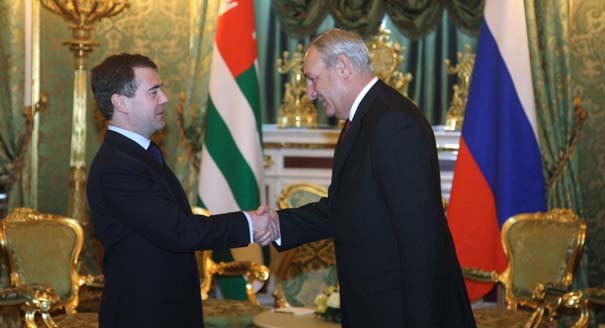
If the Abkhaz government continues to avoid engagement with the international community, it runs the risk of letting Russia determine Abkhazia's future.
Source: Foreign Policy

Frogs are the main inhabitants of this no-man's land. Apart from the sound of my suitcase wheels skidding over the bumpy road, all I could hear was frogs croaking in the riverbed. I kept pace with a friendly group of Georgian women, some of the many thousands who go back and forth between Zugdidi, a town in western Georgia, and Gali, the southern region of Abkhazia. These Gali Georgians eke out a precarious existence with family and property on both sides of the border.
A few years ago, I might have enjoyed the spy-novel quality of this walk across a bridge in an international twilight zone. But this time my feelings were more in tune with those of the unfortunate Georgian women, whose lives had been divided by the checkpoints between western Georgia and would-be independent Abkhazia, and who have to regularly make this long walk rain or shine. "When will this ever end?" I wondered as I approached the uniformed guards on the other side of the bridge, manning the cement-and-steel gateway to Fortress Abkhazia.
The Republic of Abkhazia, geographically speaking, occupies a much-coveted slice of subtropical Black Sea coastline. But since 1993, it has not had a proper place on any political map. Having won a bitter civil conflict with the Georgian government in Tbilisi in the early 1990s, the indigenous Abkhaz and their allies, mainly Armenians and Russians, have built a de facto state with a functioning government, institutions, and media.
The Abkhaz state-building project received a boost following the 2008 war between Georgia and Russia over the other breakaway territory of South Ossetia. When the conflict ended, Russia recognized Abkhazia as an independent state and dramatically increased its military presence there. But to most of the world, the Republic of Abkhazia is still part of sovereign Georgia and therefore an illegitimate entity, particularly as 200,000 of its prewar Georgian inhabitants are still prevented from returning home. Quasi-state, de facto entity, partially recognized territory -- take your pick of the terms on offer -- it is a land whose inhabitants say they have left Georgia behind, but who have not, so far, arrived anywhere else.
I had not been back to Abkhazia since 2008. On my trip last month I found Sukhumi, the capital city (which the Abkhaz call Sukhum), to be tidier and more prosperous than it was two years ago. Shops and cafes were open and doing business; there were periodic traffic jams on the central streets. The crime rate was down. But I would hardly call the city "bustling." The central square is still dominated by the burned-out hulk of the 13-story old Communist Party headquarters, which was ravaged in the final bout of fighting before the Abkhaz and their allies recaptured the city in 1993.
My mood improved as I strolled along the promenade by the Black Sea, past whitewashed hotels, shops, and rows of palm trees and dwarf pines. In lovely mid-70s temperatures, I ended up doing most of my business in the seafront cafe known either as Akop's Place (after its late Armenian owner) or by the Russian slang term brekhalovka, loosely translating to "gossipery." Here, in a pleasant throwback to Abkhazia's Ottoman past, men in flat caps play dominoes, backgammon, or chess and smoke incessantly while sipping Turkish coffee and catching up on the political news. If you sit here long enough, most people you want to talk to will come by. Even the president, Sergei Bagapsh, stops by from time to time.
My first observation from my conversations here was that the Abkhaz do not want to talk about Georgia. From their perspective, the conflict has been resolved -- in their favor -- and it is just a matter of waiting for the rest of the world to catch up.
Abkhaz officials reject the Georgian government's recent strategy on engagement, which aspires to restore people-to-people contacts, as a hapless PR stunt. Of course, the Abkhaz cannot pretend forever that Georgia and the claims of its displaced people do not exist. But another initiative of the Georgian government has arguably made their life easier in this regard. By insisting that Abkhazia is a place "under Russian occupation" -- a formula supported in July by U.S. Secretary of State Hillary Clinton -- Tbilisi suggests the Abkhaz are mere tools of Russia without any agency of their own, and that diminishes any incentive they might have had for dialogue with the Georgians.
My second impression was that the brief honeymoon with Russia that began in 2008 is now over. Moscow and Sukhumi are currently locked in a quarrel over the property rights of ethnic Russians, many of whom abandoned their houses before the war of 1992, when Georgian forces marched into Abkhazia to crush its autonomous government. There is unhappiness that the Abkhaz government has leased large pieces of real estate to the Russian military. And there was a recent public dispute between Abkhazia's foremost historian, Stanislav Lakoba, and Russian parliamentarian Konstantin Zatulin over the way a history textbook recounts Abkhazia's conflicts with Russia in the 19th century.
None of that means, however, that Russia and Abkhazia will give up on each other. The Abkhaz need Russia as their outlet to the world, giver of subsidies and pensions, and most importantly, provider of security. The Russians may mutter that the Abkhaz are showing "ingratitude" with words of criticism, in contrast to the "grateful" South Ossetians who profess absolutely loyalty to Moscow for having apparently saved them from destruction in 2008. But Moscow has invested heavily in Abkhazia and its strategic assets and needs its airport and hotels to ease overcrowding in Sochi during the 2014 Winter Olympics.
Abkhazia's professional class still yearns for contacts with the outside world beyond Russia. But in the past two years, it has gotten harder for them to get visas to visit Europe and the United States. Fewer consulates accept Abkhaz traveling on Russian travel documents, and little progress has been made on finding compromise arrangements. One result is that most students of English in Abkhazia cannot travel to an English-speaking country. Prime Minister Sergei Shamba complains that despite the European Union's stated policy of "non-recognition and engagement," the Abkhaz have seen only the former and not the latter. "If we don't get visas, it becomes engagement with Georgia, not with Europe," he told me.
Abkhazia's multiethnic intelligentsia are good talkers. There were lively questions and comments when I addressed a round table of civil society activists and journalists on the topic of U.S. foreign policy and the Caucasus. But the political space for these people is narrowing, as Russia tightens its grip on the media and the West recedes into the background.
This year an enlightened Georgian film that examines Georgians' own reactions to the conflicts of the early 1990s, Absence of Will, was shown to both Georgian and Abkhaz audiences. In Tbilisi, the film was slammed by Georgian officials for portraying their own actions on Abkhazia and South Ossetia in too negative a light. But in Abkhazia, the mere fact of the documentary being shown on television provoked a hysterical reaction and cries of "traitor" against the NGO activists who had arranged the screening of a "Georgian film." Angry mothers of men killed in the 1992-1993 war were mobilized in what looked suspiciously like staged protests. The whole episode suggested that some shadowy players in the republic's internecine political struggles are ever ready to play the "Georgian card" to embarrass their opponents.
Meanwhile, Abkhazia's "ministries" are still paper-thin bodies with a handful of employees operating off a minuscule government budget of 4.4 billion rubles ($140 million). Moreover, the ethnic politics of Abkhazia makes for an unhealthy retro-Ottoman society where one of the two largest ethnic communities, the Abkhaz, dominate politics and the public sector, while the other, the Armenians, do most of the business.
The European Union's strategy toward Abkhazia was the main topic of a seminar I attended recently in Brussels. There was a consensus that, while respecting Georgia's sovereignty claim over Abkhazia, the European Union had its own interest in Abkhazia's not becoming a "blank spot on the map" that overlapped with but was distinct from the interests of Georgia. In discussing what projects Europe should support there, some argued that Brussels should back "good governance" but not "state-building." Others argued that this was a false distinction.
Whatever the future holds in terms of long-term status and a deal with Georgia, there is a much more immediate question. Does Abkhazia's fledgling government in fact have the capacity to govern what it currently has? If the Abkhaz continue to run a coffee republic and to talk and watch the world go by, they risk letting others be masters of their future.

Senior Fellow, Carnegie Europe
Thomas de Waal is a senior fellow at Carnegie Europe, specializing in Eastern Europe and the Caucasus.
Recent Work
Thomas de Waal
Thomas de Waal
Carnegie does not take institutional positions on public policy issues; the views represented herein are those of the author(s) and do not necessarily reflect the views of Carnegie, its staff, or its trustees.
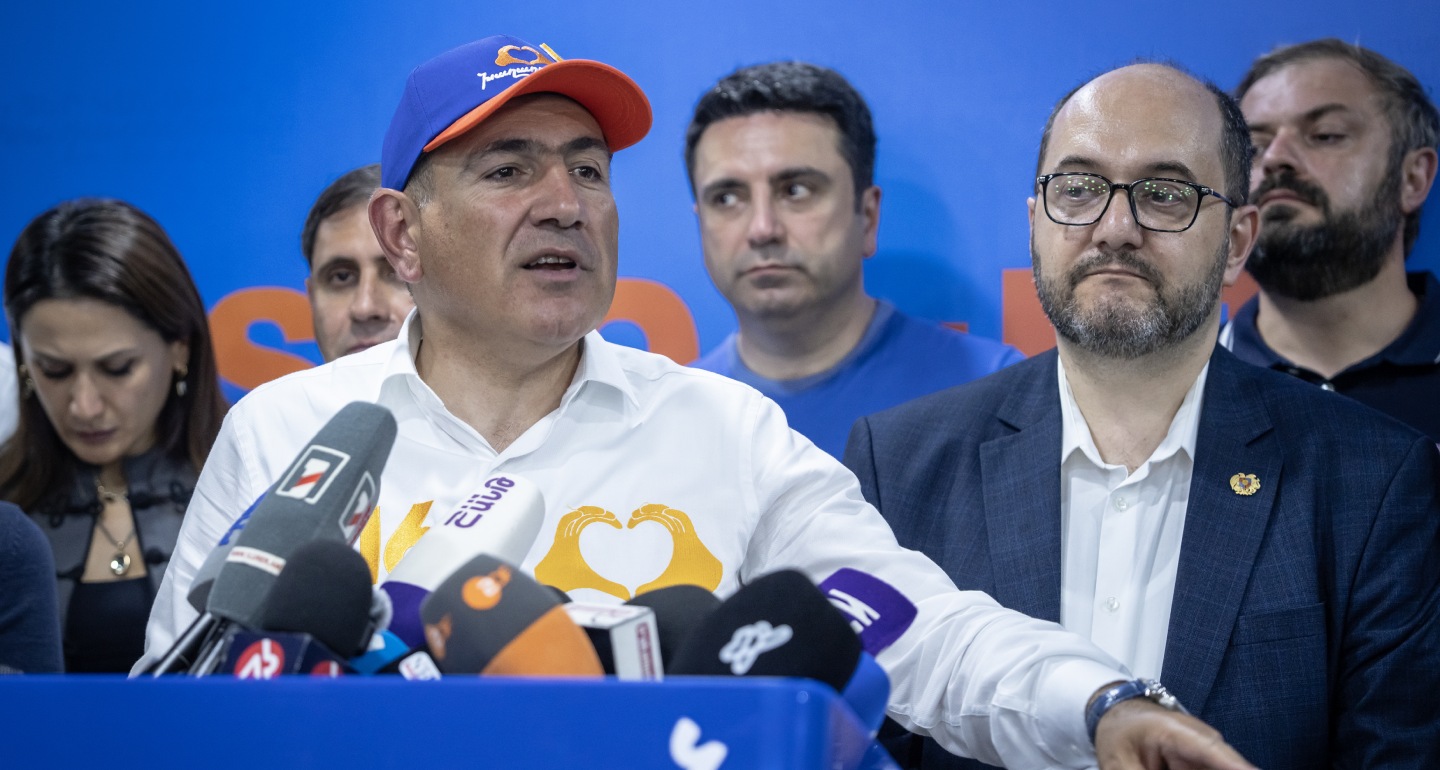
Pashinyan’s pro-European party has been re-elected with a decisive victory. But the pro-Russian opposition could still slow Armenia’s progress toward peace with Azerbaijan and rapprochement with Europe.
Mikayel Zolyan
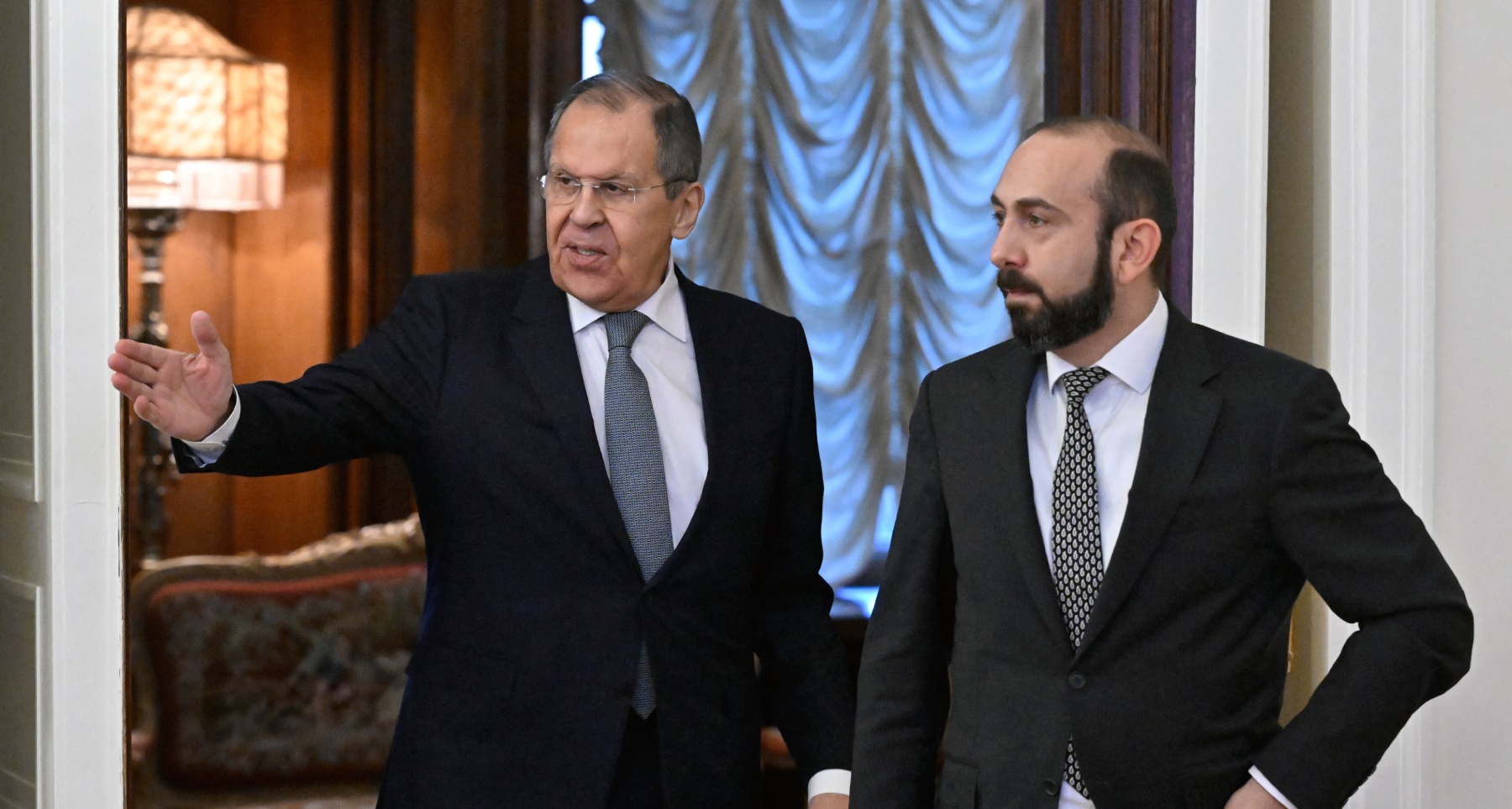
For all the menacing rhetoric, the Armenian prime minister remains a leader with whom Putin is prepared to interact: not as an ally, but as a partner, albeit a problematic one.

Alexander Atasuntsev
By fueling the arguments of both supporters and opponents of Armenian Prime Minister Nikol Pashinyan, Azerbaijan wants to ensure he is re-elected with a weaker mandate.

Bashir Kitachaev
Regardless of the outcome, there’s another path to ensuring that progress doesn’t stall.
Zaur Shiriyev
“Central Asia” as an analytical category is itself part of the problem. The term is a Soviet administrative inheritance, drawn along lines that served the convenience of Moscow. The Central Asian states the Soviets named no longer see themselves through this category alone and are not aligning across political blocs but are instead building external partnerships sector by sector, assigning different partners to different functions.

Jennifer B. Murtazashvili