• Research
  • Emissary
  • About
  • Experts
Carnegie Global logoCarnegie lettermark logo
DemocracyIran
  • Donate
{
  "authors": [
    "Marina Ottaway"
  ],
  "type": "legacyinthemedia",
  "centerAffiliationAll": "dc",
  "centers": [
    "Carnegie Endowment for International Peace",
    "Malcolm H. Kerr Carnegie Middle East Center"
  ],
  "collections": [],
  "englishNewsletterAll": "menaTransitions",
  "nonEnglishNewsletterAll": "",
  "primaryCenter": "Carnegie Endowment for International Peace",
  "programAffiliation": "MEP",
  "programs": [
    "Middle East"
  ],
  "projects": [],
  "regions": [
    "Middle East",
    "Egypt",
    "Gulf",
    "Levant",
    "Maghreb"
  ],
  "topics": [
    "Political Reform"
  ]
}
Source: Getty

In The Media

The Rise and Fall of Political Reform in the Arab World

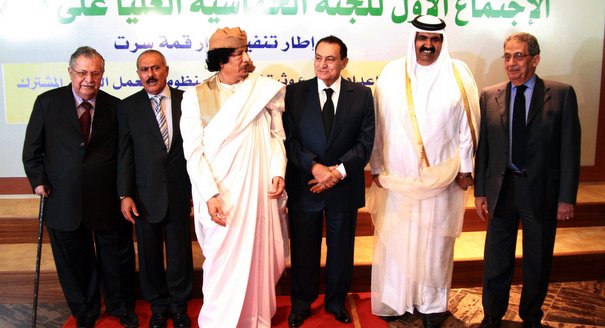
It is increasingly clear that reform in the Arab world depends less on the structure of formal political processes and institutions than on power relations among factions within Arab nations.

Link Copied
By Marina Ottaway
Published on Dec 14, 2010
Program mobile hero image

Program

Middle East

The Middle East Program in Washington combines in-depth regional knowledge with incisive comparative analysis to provide deeply informed recommendations. With expertise in the Gulf, North Africa, Iran, and Israel/Palestine, we examine crosscutting themes of political, economic, and social change in both English and Arabic.

Learn More

Source: Current History

The Rise and Fall of Political Reform in the ArabFor a few years in the early 2000s the Arab world appeared to be entering a period of political reform without confrontation. In most countries, opposition groups were trying to use legal channels of political participation to increase their influence and force regimes to accept democracy.

In countries with elected parliaments, all parties, including Islamist ones, showed more interest in taking part in elections. Even in Gulf countries without formally democratic institutions, pressure was increasing on governments to make room for at least partially elected parliaments or for municipal councils, or to allow “political societies” to operate even though parties were banned. Reformers both inside regimes and in the opposition emphasized strengthening representative institutions and increasing political participation, while trying to avoid defiance and conflict.

Today, the hope for reform without confrontation has waned in most countries. Governments throughout the Arab world have abandoned the pretense of reform and are reconsolidating their grip on power. They are narrowing opportunities for political participation by manipulating laws and closing the space in which political parties can operate. Reform, it is increasingly clear, depends less on the design of formal processes and institutions than on power relations among factions within nations.

About the Author

Marina Ottaway

Former Senior Associate, Middle East Program

Before joining the Endowment, Ottaway carried out research in Africa and in the Middle East for many years and taught at the University of Addis Ababa, the University of Zambia, the American University in Cairo, and the University of the Witwatersrand in South Africa.

    Recent Work

  • Article
    Reactions to the Syrian National Initiative

      Marina Ottaway, Omar Hossino

  • Article
    Slow Return to Normal Politics in Egypt

      Marina Ottaway

Marina Ottaway
Former Senior Associate, Middle East Program
Marina Ottaway
Political ReformMiddle EastEgyptGulfLevantMaghreb

Carnegie does not take institutional positions on public policy issues; the views represented herein are those of the author(s) and do not necessarily reflect the views of Carnegie, its staff, or its trustees.

More Work from Carnegie Endowment for International Peace

  • Commentary
    Diwan
    The U.S. Risks Much, but Gains Little, with Iran

    In an interview, Hassan Mneimneh discusses the ongoing conflict and the myriad miscalculations characterizing it.

      Michael Young

  • Commentary
    Diwan
    The Greatest Dangers May Lie Ahead

    In an interview, Nicole Grajewski discusses the military dimension of the U.S. and Israeli attacks on Iran.

      Michael Young

  • Commentary
    Strategic Europe
    The EU Needs a Third Way in Iran

    European reactions to the war in Iran have lost sight of wider political dynamics. The EU must position itself for the next phase of the crisis without giving up on its principles.

      Richard Youngs

  • Commentary
    Diwan
    Firepower Against Willpower

    In an interview, Naysan Rafati assesses the first week that followed the U.S. and Israeli attack on Iran.

      Michael Young

  • Crowds holding Iranian flags and photos of the late Khamenei
    Commentary
    Emissary
    Who Will Be Iran’s Next Supreme Leader?

    If the succession process can be carried out as Khamenei intended, it will likely bring a hardliner into power.

      • Eric Lob

      Eric Lob

Get more news and analysis from
Carnegie Endowment for International Peace
Carnegie global logo, stacked
1779 Massachusetts Avenue NWWashington, DC, 20036-2103Phone: 202 483 7600Fax: 202 483 1840
  • Research
  • Emissary
  • About
  • Experts
  • Donate
  • Programs
  • Events
  • Blogs
  • Podcasts
  • Contact
  • Annual Reports
  • Careers
  • Privacy
  • For Media
  • Government Resources
Get more news and analysis from
Carnegie Endowment for International Peace
© 2026 Carnegie Endowment for International Peace. All rights reserved.