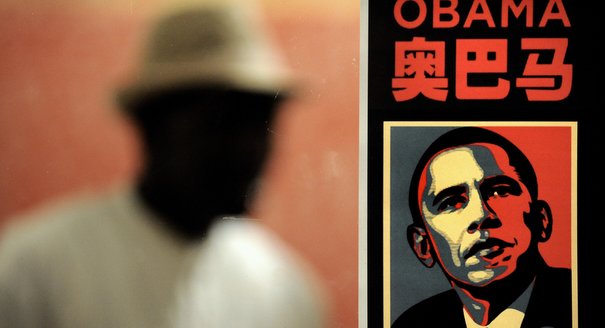
China's political system has proven capable of making difficult decisions rapidly and while it may face internal challenges, the U.S. model of liberal democracy has lost substantial credibility as an alternative.
US Democracy Has Little To Teach ChinaThe first decade of the 21-century has seen a dramatic reversal of fortune in the relative prestige of different political and economic models. Ten years ago, on the eve of the puncturing of the dotcom bubble, the US held the high ground. Its democracy was widely emulated, if not always loved; its technology was sweeping the world; and lightly regulated “Anglo-Saxon” capitalism was seen as the wave of the future. The US managed to fritter away that moral capital in remarkably short order: the Iraq war and the close association it created between military invasion and democracy promotion tarnished the latter, while the Wall Street financial crisis put paid to the idea that markets could be trusted to regulate themselves.
China, by contrast, is on a roll. President Hu Jintao’s rare state visit to Washington this week comes at a time when many Chinese see their weathering of the financial crisis as a vindication of their own system, and the beginning of an era in which US-style liberal ideas will no longer be dominant. State-owned enterprises are back in vogue, and were the chosen mechanism through which Beijing administered its massive stimulus. The automatic admiration for all things American that many Chinese once felt has given way to a much more nuanced and critical view of US weaknesses – verging, for some, on contempt. It is thus not surprising that polls suggest far more Chinese think their country is going in the right direction than their American counterparts.
But what is the Chinese model? Many observers casually put it in an “authoritarian capitalist” box, along with Russia, Iran and Singapore. But China’s model is sui generis; its specific mode of governance is difficult to describe, much less emulate, which is why it is not up for export.
The most important strength of the Chinese political system is its ability to make large, complex decisions quickly, and to make them relatively well, at least in economic policy. This is most evident in the area of infrastructure, where China has put into place airports, dams, high-speed rail, water and electricity systems to feed its growing industrial base. Contrast this with India, where every new investment is subject to blockage by trade unions, lobby groups, peasant associations and courts. India is a law-governed democracy, in which ordinary people can object to government plans; China’s rulers can move more than a million people out of the Three Gorges Dam flood plain with little recourse on their part.
Nonetheless, the quality of Chinese government is higher than in Russia, Iran, or the other authoritarian regimes with which it is often lumped – precisely because Chinese rulers feel some degree of accountability towards their population. That accountability is not, of course, procedural; the authority of the Chinese Communist party is limited neither by a rule of law nor by democratic elections. But while its leaders limit public criticism, they do try to stay on top of popular discontents, and shift policy in response. They are most attentive to the urban middle class and powerful business interests that generate employment, but they respond to outrage over egregious cases of corruption or incompetence among lower-level party cadres too.
Indeed, the Chinese government often overreacts to what it believes to be public opinion precisely because, as one diplomat resident in Beijing remarked, there are no institutionalised ways of gauging it, such as elections or free media. Instead of calibrating a sensible working relationship with Japan, for example, China escalated a conflict over the detention of a fishing boat captain last year – seemingly in anticipation of popular anti-Japanese sentiment.
Americans have long hoped China might undergo a democratic transition as it got wealthier, and before it became powerful enough to become a strategic and political threat. This seems unlikely, however. The government knows how to cater to the interests of Chinese elites and the emerging middle classes, and builds on their fear of populism. This is why there is little support for genuine multi-party democracy. The elites worry about the example of democracy in Thailand – where the election of a populist premier led to violent conflict between his supporters and the establishment – as a warning of what could happen to them.
Ironically for a country that still claims to be communist, China has grown far more unequal of late. Many peasants and workers share little in the country’s growth, while others are ruthlessly exploited. Corruption is pervasive, which exacerbates existing inequalities. At a local level there are countless instances in which government colludes with developers to take land away from hapless peasants. This has contributed to a pent-up anger that explodes in many thousands of acts of social protest, often violent, each year.
The Communist party seems to think it can deal with the problem of inequality through improved responsiveness on the part of its own hierarchy to popular pressures. China’s great historical achievement during the past two millennia has been to create high-quality centralised government, which it does much better than most of its authoritarian peers. Today, it is shifting social spending to the neglected interior, to boost consumption and to stave off a social explosion. I doubt whether its approach will work: any top-down system of accountability faces unsolvable problems of monitoring and responding to what is happening on the ground. Effective accountability can only come about through a bottom-up process, or what we know as democracy. This is not, in my view, likely to emerge soon. However, down the road, in the face of a major economic downturn, or leaders who are less competent or more corrupt, the system’s fragile legitimacy could be openly challenged. Democracy’s strengths are often most evident in times of adversity.
However, if the democratic, market-oriented model is to prevail, Americans need to own up to their own mistakes and misconceptions. Washington’s foreign policy during the past decade was too militarised and unilateral, succeeding only in generating a self-defeating anti-Americanism. In economic policy, Reaganism long outlived its initial successes, producing only budget deficits, thoughtless tax-cutting and inadequate financial regulation.
These problems are to some extent being acknowledged and addressed. But there is a deeper problem with the American model that is nowhere close to being solved. China adapts quickly, making difficult decisions and implementing them effectively. Americans pride themselves on constitutional checks and balances, based on a political culture that distrusts centralised government. This system has ensured individual liberty and a vibrant private sector, but it has now become polarised and ideologically rigid. At present it shows little appetite for dealing with the long-term fiscal challenges the US faces. Democracy in America may have an inherent legitimacy that the Chinese system lacks, but it will not be much of a model to anyone if the government is divided against itself and cannot govern. During the 1989 Tiananmen protests, student demonstrators erected a model of the Statue of Liberty to symbolise their aspirations. Whether anyone in China would do the same at some future date will depend on how Americans address their problems in the present.
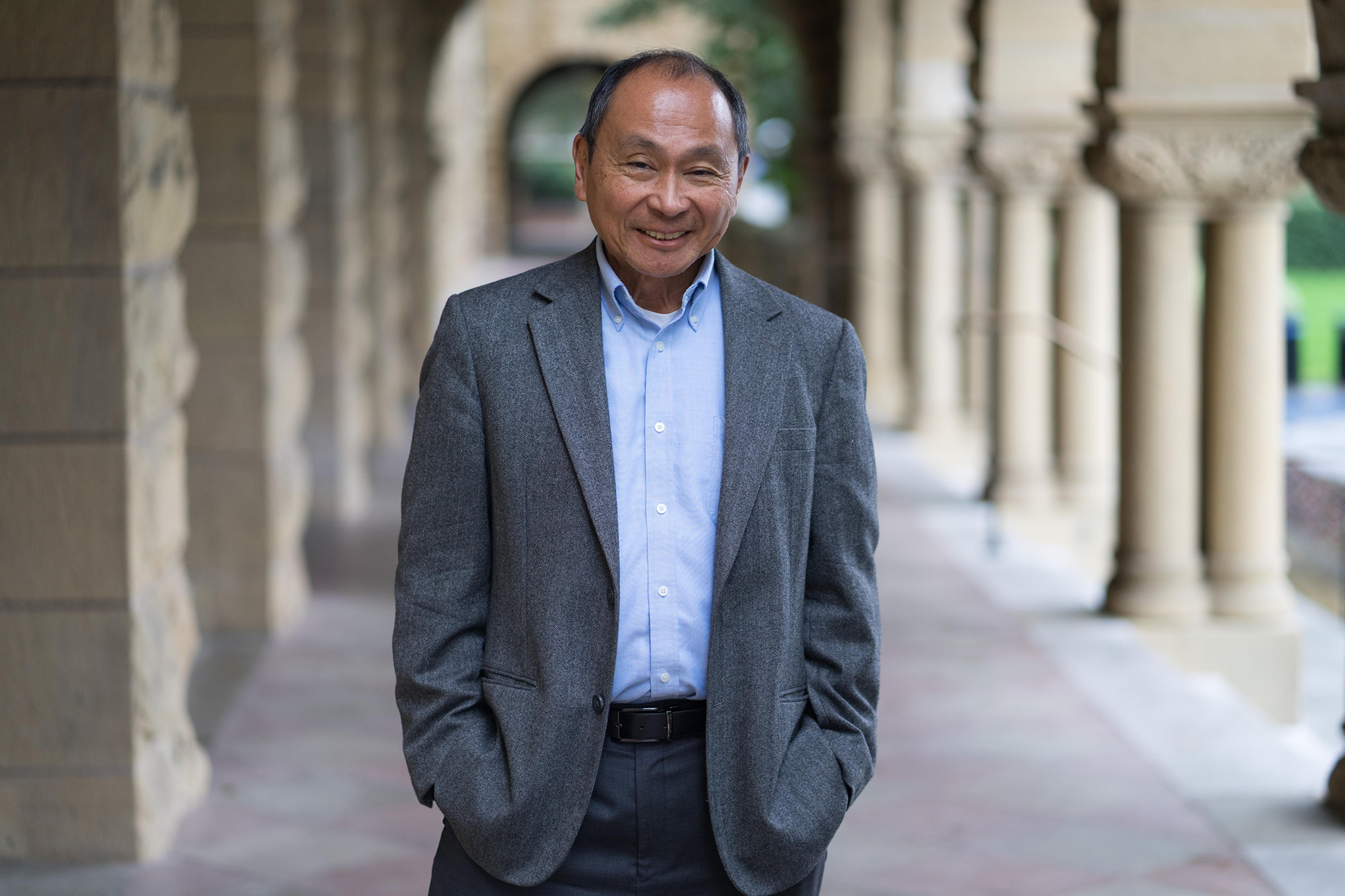
Former Nonresident Scholar, Democracy, Conflict, and Governance Program
Francis Fukuyama was a nonresident scholar in Carnegie’s Democracy, Conflict, and Governance Program, where his research focuses on democratization and international political economy.
Carnegie does not take institutional positions on public policy issues; the views represented herein are those of the author(s) and do not necessarily reflect the views of Carnegie, its staff, or its trustees.
More Work from Carnegie Endowment for International Peace
Ex-president Gurbanguly Berdimuhamedov remains interested in politics, but his son Serdar, Turkmenistan’s current president, is becoming increasingly independent and willing to break with his father’s legacy. If their covert rivalry goes too far, both risk losing power.
A notable degree of participative democracy has firmly arrived in Europe. But to have more far-reaching impact, democratic deliberation needs to move into a radically new phase.