

Commentary
Thomas de Waal
{
  "authors": [
    "Thomas de Waal"
  ],
  "type": "legacyinthemedia",
  "centerAffiliationAll": "dc",
  "centers": [
    "Carnegie Endowment for International Peace",
    "Carnegie Europe",
    "Carnegie Russia Eurasia Center"
  ],
  "collections": [],
  "englishNewsletterAll": "ctw",
  "nonEnglishNewsletterAll": "",
  "primaryCenter": "Carnegie Europe",
  "programAffiliation": "russia",
  "programs": [
    "Russia and Eurasia"
  ],
  "projects": [],
  "regions": [
    "Caucasus",
    "Russia"
  ],
  "topics": [
    "Political Reform"
  ]
}
Source: Getty
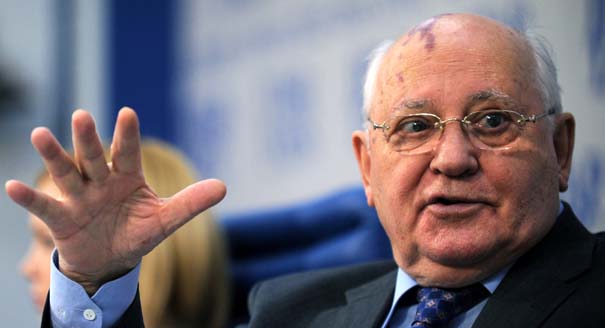
Mikhail Gorbachev presided over the biggest upheaval in Russia’s history—the fall of the Soviet Union—with surprisingly little bloodshed.
Source: National Interest

The achievements of Gorbachev, who turns 80 on March 2, look greater from a distance. Historians will surely ask how the Russian leader who presided over the biggest upheaval in his country’s history, the dissolution of the Soviet Union, was also the leader with the least blood on his hands.
Working as a journalist in Russia in the Yeltsin era in the 1990s I was able to get closer to Gorbachev than I could have done when he was actually in power. I met him three times. I found a man whose faults I knew in advance: a rather woolly intellect, a didactic tone, a propensity never to use a sentence when a paragraph would do. But I was still greatly impressed. The steel was still there: this after all was the man who took on the entire Soviet old guard of the 1980s and defeated them one by one. And there was also immense energy, political acumen and—an extraordinary quality for a man who had held such a position—real human decency.
In retrospect it looks as though Gorbachev’s most frustrating character trait, equivocation, was also his redeeming grace. He was not decisive enough in fixing the growing ethnic and political challenges that erupted in the Soviet Union. In 1988, faced with his first big challenge, as violence sprang up between Armenians and Azerbaijanis over the disputed territory of Nagorny Karabakh, he issued a call for socialist solidarity in a barren “Appeal to the workers of Armenia and Azerbaijan.” Yet he did not, as others would have done, order mass arrests or call out the troops. By instinct, both personal and political, he did not want to see blood shed.
Compare that approach to both his predecessors and successors. The Soviet leader with whom Gorbachev is most comparable, Nikita Khrushchev, will always have the dethroning of Stalinism to his credit, but his legacy is stained with the crushing of the Hungarian uprising in 1956 and the killing of protestors in Novocherkassk in 1961. Boris Yeltsin, Russia’s great democratic hope, used tanks to defeat his opposition in Moscow in October 1993 and caused untold bloodshed in Chechnya in 1994-5. Vladimir Putin went back to war in Chechnya in 1999.
Compared to them, Gorbachev exercised restraint—huge restraint. The bloody incidents which happened under his leadership were smaller and messier. The killing of protestors in Tbilisi in 1989 was ordered by the local Georgian leadership, and Gorbachev, who was in London at the time, allowed an unprecedented parliamentary investigation into the events. He was more culpable for the violent suppression of the demonstrations in Vilnius in January 1991, but subsequently it became clear that he was being misled by the security ministers who tried to oust him seven months later.
The bloodshed for which Gorbachev bore most responsibility was the crackdown in Baku in January 1990. Five years later, I heard him openly say that this was his deepest regret. The Azerbaijani Popular Front had taken control of the streets and the local Communist Party was panicking. Gorbachev’s decision to send in the army was taken, as I understand it, against the advice of Yevgeny Primakov, who was on the ground. More than 130 civilians were killed.
Bad as Baku’s Black January was, it is almost miraculous that it was the cruelest act committed by Gorbachev’s central government in Moscow in six years. In that period, let me remind you, first the six Warsaw Pact countries left the Soviet orbit, then Germany was re-unified, the three Baltic States broke away and eventually the whole Soviet Union came apart. Tito’s Yugoslavia was much smaller, more prosperous and a thousand times bloodier. When someone finally tried to use force to keep the Soviet Union together—the coup plotters of August 1991—thankfully they were too late and their efforts ended in farce and euphoria and not in tragedy.
Grigory Yavlinsky got it right when asked about Gorbachev, saying simply “Gorbachev gave us freedom. It’s up to us to decide what to do with it. And that’s all.” When they vent their frustration against him, Russians and other former Soviet citizens should reflect on why Czechs, Poles and Estonians were able to take advantage of perestroika and they did not. Still, many of the freedoms won in those years have proved irreversible. Not least of them is the precedent of his own peaceful departure. Gorbachev himself lives peacefully in retirement while his political successors rule the country.
Happy Birthday, Mikhail Sergeevich.

Senior Fellow, Carnegie Europe
Thomas de Waal is a senior fellow at Carnegie Europe, specializing in Eastern Europe and the Caucasus.
Recent Work
Thomas de Waal
Thomas de Waal
Carnegie does not take institutional positions on public policy issues; the views represented herein are those of the author(s) and do not necessarily reflect the views of Carnegie, its staff, or its trustees.
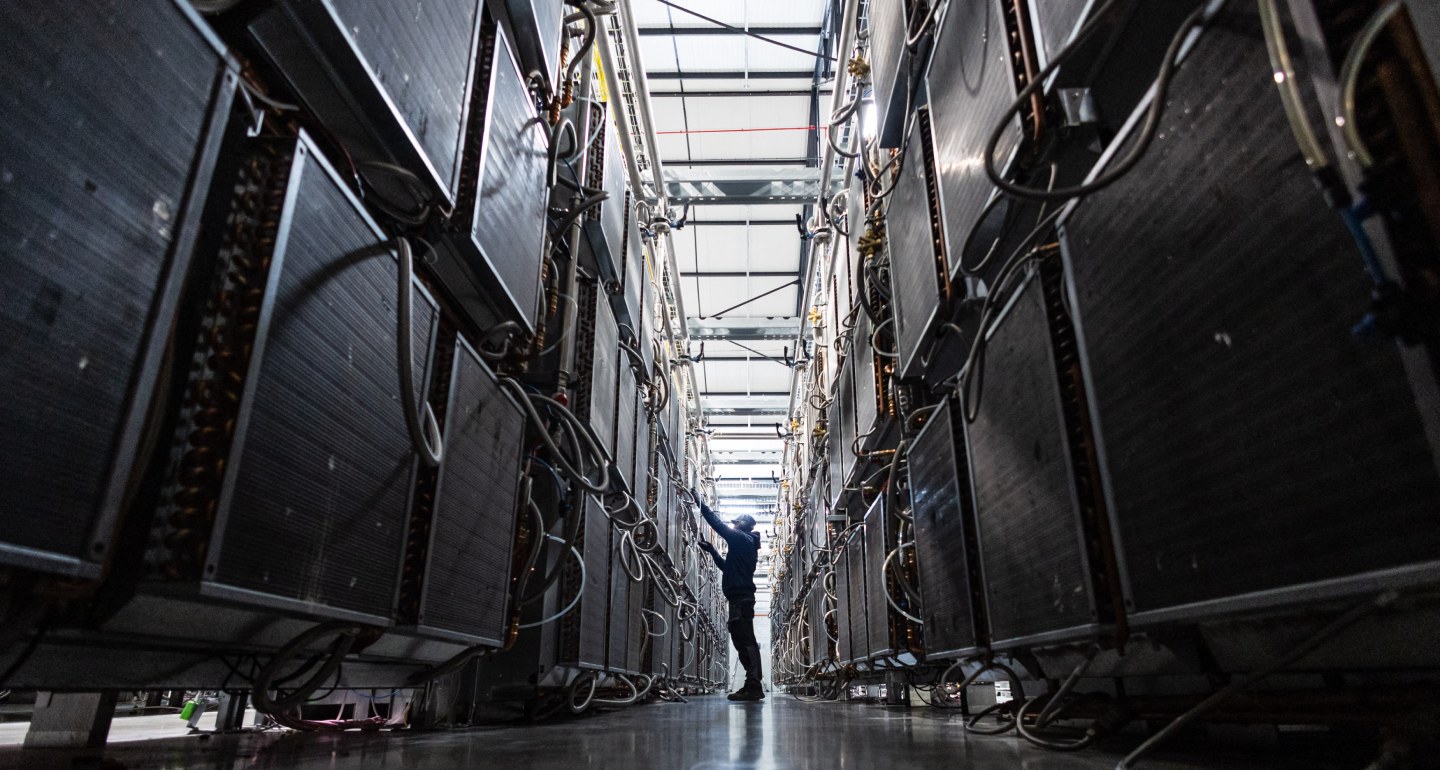
Russia spent years building a “sovereign internet,” concentrating web infrastructure exclusively within Russian territory. Ukrainian drone attacks have shown how vulnerable that approach has left the Russian internet.

Maria Kolomychenko

Putin’s conservative staffing policies and search for ever greater control have cemented parliament’s transformation into a bureaucratic appendage of the executive branch.

Andrey Pertsev

Russia’s AI-driven propaganda campaigns operate in a fragmented, chaotic, and often illogical manner. That’s not necessarily a problem for the Kremlin, though: It’s much easier to mimic genuine public debate that way.

Ilya Klishin

Russian strikes are weakening the economy sustaining Ukraine’s war effort. Closing the growing funding gap will require more European support and politically contentious reforms in Kyiv.

Balázs Jarábik

Ex-president Gurbanguly Berdimuhamedov remains interested in politics, but his son Serdar, Turkmenistan’s current president, is becoming increasingly independent and willing to break with his father’s legacy. If their covert rivalry goes too far, both risk losing power.

Galiya Ibragimova