
• Research
  • Emissary
  • About
  • Experts
Carnegie Global logoCarnegie lettermark logo
DemocracyIran
  • Donate
{
  "authors": [
    "Bill Bradley",
    "Tom Ridge",
    "David Walker"
  ],
  "type": "legacyinthemedia",
  "centerAffiliationAll": "dc",
  "centers": [
    "Carnegie Endowment for International Peace"
  ],
  "collections": [],
  "englishNewsletterAll": "ctw",
  "nonEnglishNewsletterAll": "",
  "primaryCenter": "Carnegie Endowment for International Peace",
  "programAffiliation": "SCP",
  "programs": [
    "Sustainability, Climate, and Geopolitics"
  ],
  "projects": [],
  "regions": [
    "North America",
    "United States"
  ],
  "topics": [
    "Climate Change"
  ]
}

Source: Getty

In The Media

What's Lost in the House Budget Cuts

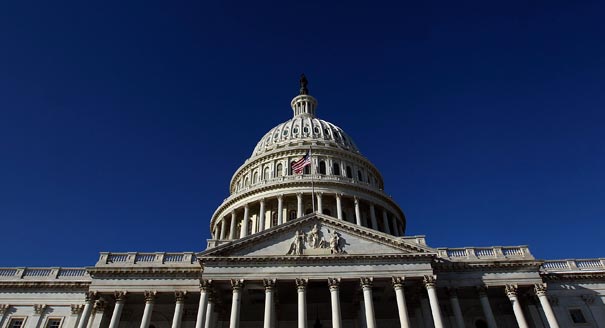
While there are many legitimate disagreements regarding how to cut the U.S. deficit, deep cuts to the national infrastructure is more likely to hurt the country's long-term economic growth.

Link Copied
By Bill Bradley, Tom Ridge, David Walker
Published on Feb 27, 2011
Program mobile hero image

Program

Sustainability, Climate, and Geopolitics

The Sustainability, Climate, and Geopolitics Program explores how climate change and the responses to it are changing international politics, global governance, and world security. Our work covers topics from the geopolitical implications of decarbonization and environmental breakdown to the challenge of building out clean energy supply chains, alternative protein options, and other challenges of a warming planet.

Learn More

Source: Washington Post

What's Lost in the House Budget CutsWhile there are many legitimate disagreements regarding how to cut the deficit, the continuing resolution the House passed last week goes too far by cutting almost 20 percent in the transportation budget - the largest percentage cut in all domestic discretionary programs. A nation that does not maintain its infrastructure is doomed to economic decline. We look at U.S. spending as a Democrat, a Republican and an independent - and we believe our nation needs to invest more, not less, in infrastructure.

This does not mean that improvements shouldn't be made. At present 80 percent of federal transportation funds are distributed by formula - with no competition and no performance requirements. That must stop. We must make every dollar contribute to transportation performance. All transportation spending should be consolidated into a unified transportation trust fund subject to rigorous, independent cost-benefit analysis.

A better transportation system will enhance our economic and national security and will rebuild public trust in public investments. Many new members of Congress are rightly furious about wasteful spending. By squeezing every ounce of investment gain from our infrastructure dollar we can create a transportation program that both deficit hawks and program reform leaders can get behind.

The authors are the co-chairs of the Leadership Initiative on Transportation Solvency, an initiative created by the Carnegie Endowment for International Peace to develop a non-partisan solution funding a better transportation system in the United States.

About the Authors

Bill Bradley

Tom Ridge

David Walker

Authors

Bill Bradley
Tom Ridge
David Walker
Climate ChangeNorth AmericaUnited States

Carnegie does not take institutional positions on public policy issues; the views represented herein are those of the author(s) and do not necessarily reflect the views of Carnegie, its staff, or its trustees.

More Work from Carnegie Endowment for International Peace

  • The tops of people's heads. Raised above their heads are "No Kings" signs, an upside-down American flag, and a rainbow flag.
    Commentary
    Emissary
    Protests Like No Kings Can Only Go So Far to Stem Authoritarianism

    Lessons from other backsliding democracies show that mass mobilization needs to feed into an electoral strategy. 

      Saskia Brechenmacher, Shreya Joshi

  • Commentary
    Europe Doesn’t Like War—for Good Reasons

    The wars in Ukraine and the Middle East are existential threats to Europe as a peace project. Leaders and citizens alike must reaffirm their solidarity to face up to today’s multifaceted challenges.

      Marc Pierini

  • A White man in a tan jacket stands with his back to the camera, plugging in an electric car to a row of green and white chargers.
    Commentary
    Emissary
    Some Countries Are Better Prepared for an Energy Crisis This Time

    As the Iran war shocks oil prices, countries that have invested in renewables, EVs, and battery development since the 2022 Russian invasion of Ukraine are seeing the value of their investments.

      • Noah  Gordon ​​​​

      Noah Gordon

  • Commentary
    Emissary
    The Iran War Is Uncovering the Weakness in U.S.-Gulf Ties

    Neither the Abraham Accords nor the presence of large U.S. bases are enough to protect Arab Gulf states.

      Marwan Muasher

  • Article
    Rewiring the South Caucasus: TRIPP and the New Geopolitics of Connectivity

    The U.S.-sponsored TRIPP deal is driving the Armenia-Azerbaijan peace process forward. But foreign and domestic hurdles remain before connectivity and economic interdependence can open up the South Caucasus.

      • Areg Kochinyan

      Thomas de Waal, Areg Kochinyan, Zaur Shiriyev

Get more news and analysis from
Carnegie Endowment for International Peace
Carnegie global logo, stacked
1779 Massachusetts Avenue NWWashington, DC, 20036-2103Phone: 202 483 7600Fax: 202 483 1840
  • Research
  • Emissary
  • About
  • Experts
  • Donate
  • Programs
  • Events
  • Blogs
  • Podcasts
  • Contact
  • Annual Reports
  • Careers
  • Privacy
  • For Media
  • Government Resources
Get more news and analysis from
Carnegie Endowment for International Peace
© 2026 Carnegie Endowment for International Peace. All rights reserved.