

Paper
Alejandro Foxley, Fernando Sossdorf
{
  "authors": [
    "Alejandro Foxley"
  ],
  "type": "other",
  "centerAffiliationAll": "",
  "centers": [
    "Carnegie Endowment for International Peace"
  ],
  "collections": [],
  "englishNewsletterAll": "",
  "nonEnglishNewsletterAll": "",
  "primaryCenter": "Carnegie Endowment for International Peace",
  "programAffiliation": "",
  "programs": [],
  "projects": [],
  "regions": [
    "North America",
    "South America",
    "East Asia",
    "Eastern Europe",
    "Western Europe"
  ],
  "topics": [
    "Economy"
  ]
}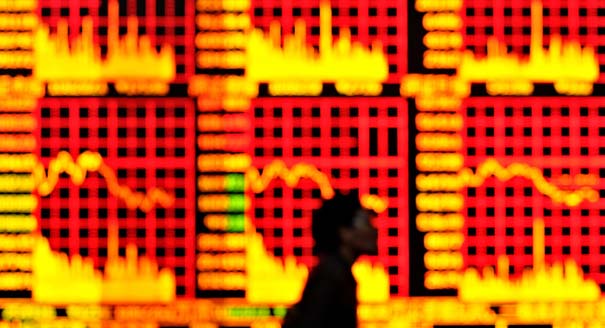
Source: Getty
One of the most striking aspects of the global financial crisis has been how often the facts have contradicted what, according to conventional wisdom, was expected to happen.
When the global financial crisis struck, the purveyors of conventional wisdom had it all figured out. Latin American countries would surely mismanage the crisis, as they have in the past. Economies that established partnerships with developed countries could rely on that “insurance” against instability. The growth rate of East Asian economies would not dip below the rates reached in previous decades. And the growth rate of economies, such as Ireland’s, which had enjoyed a “good boom” prior to the crisis, would rebound quickly and relatively painlessly.
Not one of these predictions came to pass.
Former Senior Associate, International Economics Program
Foxley was previously minister of foreign affairs, senator, and minister of finance of the Republic of Chile. While minister of finance he concurrently served as a governor of the Inter-American Development Bank and the World Bank.
Recent Work
Alejandro Foxley, Fernando Sossdorf
Alejandro Foxley
Carnegie does not take institutional positions on public policy issues; the views represented herein are those of the author(s) and do not necessarily reflect the views of Carnegie, its staff, or its trustees.

The Bureau of Industry and Security needs to adjust its focus and practices to maintain its position as the U.S. government’s primary champion of international technological competition.

Geoffrey Irving
Despite myriad challenges and occasional stumbles, the new Hungarian government is moving ahead with energy and conviction to uproot years of illiberalism and corruption and rebuild Hungarian democracy.

Thomas Carothers

Depleted financial reserves and a shrinking tax base mean it is no longer possible to simultaneously deliver high defense spending, price stability, and economic growth.

Alexandra Prokopenko
U.S. trading partners in Asia are closely watching the dispute for signs of how it may affect their own interests.

Barbara Weisel

Amid celebrations of bilateral ties was a deeper focus on stability in the Middle East.

Amr Hamzawy