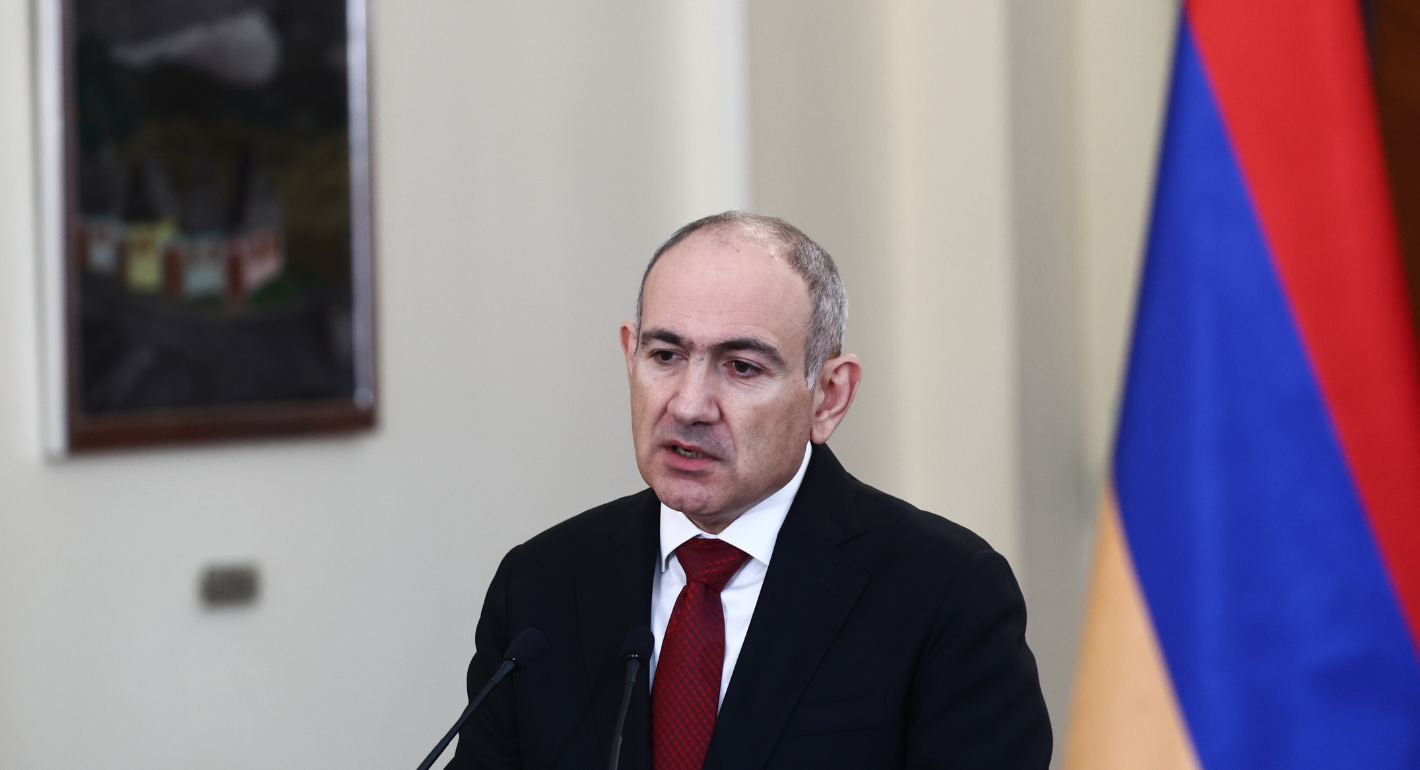
Europe has an interest in supporting Armenian leader Nikol Pashinyan as he tries to make peace with neighbors and loosen ties with Russia. But it is depersonalized support in the long term, not quickfire flash, that will win the day.
Thomas de Waal

{
"authors": [],
"type": "other",
"centerAffiliationAll": "",
"centers": [
"Carnegie Endowment for International Peace",
"Malcolm H. Kerr Carnegie Middle East Center"
],
"collections": [],
"englishNewsletterAll": "",
"nonEnglishNewsletterAll": "",
"primaryCenter": "Carnegie Endowment for International Peace",
"programAffiliation": "",
"programs": [],
"projects": [],
"regions": [
"Middle East",
"Gulf"
],
"topics": [
"Political Reform"
]
}REQUIRED IMAGE
News from Oman
An estimated 3,000 protesters rallied in the southern port of Salalah following Friday prayers on April 22 in one of the largest demonstrations since scattered unrest broke out two months ago. Protesters gathered outside of the governor’s office to demand reforms, particularly anti-corruption measures. | Reuters
Friday’s protest followed a decision by Sultan Qaboos on April 21 to pardon 234 protesters detained over the course of recent demonstrations. | Reuters
Carnegie does not take institutional positions on public policy issues; the views represented herein are those of the author(s) and do not necessarily reflect the views of Carnegie, its staff, or its trustees.
Europe has an interest in supporting Armenian leader Nikol Pashinyan as he tries to make peace with neighbors and loosen ties with Russia. But it is depersonalized support in the long term, not quickfire flash, that will win the day.
Thomas de Waal
The return of parliamentary politics reflects a broader shift from earlier expectations of a settlement and elections toward the reality of a prolonged war.
Balázs Jarábik
When municipalities and local actors are empowered with regulatory authority, knowledge, and resources, they can fill critical governance gaps.
Sabine Saad
The conflict is exposing the flaws and fissures of their domestic governance and social cohesion.
Frederic Wehrey, Charles H. Johnson
The Russian state has opted for complete ideological control of the internet and is prepared to bear the associated costs.
Maria Kolomychenko